
Best Waterproof Wall Panels for Showers: 2026 Guide
Table of Contents
- Why Waterproof Wall Panels Are Replacing Shower Tiles
- Pros and Cons of Shower Wall Panels vs Tiles
- Waterproof Wall Panel Materials: PVC, MDF, Plywood and SPC Compared
- Panel Sizes, Thickness and Design Finishes to Know Before You Buy
- Shower Wall Panel Installation Guide: What You Need to Know
- How to Clean Waterproof Bathroom Panels and Keep Them Looking New
- Long-Term Durability, Failure Points and Sustainability
- Which Waterproof Wall Panels Should You Choose?
Last Updated: August 5, 2026
Choosing the best waterproof wall panels for showers is one of the most searched bathroom renovation questions in the UK. Tiling is time-consuming, expensive, and leaves grout lines that harbour mould within months. At Wetwall Wonders, we supply waterproof wall panels to homeowners, bathroom fitters, and property developers across the UK. This guide covers every material type, thickness, finish, and installation method so you can make a confident buying decision.

Quick Picks:
- Best Overall: PVC panels with a tongue and groove system, ideal balance of waterproofing, ease of installation, and cost for most UK bathrooms
- Best for Premium Renovations: SPC (Stone Polymer Composite) panels, denser, heavier, and more authentic-looking than standard PVC
- Best Budget Option: 8mm PVC cladding panels in 250mm widths, covers the basics well and suits tight spaces and narrow ensuites
Why Waterproof Wall Panels Are Replacing Shower Tiles
Waterproof wall panels are rigid wall coverings, typically made from PVC, MDF, plywood, or SPC, fitted directly to shower walls to create a grout-free, seamless finish.
Grout lines absorb moisture, trap soap residue, and develop mould within months. Panels eliminate that problem entirely. A properly fitted panel system with correctly applied silicone sealant creates a water-tight surface with no porous joints for water or bacteria to penetrate. Tiling a standard shower enclosure takes two to three days; most panel systems can be fitted in a single day. According to NHBC guidance on bathroom waterproofing in new builds, water ingress behind wall finishes is one of the most common sources of structural moisture damage in UK residential properties. Panels, when fitted correctly, significantly reduce that risk compared to traditionally grouted tiles.
Pros and Cons of Shower Wall Panels vs Tiles
Where Panels Win
- No grout lines. Grout harbours mould, requires periodic resealing, and is difficult to clean in a steam-heavy shower environment.
- Faster installation. Most panel systems can be fitted over existing tiles, removing the cost and mess of a full strip-out.
- DIY-friendly. A tongue and groove system requires no specialist tools, just a tape measure, fine-tooth saw, adhesive, and silicone.
- Low maintenance. A wipe with a damp cloth is sufficient. There is no regrouting, no sealing schedule, and no specialist cleaning products required.
- Consistent finish. Panels give a seamless look difficult to achieve with tiles, particularly on uneven walls.
Where Tiles Still Have the Edge
- Longevity on perfectly prepared substrates. A well-laid tile job on a solid, fully tanked substrate can outlast a panel system in high-traffic commercial settings.
- Heat resistance. Ceramic and porcelain tiles handle sustained heat better than PVC panels, which can warp if exposed to direct heat sources.
- Resale perception. Some buyers still associate tiles with quality, though this is changing.
- Repairability. Individual tiles can be replaced. Matching a panel section years later is harder if the design has been discontinued.
| Factor | Wall Panels | Tiles |
|---|---|---|
| Installation time | 1 day typical | 2-3 days minimum |
| Grout maintenance | None required | Periodic resealing |
| DIY suitability | High | Moderate to high |
| Mould resistance | Excellent (grout-free) | Moderate |
| Design variety | Wide and growing | Very wide |
| Upfront cost | Moderate to high | Low to very high |
| Fit over existing tiles | Yes, in most cases | No |
Waterproof Wall Panel Materials: PVC, MDF, Plywood and SPC Compared
The material core of a waterproof wall panel determines its weight, rigidity, thermal properties, and long-term durability.
PVC Panels
PVC panels are the most widely used bathroom cladding option in the UK. The entire panel is made of polyvinyl chloride, meaning water cannot penetrate the core even if the surface is scratched. They are lightweight, easy to cut with a fine-tooth saw, and available in widths from 250mm to 900mm. The Decorwall Elite Print range at Wetwall Wonders starts from £11.00 per panel for the 2700mm x 250mm x 8mm format. The main limitation is that thinner panels can flex slightly on uneven walls if adhesive coverage is insufficient.
MDF and Plywood Core Panels
MDF and plywood core panels carry a decorative high-pressure laminate face bonded to a moisture-resistant board substrate. The laminate surface is waterproof, but the core is not fully impervious to water. If water finds a route behind the panel through a failed sealant joint or damaged trim, the MDF or ply core can swell and delaminate.
SPC (Stone Polymer Composite) Panels
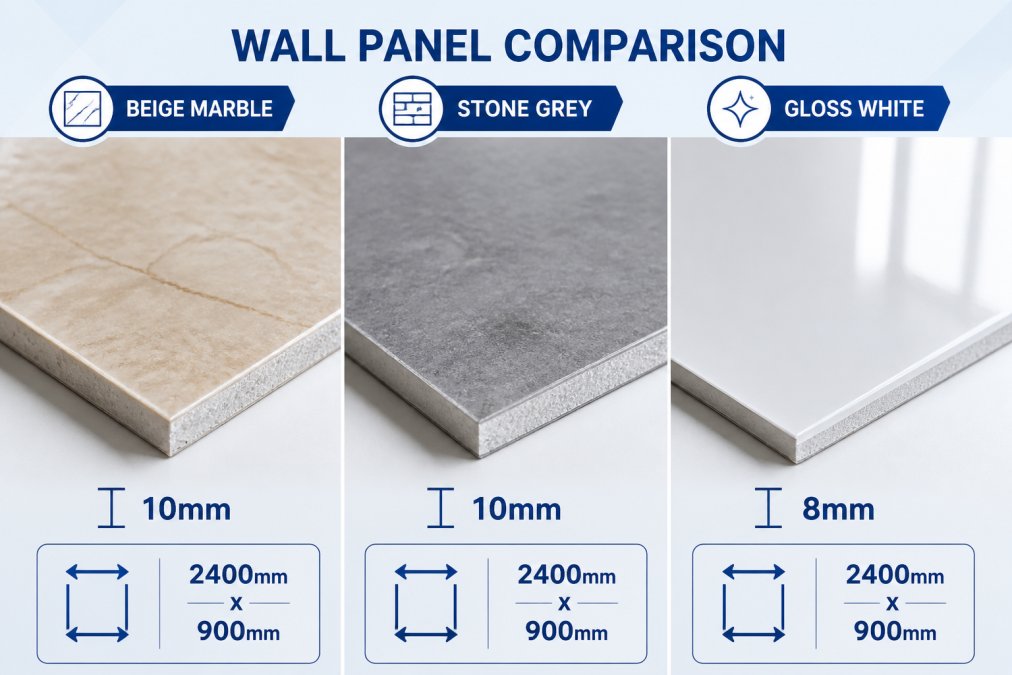
SPC panels are the premium end of the wall panel category. The core is made from limestone powder, polyvinyl chloride, and stabilisers, producing a dense, rigid panel that is fully waterproof throughout and significantly heavier than standard PVC. The density of SPC provides acoustic and thermal insulation properties that neither PVC nor MDF panels can match. The Decorwall Maxi Panel range at Wetwall Wonders offers 10mm panels in Beige Marble from £54.00 per panel, covering a 2400mm x 900mm area.

Panel Sizes, Thickness and Design Finishes to Know Before You Buy
Getting the size and thickness wrong before ordering is an expensive mistake.
Choosing Between 8mm and 10mm Thickness
8mm panels are the standard choice for most domestic shower walls. They are lighter, easier to handle solo, and sufficient for the vast majority of residential applications. The Decorwall Elegance Mineral range at Wetwall Wonders, priced at £22.00 per 300mm-wide panel, uses an 8mm construction and delivers a high-quality stone effect finish.
10mm panels offer greater rigidity and a more solid feel. They are the better choice for wet rooms with floor-to-ceiling coverage, for walls that are not perfectly flat, and for anyone who wants the panel to feel closer to a tiled surface. For narrow ensuites, 250mm or 300mm wide panels are the practical choice, allowing you to work around obstacles and minimise waste.
Popular Finishes: Marble Effect, Stone and Modern Aesthetics
Marble effect panels have become the dominant finish in UK bathroom renovations. The Beige Marble and Antique Marble options from the Decorwall Maxi range deliver a convincing veined stone appearance that works in both traditional and contemporary bathrooms. Stone finishes, including Misty Stone and Calcite options, suit wet rooms and open-plan bathroom designs. For modern, minimal interiors, high-gloss panels in neutral tones remain popular. The Dumawall+ High Gloss Mura tile-effect panel at Wetwall Wonders offers a heavy-duty PVC alternative to ceramic tiles, sold in packs of 8 from £3.95 per panel.
Shower Wall Panel Installation Guide: What You Need to Know
A shower wall panel installation is achievable for most competent DIYers in a single day, provided the substrate is prepared correctly and the right adhesive and sealant are used.
Substrate Preparation
The wall surface must be clean, dry, flat, and structurally sound before any panel is fixed. Remove any loose plaster, flaking paint, or existing tiles that are not firmly bonded. Walls with more than a 3mm deviation over a 2-metre span should be skimmed or battened out before panelling. According to the British Standards Institution guidance on internal wet area construction, substrate integrity is a primary factor in the long-term performance of any wall covering in wet areas.
Fitting the Panels: Tongue and Groove vs Adhesive Methods
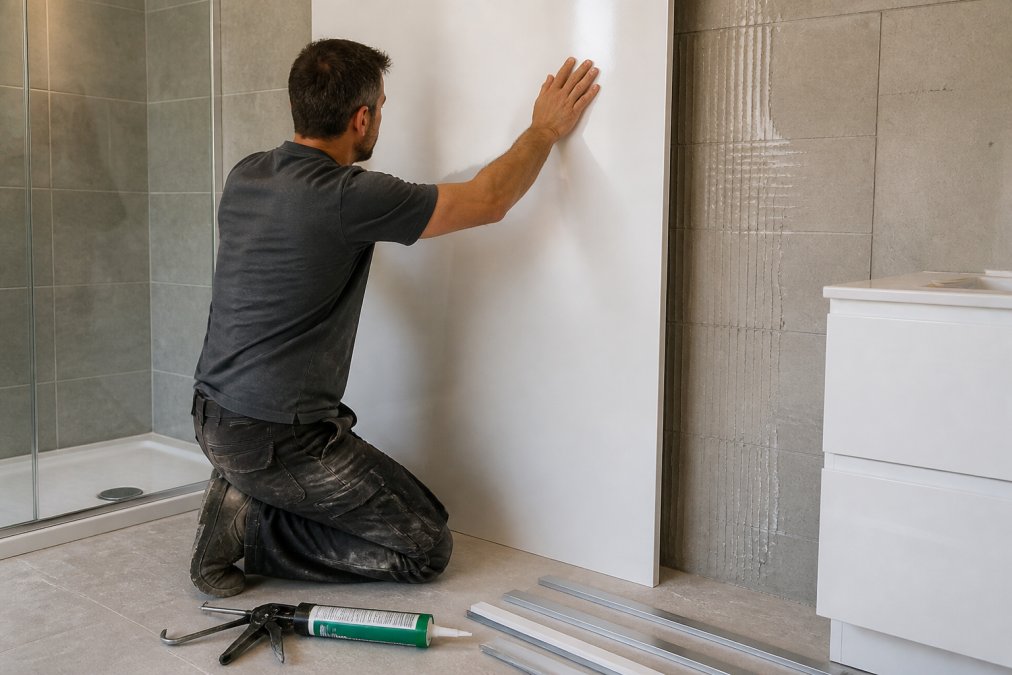
Tongue and groove systems, such as those used in the Dumawall tile-effect range, use a profiled edge on each panel that slots into the adjacent panel. This creates a mechanical lock that aligns panels automatically and is the faster and more forgiving method for DIY installation.
Adhesive-only methods are used for large-format panels, typically 900mm-wide boards, where the panel face is bonded directly to the substrate. For both methods, the adhesive must be applied in vertical ribbons or full-coverage spread according to the manufacturer's specification. Leaving voids in adhesive coverage creates hollow spots where the panel can flex and allow moisture to track behind the board.
Sealing, Trim Profiles and Finishing
Every internal corner, external corner, and panel-to-floor or panel-to-ceiling junction must be sealed with sanitary silicone. The trim profiles, including H-profiles for panel joints and L-profiles for internal corners, hold the panels in alignment and provide a channel for the silicone to bond into. Apply silicone in a continuous bead with no gaps, then tool it smooth with a wet finger. Allow the silicone to cure fully, typically 24 hours, before running water in the shower.
How to Clean Waterproof Bathroom Panels and Keep Them Looking New
Cleaning waterproof bathroom panels is straightforward. For routine cleaning, a soft cloth or non-abrasive sponge with warm water and a mild, non-bleach bathroom cleaner is all that is needed. Avoid abrasive scouring pads, wire wool, or cream cleaners, as these will scratch the surface finish.
Limescale deposits, common in hard-water areas across much of southern England, respond well to a diluted white vinegar solution or a proprietary limescale remover safe for plastic surfaces. The silicone sealant joints require separate attention. If mould develops on the soap and shampoo residue that accumulates on top of the silicone, a monthly wipe with a diluted mould-inhibiting bathroom spray keeps joints clean. If the silicone has already discoloured, it should be removed and replaced. According to the Chartered Institute of Environmental Health guidance on mould prevention in domestic bathrooms, adequate ventilation combined with regular surface cleaning is the most effective strategy for preventing mould growth in wet rooms and shower enclosures.
Long-Term Durability, Failure Points and Sustainability
PVC panels are the most durable in terms of water resistance because the material is homogeneous throughout. The main long-term risk is UV yellowing on panels exposed to direct sunlight. Premium PVC panels with a UV-stabilised face layer resist this significantly better than budget alternatives.
MDF and plywood core panels have a finite lifespan if any water ingress occurs. A failed silicone joint that goes unnoticed for several months can result in significant swelling and delamination. Inspect sealant joints annually and re-silicone at the first sign of cracking or shrinkage.
SPC panels offer the best long-term durability of the three core types. The limestone-based core does not swell, warp, or delaminate in the presence of moisture, and the material is dimensionally stable across a wide temperature range.
On sustainability, PVC is durable and long-lasting, which reduces replacement frequency, but it is not biodegradable and recycling infrastructure for PVC building products in the UK remains limited. If environmental credentials matter to your project, look for panels that carry third-party certification for their core material.
Which Waterproof Wall Panels Should You Choose?
The best waterproof wall panels for showers depend on your budget, installation confidence, and how long you want the result to last without maintenance.
For most UK homeowners doing a DIY bathroom refresh, a 10mm PVC panel in a 900mm-wide format offers the best combination of waterproofing, ease of installation, and design quality. The Decorwall Maxi Panel range at Wetwall Wonders covers a 2400mm x 900mm wall section per panel, meaning fewer seams and faster installation. Prices start at £54.00 per panel for the Beige Marble finish.

For narrow ensuites or spaces with awkward dimensions, the 300mm-wide Decorwall Elegance Mineral panels at £22.00 each give you flexibility to work around obstacles without excessive waste. The tile-effect Dumawall+ range is the right choice if you want the visual texture of tiles without the grout maintenance.
For premium renovations or wet rooms, SPC panels are worth the additional investment. The denser core, better acoustic performance, and superior dimensional stability make them the most reliable long-term choice for a high-use shower.
| Panel Type | Best For | Thickness | Waterproof Core | Relative Cost |
|---|---|---|---|---|
| PVC (full core) | Most DIY showers | 8mm or 10mm | Yes, throughout | Low to mid |
| MDF/Ply core | Premium finish, solid feel | 10mm-11mm | Surface only | Mid to high |
| SPC | Wet rooms, premium projects | 10mm+ | Yes, throughout | High |
| Tile-effect PVC | Tile look, no grout | 5mm-8mm | Yes, throughout | Low |
Wetwall Wonders supplies all panel types alongside the full installation accessory range, including silicones, adhesives, trim profiles, and H-profiles, so you can order everything for your project in a single transaction. The quality of installation materials, particularly adhesives and sealants, has as much impact on long-term performance as the panel material itself, as noted in the Federation of Master Builders' bathroom renovation guidance.
Choosing the right shower wall panel is straightforward once you understand the material differences and what each system demands in terms of installation care. Wetwall Wonders solves the sourcing challenge directly, offering a comprehensive range of waterproof wall panels in sizes from 250mm to 900mm wide, alongside every installation accessory you need, from Dumawall tile-effect cladding to premium Decorwall Maxi panels in marble and stone finishes. Browse the full range at Wetwall Wonders and order everything for your project in one place.
Frequently Asked Questions
What is the best waterproof material for shower walls?
PVC is the most popular choice for shower walls because it is 100% waterproof, lightweight, and resistant to mould. MDF and plywood core panels with a high-pressure laminate face are also widely used and offer a more solid feel, though they can swell if water gets behind them through failed sealant. SPC panels with a stone polymer composite core sit between the two: denser than PVC and fully moisture-resistant. For most DIY bathroom renovations, a quality PVC or SPC panel with proper adhesive and sealant gives the best long-term result.
Are shower wall panels cheaper than tiling?
In most cases, yes. The material cost can be comparable, but wall panels cut labour time significantly. Tiling a standard shower enclosure typically takes one to two days including grouting and drying time. Panels can be fitted in a few hours. For DIY projects, panels also remove the need for specialist tiling tools. Products like the Decorwall Elite Print range start from £11 per panel, making them a cost-effective tile alternative for budget-conscious renovations.
Do shower wall panels need to be sealed?
Yes. Even 100% waterproof panels require silicone sealant along all joins, corners, and edges where panels meet the tray, bath, or floor. Without proper sealing, water can track behind the panels and cause mould or substrate damage over time. Internal and external corner trim profiles, combined with a compatible silicone, create a fully water-tight finish. Always use a silicone formulated for wet rooms rather than a standard decorating silicone, and check that your adhesive is compatible with the panel material.
Is PVC or acrylic better for shower panels?
PVC panels are generally more practical for shower walls. They are lightweight, easy to cut with standard tools, fully waterproof, and available in a wide range of finishes including marble effect and stone. Acrylic panels can offer a high-gloss finish but are more prone to scratching and some thinner acrylic products can show adhesive bleed-through over time. For everyday bathroom cladding and wet room use, PVC panels from a reputable supplier offer a better balance of durability, ease of installation, and long-term appearance.
Can I fit shower wall panels myself without a professional?
Yes, most PVC and SPC shower panels are designed for DIY installation. Products with a tongue and groove system, such as the Dumawall+ range, click together without specialist tools. The key steps are preparing a clean, flat substrate, applying panel adhesive correctly, and sealing all edges with silicone. Wider 900mm panels like the Decorwall Maxi range cover large areas quickly with fewer seams. For tight spaces such as narrow ensuites, 250mm or 300mm panels give more flexibility to work around fixtures without awkward cuts.
This article was written using GrandRanker

