
PVC Bathroom Wall Panels: A 2026 Review
Table of Contents
- What Are PVC Bathroom Wall Panels?
- Waterproof Properties and Why They Matter
- Design Aesthetics: Marble, Gloss, and Stone Effects
- Bathroom Wall Cladding Installation: Step-by-Step
- PVC Panel Adhesive Guide and Substrate Preparation
- Maintenance of PVC Wall Panels and Long-Term Care
- Dimensions, Thickness, and Sizing for Your Space
- Durability, Impact Resistance, and Warranty Coverage
- Frequently Asked Questions
Last Updated: October 3, 2026
What Are PVC Bathroom Wall Panels?
PVC bathroom wall panels are lightweight, waterproof wall coverings made from polyvinyl chloride, a durable plastic material engineered specifically for wet environments. Unlike traditional ceramic tiles that require grouting and extensive preparation, PVC bathroom wall panels install directly onto existing surfaces with adhesive or mechanical fasteners, transforming your space in a fraction of the time.
These panels come in various thicknesses (5mm to 10mm) and widths (250mm to 900mm). The cellular structure provides inherent waterproofing, water cannot penetrate the material itself, making them ideal for shower enclosures, wet rooms, and full-height bathroom cladding.
At Wetwall Wonders, we stock PVC bathroom wall panels in marble-effect, gloss, and stone textures. They combine performance, ease of installation, and durability without the maintenance burden of grout lines.
Waterproof Properties and Why They Matter
The waterproof nature of PVC bathroom wall panels is their defining strength. Because the material is solid PVC rather than a surface coating, water cannot soak through or degrade the panel over time, unlike painted drywall or laminate alternatives.
Proper installation transforms this material advantage into real protection. Silicone sealant applied to all seams and around fixtures creates a continuous waterproof barrier, preventing moisture from reaching the substrate beneath, the primary cause of mold growth and structural damage.
PVC maintains its dimensions and integrity regardless of humidity levels, resisting warping, swelling, or soft spots even in steam showers or fully enclosed wet rooms.
Design Aesthetics: Marble, Gloss, and Stone Effects
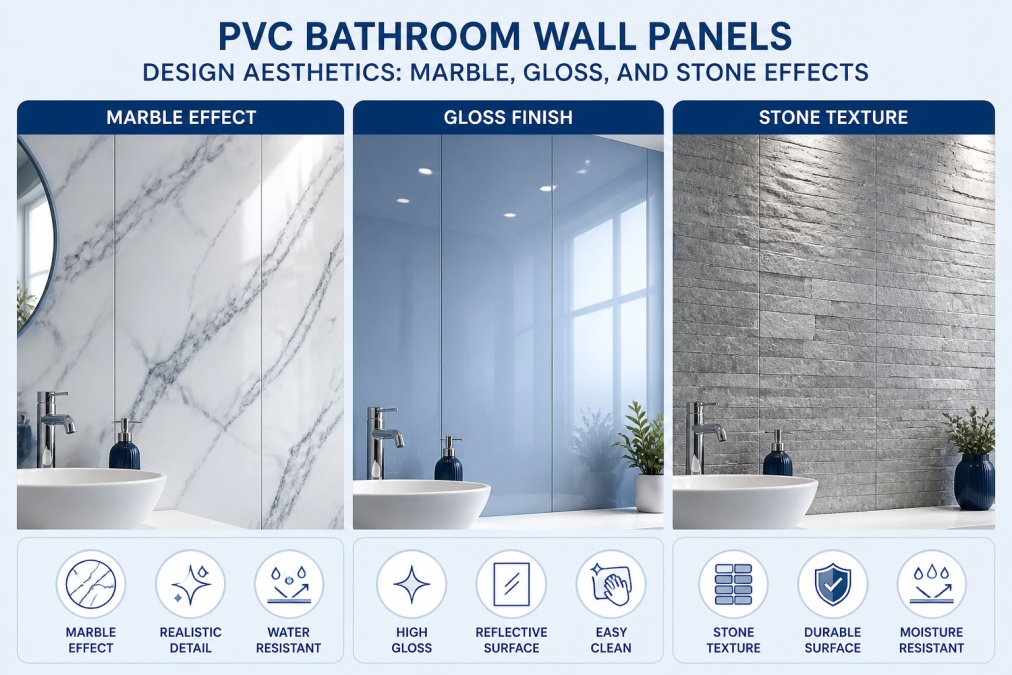
Modern PVC bathroom wall panels deliver the visual appeal of expensive finishes at a fraction of the cost, with designs ranging from marble effects to high-gloss surfaces and textured stone finishes.
Marble-effect panels create an elegant, spa-like atmosphere without the porous nature of real marble. The printed surface mimics natural veining and colour variation, with beige finishes suiting neutral schemes and grey or white effects complementing contemporary interiors.
Gloss finishes reflect light and make smaller bathrooms feel larger. The high-shine surface is hygienic and easy to clean with a damp cloth, working well in modern or industrial-style bathrooms.
Stone-effect panels like our Kerradeco range provide texture and visual interest without the weight of real stone, maintaining PVC's practical benefits: waterproofing, low maintenance, and straightforward installation.

Bathroom Wall Cladding Installation: Step-by-Step
Installing PVC bathroom wall cladding is achievable for competent DIY homeowners.
Step 1: Prepare the Substrate Remove loose paint, wallpaper, or damaged plaster. The surface must be clean, dry, and stable. Fill gaps with filler and sand smooth.
Step 2: Measure and Plan Your Layout Measure wall height and width. Mark a horizontal guideline using a spirit level as your reference for the first row.
Step 3: Apply Adhesive Use PVC-specific panel adhesive applied in vertical strips or a grid pattern to the panel back, not the wall. This gives working time to position panels correctly.
Step 4: Position and Press Position the first panel against your guideline and press firmly from top to bottom to eliminate air pockets. Use a spirit level to ensure it's plumb.
Step 5: Seal the Seams Once adhesive cures (24 hours), apply silicone sealant to all vertical seams.
Step 6: Trim and Finish Cut panels to length using a fine-toothed saw. Install corner trim, edge trim, and finishing strips per product instructions. These protect panel edges from impact damage.
Unlike traditional tiling, there's no grouting or wet mortar to manage.
PVC Panel Adhesive Guide and Substrate Preparation
The adhesive you select directly impacts installation longevity. Standard construction or tile adhesives often fail in bathrooms because they're not formulated for prolonged moisture. PVC-specific adhesives cure in humid conditions and maintain flexibility through temperature and humidity fluctuations.
Quality adhesives cure to a waterproof bond preventing moisture migration. Verify adhesive is rated for PVC wall panels and bathroom use. Coverage typically runs 4-6 square metres per litre.
Substrate preparation is critical. Smooth, stable surfaces allow full adhesive contact. If your bathroom has existing tiles, ensure they're fully adhered by tapping with a rubber mallet; hollow-sounding areas indicate loose tiles that must be re-adhered or removed.
For painted surfaces, lightly sand to improve adhesive grip. For glossy finishes, sanding is essential. Remove mould or mildew with fungicidal cleaner and allow complete drying.
Silicone sealant completes the waterproofing system. Unlike adhesive, it remains flexible after curing. Apply to all seams, pipe penetrations, and where panels meet ceiling or floor. Use a sealant gun and smooth with a wet finger to create a concave profile that sheds water.
Decorwall Elite Print- Arctic Grey- 2700mm x 250mm x 8mm →
| Task | Duration | Frequency |
|---|---|---|
| Substrate cleaning and prep | 2-4 hours | Once, before installation |
| Adhesive application | 1-2 hours | Per wall section |
| Panel positioning and pressing | 2-3 hours | Per wall section |
| Silicone sealing | 1-2 hours | After adhesive cures (24 hours) |
| Final curing before use | 24-48 hours | Once, after all sealing |
Maintenance of PVC Wall Panels and Long-Term Care
PVC bathroom wall panels require minimal maintenance. Unlike tiles with grout lines that accumulate mould, PVC panels stay hygienic with basic care.
Weekly cleaning involves a wipe-down with a damp cloth and mild detergent. Use a microfibre cloth for gloss finishes to prevent streaking, or a soft brush for textured finishes.
Prevent mould by running extraction fans during and 20-30 minutes after showers, and wiping panels dry after use. If mould appears, spray with dilute bleach (1:10) and wipe clean. The non-porous surface prevents mould penetration.
Thicker panels (9-10mm) withstand accidental bumps better than thinner options (5-8mm). If a panel cracks, remove it by carefully prying from adhesive, clean the substrate, and install a new panel with fresh adhesive.
Long-term durability depends on installation quality and sealed seams, which prevent water ingress. In well-ventilated bathrooms with good maintenance, quality PVC panels remain excellent for 10-15 years or longer. Our Dumawall+ High Gloss Mura panels include a 10-year manufacturer's warranty.
Dimensions, Thickness, and Sizing for Your Space
Selecting the right panel dimensions affects installation efficiency and aesthetics. Panel width ranges from 250mm to 900mm, with length varying by product. Understanding these options helps minimize waste and achieve proportional results.
Narrow panels (250-300mm) work well in small ensuites where wider panels create awkward seams. The Decorwall Elite Print in Arctic Grey measures 250mm wide and 2.7m long. Narrow panels offer flexibility to adjust seam placement around fixtures.
Medium-width panels (300-500mm) suit most standard bathrooms, balancing visual impact with practical installation. The Decorwall Elegance Mineral in Calcite at 300mm width offers stone-effect aesthetics.
Large panels (900mm) reduce seams and installation time. The Decorwall Maxi Panels in Beige Marble at 900mm width create a seamless appearance in larger bathrooms. Fewer seams mean fewer water ingress points, though large panels require careful substrate preparation.

Panel thickness ranges from 5mm to 10mm. Thinner panels (5-8mm) are lighter for DIY installation; thicker panels (9-10mm) offer superior impact resistance. The Kerradeco Stone Grey panels measure 9mm thick in packs of 8 boards covering 3.186 square metres.
Length varies by product. The Arctic Grey panels run 2.7m (full-height for most bathrooms), while the Kerradeco boards measure 1.35m, allowing you to create layered or tiered designs. Calculate your wall area in square metres to determine how many panels you'll need, accounting for waste and the specific dimensions of your chosen product.
Durability, Impact Resistance, and Warranty Coverage
Quality PVC bathroom wall panels are engineered to withstand the physical and environmental demands of bathroom use. Impact resistance, the ability to resist dents or cracks from dropped bottles or accidental contact, varies by panel thickness and construction.
Solid, heavy-duty PVC panels like the Dumawall+ High Gloss Mura offer superior impact resistance due to their construction from completely solid boards. This means they can absorb impact from bathroom items without denting or cracking. Thinner panels or those with cellular structures may dent under direct impact, though they won't crack easily.
Colour fastness is another durability consideration. UV-resistant panels like the Dumawall+ range maintain their colour and gloss over years of exposure to natural light and bathroom humidity. Non-UV-protected panels may gradually fade, particularly if your bathroom receives significant natural light.
Warranty coverage reflects manufacturer confidence in product longevity. The Decorwall Maxi Panels come with a 5-year guarantee, covering manufacturing defects and material failure. The Dumawall+ range offers a 10-year manufacturer's warranty, the longest coverage in our range.
Real-world durability also depends on installation quality. Panels installed with proper substrate preparation, adequate adhesive coverage, and sealed seams last significantly longer than those installed carelessly. In well-maintained bathrooms, quality panels easily surpass their warranty period.
The cost-to-durability ratio favours PVC panels over traditional tiling. If you're renovating a rental property or planning to sell within 10 years, the durability and low maintenance of PVC panels offer excellent value.
Choosing the right PVC bathroom wall panels means balancing aesthetics, durability, and installation complexity. Start with your space dimensions, choose a design that matches your interior vision, and invest in quality adhesive and silicone sealant to ensure your panels perform for years to come. Search our full range of PVC bathroom wall panels to find the perfect fit for your renovation project.
Frequently Asked Questions
Are PVC bathroom wall panels waterproof and mould-resistant?
Yes. PVC bathroom wall panels are 100% waterproof, making them suitable for wet rooms and shower enclosures. Unlike traditional tile grout, which can crack and harbour mould, PVC panels have no grouting to degrade. When installed with silicone sealant at seams and edges, they prevent water penetration behind the panels. The cellular PVC structure resists moisture absorption, and proper maintenance with warm water and a cloth keeps surfaces hygienic and mould-free.
How do you fit PVC wall panels to a bathroom?
Installation begins with preparing the substrate: ensure walls are clean, dry, and flat. Apply adhesive to the back of each panel using a notched spreader, then press firmly onto the wall. Use silicone sealant at joints and edges to seal seams. Many PVC panels feature tongue and groove design, allowing them to click together for a seamless finish. For small rooms, narrow panels (250mm or 300mm width) minimise seams and awkward gaps. Making DIY projects feasible for homeowners.
What are the downsides of PVC wall panels?
The main concerns are installation quality and long-term water management. Poor substrate preparation or inadequate sealant application can allow water to accumulate behind panels, causing mould. Additionally, while PVC panels cost less upfront than traditional tiling, thick panels (10mm) cost more than thinner options (5mm-8mm), and the aesthetic may not suit all design preferences.
How much does a PVC bathroom panel cost?
Costs vary by size and design. Single narrow panels (250mm-300mm width) start from £11 to £22 per panel. Larger panels (900mm width) cost around £54. Tile-effect packs like Dumawall+ cost from £3.95 per pack (8 tiles covering 1.95m²), while premium stone-textured options like Kerradeco cost £209 per pack covering 3.186m². Budget also depends on wall area: a small ensuite requires fewer panels than a full bathroom. Installation materials (adhesive, silicone sealant, trims) add to the total cost but ensure a professional, watertight finish.
Can PVC wall panels be cut to size for small spaces?
Yes. PVC panels can be cut to fit tight spaces, narrow walls, and awkward corners. Narrow panel widths (250mm and 300mm) are designed specifically for small ensuites and tight bathrooms, minimising visible seams and waste. Wider panels (900mm) suit larger walls but require more careful planning to avoid excessive cutting. Always measure your wall dimensions before ordering, and consider panel width options that reduce the number of seams needed, fewer seams mean fewer potential weak points for water penetration.

