
Is a Walk-in Shower Worth It for Resale?
Table of Contents
- Walk-in Shower vs Bath for Resale: What Buyers Actually Want
- Does a Walk-in Shower Add Resale Value?
- Bathroom Features Buyers Look For
- Should I Replace My Bath with a Walk-in Shower?
- Renovation Costs and Break-Even Analysis
- Installation Quality and Water Management Risks
- Making Your Decision: A Home-Specific Framework
- Frequently Asked Questions
Last Updated: October 18, 2026
Walk-in Shower vs Bath for Resale: What Buyers Actually Want
When you're considering whether a walk-in shower is worth it for resale, you're really asking two questions: will it appeal to the next owner, and will it recover its cost?
A walk-in shower adds convenience and modern appeal, but removing your only bathtub can turn buyers away.
At Wetwall Wonders, we offer solutions for bathroom renovations that add real value. Whether you're upgrading a shower or replacing a tub, start by understanding the trade-offs.
Does a Walk-in Shower Add Resale Value?
A walk-in shower alone doesn't guarantee a resale boost. What matters is context: how many bathrooms you have, their condition, and local buyer expectations.
Many homeowners assume modern = valuable, but buyers care more about functionality and options. A beautiful walk-in shower in a one-bathroom home can deter families and older buyers who need a bathtub.
The resale impact depends on three factors:
Bathroom count matters most. With two or more bathrooms, converting one tub to a walk-in shower is often smart: buyers get options. In a one-bathroom home, removing the tub is risky, eliminating a feature families and older buyers consider essential.
Local buyer preferences vary. Urban professionals and young couples often prefer walk-in showers, while families with young children, older buyers, and multi-generational households typically want at least one bathtub.
Renovation quality affects perceived value. A poorly installed enclosure or cheap wall panels look like cost-cutting, not an upgrade. Professional installation with quality materials, like the durable shower trays and wall panels from Wetwall Wonders, signals proper investment.
Bathroom Features Buyers Look For
Buyers think about usability, style, and whether the bathroom meets their household's needs.
Modern finishes and clean design appeal to most buyers. Contemporary tile effects, sleek wall panels, and minimalist layouts read as "updated" and "well-maintained," while dated décor and worn fixtures make buyers worry about hidden problems. Modern wall solutions like Dumawall tile effects or Linerio slatwall create visual impact without excessive cost.
Storage and organisation signal quality of life. A shower with nowhere to store bottles and towels feels cramped, while a bathtub with good surround space and shelving feels luxurious.
Lighting and ventilation are non-negotiable. A dark, damp bathroom raises red flags about mould and moisture damage; bright, well-ventilated bathrooms signal proper maintenance.
Should I Replace My Bath with a Walk-in Shower?
The decision to replace a bathtub with a walk-in shower should depend on your home's situation, not fashion.
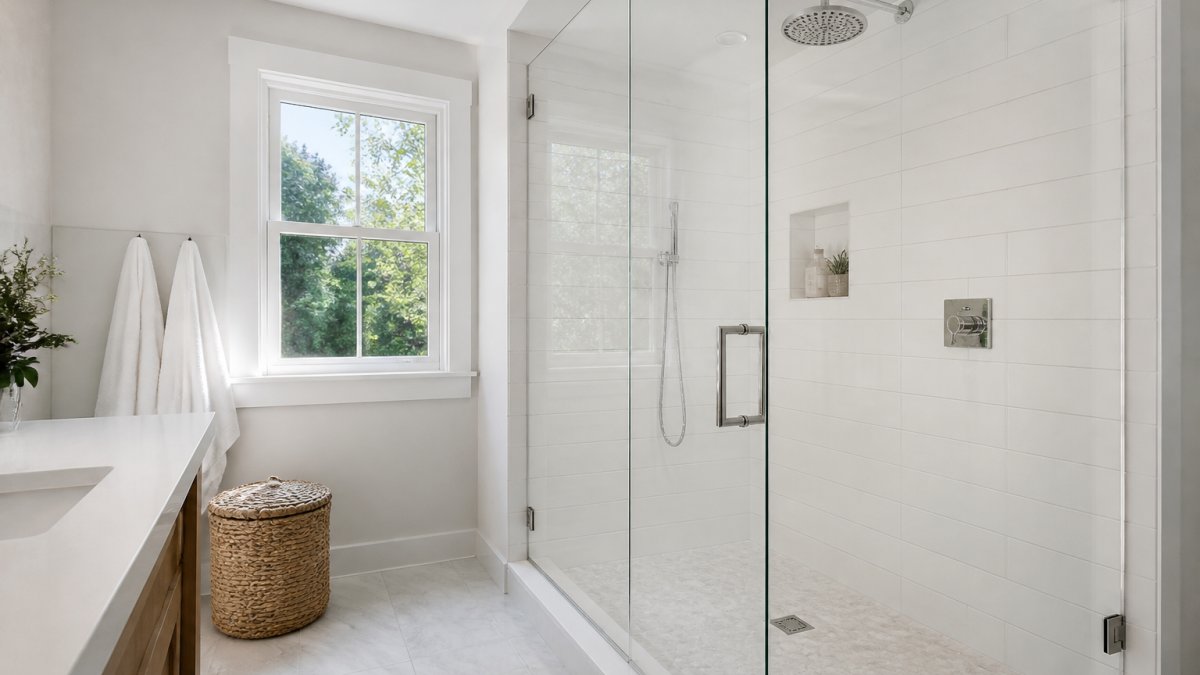
Family homes and young children
If your home is marketed toward families, keeping at least one bathtub is essential. Young children need baths for safety and comfort, and parents will skip properties with only showers.
With multiple bathrooms, upgrade the master with a walk-in shower and keep a tub in a secondary or family bathroom, giving modern appeal while retaining family functionality.
Accessibility and aging in place
Walk-in showers with no step or lip are genuinely easier for older people and anyone with mobility challenges, adding real value for a specific buyer segment.
Accessibility goes beyond removing the tub: grab bars, non-slip flooring, adequate space, and easy-to-reach controls all matter. A step-in shower with poor grab bar placement isn't accessible, it's a liability.
Keeping at least one bathtub
The safest approach for most homes is to keep at least one bathtub. With two bathrooms, upgrade one with a walk-in shower and keep the tub in the other; with only one, the risk of removing the tub outweighs the benefit.
Even with three or more bathrooms, many estate agents recommend keeping one tub: it appeals to multiple buyer types and costs nothing to maintain.
Renovation Costs and Break-Even Analysis
A walk-in shower conversion involves costs for labour and materials, depending on whether you're replacing plumbing, adding new wall panels, or upgrading the entire layout.
Cost breakdown for a typical conversion:
Volente Square Shower Tray White →
| Component | Typical Cost |
|---|---|
| Shower tray (e.g., Vantage or Corsair) | £158-£174 |
| Wall panels and surround | £400-£1,200 |
| Shower enclosure and fixtures | £600-£1,500 |
| Labour and installation | £1,200-£2,500 |
| Plumbing adjustments | £300-£800 |
| Total estimate | £2,660-£6,174 |
The resale value gain depends on your local market and home type.

Talk to local estate agents before committing: they can tell you whether similar homes with walk-in showers sell faster or at higher prices in your area.
Installation Quality and Water Management Risks
A walk-in shower is only an asset if it is watertight, drains properly, and ventilates effectively. Poor installation is one of the most common reasons buyers discount a recently renovated bathroom.
Waterproofing: the hidden risk that undermines resale
Waterproofing is the single most important factor in a shower installation. In a walk-in shower, water hits walls and floors with no tray upstand to contain it; if the substrate isn't protected, moisture penetrates over time, causing mould, rot, and structural damage.
Best practice is a waterproof tanking system or moisture-resistant backer board behind the shower area, with all joints and penetrations sealed. Wall panels are a practical alternative to tiling, but must be fitted with the manufacturer's recommended adhesives and sealants; cheaper panels fitted without proper backing commonly cause hidden water damage.
Buyers and surveyors look for signs of poor waterproofing: silicone smeared over failed seals, soft or discoloured plaster, musty smells, and mould in corners. Any of these can trigger further investigation and price negotiations.
Drainage and falls: why pooling water is a red flag
A walk-in shower tray or wet room floor must have a sufficient fall to the drain so water doesn't pool. Standing water accelerates mould growth and signals an installation that will fail.
Improper falls often result from a tray installed out of level or a wet room floor laid without adequate slope. Correcting this usually means removing the shower, which is expensive. If you're renovating, insist the installer checks the fall with a spirit level before the tray or tiles are fixed.
Ventilation: controlling moisture in a sealed room
A walk-in shower produces significant moisture. Without adequate ventilation, condensation forms on walls, ceilings, and windows, leading to mould and peeling paint. Building regulations require adequate ventilation, either through a window or mechanical extractor fan sized to the room and ducted outside, not into the loft or a wall cavity.
Buyers notice condensation stains, mould around window reveals, and peeling paint. These visible signals of a moisture problem undermine confidence in the whole property. If your bathroom has no window, a properly installed and ducted extractor fan is essential.
Workmanship and compliance: what buyers and surveyors check
Poor workmanship shows in misaligned panels, uneven silicone lines, poorly fitted shower screens, and gaps around fittings. These details suggest a rushed job and raise questions about what's hidden behind the surfaces. Buyers often read visible defects as a sign of deeper problems.
Where work involves alterations to drainage or electrical installations, building regulations may apply. Electrical work in a bathroom, including shower pumps and extractor fans, must comply with Part P of the Building Regulations in England and Wales, and drainage alterations may require notification to the local authority.
Making Your Decision: A Home-Specific Framework
Most advice on walk-in showers for resale treats every home the same. In reality, the right decision depends almost entirely on how many bathrooms you have and how they're used. Use this framework to reach a clear recommendation for your property.
Step 1: Count your bathrooms and identify the main family bathroom
Start by mapping your home's bathroom provision. The critical distinction is between the main family bathroom (usually nearest the bedrooms and used for bathing children) and secondary bathrooms or en-suites.
- One bathroom only: This is the highest-risk scenario. Removing the only bathtub eliminates a feature that families with young children and some older buyers consider essential. Most estate agents will advise keeping the tub unless the property is explicitly targeted at buyers who cannot use a bath.
- Two bathrooms (one with a tub, one with a shower or en-suite): You have flexibility. Converting the secondary bathroom or en-suite to a walk-in shower is usually low-risk because the main family bathroom retains a tub. Converting the main family bathroom is riskier if it leaves the home without any bath.
- Three or more bathrooms: You can generally convert one or more tubs to walk-in showers without harming resale, provided at least one bathtub remains. The exception is if the home is in a market where family buyers expect a bath in the main bathroom.
Step 2: Match the conversion to your likely buyer
Buyer preferences are not universal. Use the table below as a starting point, then verify with local estate agents.
| Buyer type | Likely preference | Implication for your conversion |
|---|---|---|
| Families with young children | Bathtub essential in main bathroom | Keep at least one tub; convert only secondary bathrooms |
| Older buyers or those with mobility concerns | Walk-in shower with low threshold valued | Ensure accessibility features are properly installed, not just a removed tub |
| Young professionals and couples | Walk-in shower often preferred for style and convenience | Conversion can add appeal, especially in urban or premium locations |
| Multi-generational households | May need both bath and shower options | Retain at least one tub and one walk-in shower if possible |
Step 3: Assess the condition and quality of the existing bathroom
A walk-in shower conversion is not automatically an upgrade. If your bathroom is dated, worn, or poorly maintained, a full renovation including a walk-in shower can add significant value. If the existing tub and surround are in good condition, the conversion cost may not be recovered. Buyers discount tired bathrooms, but they also discount poorly executed conversions.
Step 4: Consider your timeline and break-even point
If you're selling within 12 months, the renovation must appeal to buyers quickly and recover its cost in the sale price. If you plan to stay five years or more, the investment has more time to pay back through enjoyment and gradual market appreciation. Use the cost figures above to estimate your break-even and discuss likely recovery with local agents.
Step 5: Get local evidence before you commit
General advice cannot tell you what buyers in your area will pay for. Ask at least two local estate agents whether homes with walk-in showers sell faster or at higher prices than comparable homes with baths, and request recent comparable sales evidence. Their view on your specific property and buyer profile is more valuable than any national trend.
Frequently Asked Questions
Does a walk-in shower add value to a home?
A walk-in shower can increase appeal to specific buyer groups, particularly young professionals and older buyers seeking accessibility. However, resale value depends heavily on local market preferences, the number of existing bathrooms, and renovation quality. Removing the only bathtub in a family home may reduce buyer appeal. The return on investment varies by location and property type; not all renovations recover their full cost at resale.
Is a bath or walk-in shower better for resale?
Buyer preference depends on household type. Families with young children typically prefer at least one bathtub for practicality. Older buyers and accessibility-conscious purchasers favour walk-in showers for ease of entry and safety. The strongest resale strategy is offering both: keeping the primary bathtub whilst adding a walk-in shower in a secondary bathroom, or choosing properties with multiple bathrooms before deciding on conversions.
Should you remove the only bath in your home?
Removing the sole bathtub significantly narrows your buyer pool and may reduce resale appeal in family-oriented markets. If your home has only one bathroom, converting a tub to a shower is generally not advisable. For homes with two or more bathrooms, removing a bathtub from a secondary space is lower-risk. Always assess local buyer preferences and your property's target demographic before proceeding.
What makes a walk-in shower renovation risky?
Poor waterproofing behind wall panels or inadequate silicone application can allow water ingress, leading to mould, rot, and structural damage. Permits may be required for structural changes. Cheap materials or DIY mistakes can result in costly repairs within years. Quality installation with proper drainage, professional-grade adhesives and silicones, and correct ventilation are essential. Budget for professional assessment if you're uncertain about existing plumbing or structural integrity.

