
How to Clean Shower Wall Panels Without Damaging Finish
Table of Contents
- Why Proper Cleaning Matters for Shower Wall Panels
- What You'll Need: Approved Cleaners and Tools
- Step-by-Step: Cleaning Your Shower Wall Panels
- How to Remove Soap Scum from Shower Panels
- Cleaning Products to Avoid on Shower Panels
- Establishing a Shower Wall Panel Cleaning Routine
- Protecting Your Panel Finish Long-Term
- Frequently Asked Questions
Last Updated: October 17, 2026
Why Proper Cleaning Matters for Shower Wall Panels
Clean shower wall panels transform your bathroom. They're durable, stylish, and easy to maintain, but only if you clean them correctly. The wrong approach scratches the finish, dulls the surface, or traps moisture behind the panels. We help homeowners and installers understand how to clean shower wall panels without damaging finish, so your investment stays beautiful for years.
Proper cleaning protects your panel finish and prevents costly damage. Scratches catch light and make panels look older. Harsh chemicals can degrade the protective coating. Water trapped behind panels leads to mildew and mold. A few simple steps prevent all of this.
The good news: cleaning shower wall panels is straightforward. You don't need expensive products or specialist knowledge. You need the right approach and the right tools.
What You'll Need: Approved Cleaners and Tools
Before you start, gather the right supplies. Using the wrong products is where most people go wrong.
Safe cleaning products for shower panels:
- Warm water (your first line of defence)
- Mild soap or gentle liquid cleaner
- Non-abrasive, non-gritty cleaning solutions
- Specialist panel cleaners designed for bathroom surfaces
Tools you'll need:
- Soft microfibre cloth or soft sponge
- Soft-bristled brush for stubborn spots
- Clean, dry towel for drying
- Spray bottle for applying water
What to avoid entirely:
- Abrasive or gritty cleaners
- Harsh chemicals like bleach
- Scouring pads or rough cloths
- Steel wool or wire brushes
- Acidic cleaners that damage protective coatings
The products you choose make the difference between a clean panel and a damaged one. Gentle products clean effectively without harming the finish.
Step-by-Step: Cleaning Your Shower Wall Panels
Follow this process to clean your panels safely and effectively.
Step 1: Prepare the Area and Gather Supplies
Clear the shower of bottles, soap dishes, and other items. You need access to the entire panel surface.
Check your supplies are ready:
- Soft cloth within reach
- Mild soap mixed with warm water in a spray bottle
- Dry towel nearby
- Optional: specialist panel cleaner if you have stubborn deposits
This takes two minutes. It prevents you from rushing or damaging panels while searching for tools.
Step 2: Apply Warm Water and Mild Soap
Spray the entire panel with warm water mixed with mild soap. Let it sit for 30 seconds to loosen dirt and soap scum.
Warm water softens deposits without damaging the finish. Mild soap (like washing-up liquid diluted in water) lifts dirt without harsh chemicals. This combination works for most everyday cleaning.
Don't oversoak the panel. You want a damp surface, not water running down the walls.
Step 3: Wipe with a Soft Cloth
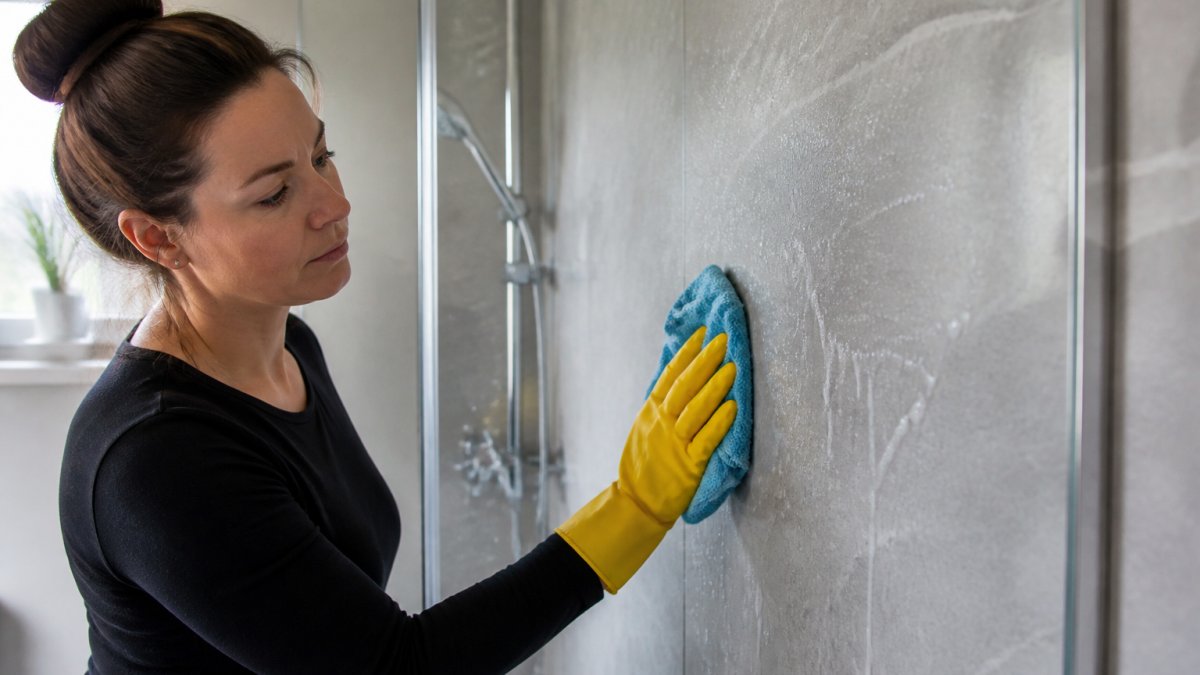
Use a soft microfibre cloth or soft sponge to wipe the panel gently. Work from top to bottom in smooth, even strokes.
Don't scrub hard. Light pressure is enough. The soap and warm water do the work, your cloth just removes the loosened dirt.
Pay attention to corners and edges where soap scum builds up. A soft-bristled brush works here if you need extra help, but keep pressure gentle.
Step 4: Rinse Thoroughly
Spray the panel with clean warm water to remove all soap residue. Soap left behind dulls the finish and attracts dirt.
Wipe the panel dry with a clean towel. Water spots form if you leave panels wet. Drying prevents mineral deposits from hard water.
This final step protects your panel finish and keeps the surface looking fresh.
How to Remove Soap Scum from Shower Panels
Soap scum builds up over time, especially in hard water areas. It's stubborn but removable without damaging the panel.
For light soap scum:
Warm water and mild soap often shift it. Let the solution sit for two minutes before wiping. The extra time softens the deposit.
For heavy soap scum:
Mix a specialist panel cleaner with warm water, following the product instructions. Apply it to the affected area and let it sit for 3-5 minutes. Wipe gently with a soft cloth.
Never use vinegar or acidic cleaners on shower panels. These damage the protective coating and can degrade the panel material itself. The finish won't recover.
For mildew or light mould:
A mixture of warm water and a small amount of mild detergent removes early mildew. If mildew persists, use a specialist anti-mildew cleaner designed for bathroom panels, not bleach.
Bleach damages panel finishes and can weaken adhesive bonds. It's too harsh for this job.
The key is patience. Let your cleaner work for a few minutes instead of scrubbing hard. Gentle effort beats aggressive force every time.
Cleaning Products to Avoid on Shower Panels
Most finish damage comes from a small number of product categories. Knowing why each one is risky helps you judge unfamiliar bottles on the shelf, rather than relying on a brand list.
Abrasive and gritty cleaners
Powder cleansers, cream cleansers with suspended grit, and "heavy-duty" bathroom pastes work by scouring. On a gloss or acrylic panel they leave a network of fine scratches that catch light and hold dirt.
Scouring pads, steel wool and wire brushes
These are the fastest way to dull a panel. A green scouring pad is abrasive enough to remove the protective top layer on laminate and acrylic in a few passes.
Bleach and bleach-based sprays
Bleach is alkaline and oxidising.
Acidic cleaners, including vinegar and lemon juice
Acids attack the protective coating on many panels and can etch the surface. They are often recommended online for limescale, but on shower wall panels the risk outweighs the benefit.
Solvent and heavy-duty degreasers
Paint thinners, white spirit, acetone-based nail polish remover and industrial degreasers can soften or cloud panel surfaces and damage seals. Keep them away from panels, and wipe up any overspray immediately.
Caustic and drain cleaners
These are far too aggressive for panel faces and seals. If a drain cleaner splashes onto a panel, rinse it off at once with plenty of clean water.
High-pressure washers
A pressure washer can force water behind panels and lift seals, and the jet can mark softer finishes. A shower head or spray bottle is sufficient.
Rough cloths and old towels
Old towels with hardened fibres, and cloths with embedded grit, can scratch. Keep a dedicated soft microfibre cloth for panels and wash it regularly without fabric softener, which can leave a film.
Establishing a Shower Wall Panel Cleaning Routine
A routine only works if it matches your panel material and your water. The schedule below is a sensible starting point; adjust it to the panel maker's care instructions and to how quickly you see deposits form.
After every shower (about 30 seconds)
Squeegee or wipe down the panels with a soft microfibre cloth. This removes most of the water before minerals can dry on the surface and is the single most effective habit for keeping panels looking new.
Weekly (about 5 minutes)
Spray the panels with warm water and a mild soap solution, wipe top to bottom with a soft cloth, rinse with clean warm water and dry with a clean towel. Pay attention to corners, edges and the base of the panels where soap and shampoo collect.
Monthly (about 15 minutes)
Repeat the weekly clean, then use a specialist panel cleaner on any stubborn spots, following the label dwell time. Check the silicone seals and edges for discoloration or lifting, and check behind the panels where accessible for signs of trapped moisture.
Quarterly
Inspect the full panel surface under good light for scratches, dull patches or discoloration. Distinguish removable residue from finish damage: residue usually wipes away or lightens with a specialist cleaner, while a scratch or dull patch remains after cleaning and may catch light at an angle.
Adjusting for material and finish
Laminate and PVC panels generally tolerate the routine above. Acrylic panels are softer and scratch more easily, so keep to soft cloths and avoid any grit.
Prevention habits that reduce cleaning
- Keep a squeegee in the shower and use it after every use.
- Run the extractor fan during and after showers.
- Don't leave wet towels or bottles pressed against panels.
- Wipe up shampoo, conditioner and cleaning products promptly; some leave marks if left to dry.
- Use quality silicones and adhesives at installation to keep water out from behind panels.
Protecting Your Panel Finish Long-Term
Prevention is easier than repair. These habits protect your panel finish for years.
After every shower:
- Wipe down panels with a dry cloth or squeegee
- This prevents water spots and mineral deposits
- Takes 30 seconds
Improve ventilation:
- Use an extractor fan during and after showers
- Open a window if possible
- This reduces moisture that causes mildew
Address spills immediately:
- Wipe up any cleaning products or shampoo that touches panels
- Some products damage finishes if left to dry
- Quick action prevents permanent marks
Use the right installation materials:
- Quality silicones and adhesives keep water out from behind panels
- Poor installation leads to water damage and mould
- When you're ready to install new panels, Wetwall Wonders supplies professional-grade installation materials designed to protect your investment
Avoid unnecessary moisture:
- Squeegee water off panels after use
- Don't let wet towels sit against panels
- Ensure proper ventilation in your bathroom
These simple habits add years to your panel finish. Your panels stay looking new when you protect them from damage before it happens.
Keeping your shower wall panels clean and protected is straightforward when you use the right approach. Warm water, mild soap, and a soft cloth handle most cleaning jobs. Avoiding harsh chemicals and abrasive tools prevents the damage that makes panels look old. At Wetwall Wonders, we understand that your panels are an investment in your home. We supply high-quality panels in sizes like 250mm, 300mm, 500mm, and 900mm, along with specialist installation materials including silicones and adhesives that keep water out and protect your finish for years. Follow these cleaning steps, establish a regular routine, and your panels will stay beautiful and durable.
Frequently Asked Questions
What is the safest way to clean shower wall panels?
The safest method combines warm water with mild soap and a soft cloth. Dampen the cloth, apply gentle pressure in circular motions, then rinse thoroughly with clean water. Avoid abrasive sponges, gritty cleaners, and harsh chemicals like bleach. This approach protects the panel finish whilst removing daily soap residue and water marks without risk of scratching or dulling the surface.
Can you use vinegar to clean shower wall panels?
Vinegar is too acidic for most shower wall panel finishes and can damage or dull the surface over time. Stick with mild soap and warm water instead, which is gentler and equally effective for routine cleaning. For stubborn soap scum, a non-abrasive liquid cleaner specifically formulated for bathroom surfaces is safer than vinegar or other household acids.
How often should you clean shower wall panels?
Clean your shower wall panels weekly with mild soap and warm water to prevent soap scum and water mark buildup. A quick wipe-down after each use helps reduce deposits. In areas with hard water, more frequent cleaning may be needed. Regular light cleaning prevents the need for harsh scrubbing later and keeps your panel finish looking new longer.
What should you avoid when cleaning shower wall panels?
Avoid abrasive cleaners, gritty scouring powders, bleach, and harsh chemicals, these scratch and dull the finish. Don't use rough sponges, wire brushes, or scouring pads. Skip vinegar, lemon juice, and other acidic solutions. Never apply high-pressure water jets. Stick to soft cloths, mild soap, and gentle non-scratch liquid cleaners formulated for bathroom surfaces to keep your panels protected.

