
How to Clean Bathroom Wall Panels Properly
Table of Contents
- What You'll Need to Clean Bathroom Wall Panels
- Best Cleaning Products for PVC Panels
- Step-by-Step Cleaning Process for Wall Panels
- How to Remove Limescale from Shower Panels
- Preventing Mould on Bathroom Wall Panels
- What to Avoid When Cleaning Wall Panels
- Repairing Surface Scratches and Damage
- Cleaning Textured vs High-Gloss Panels
- Frequently Asked Questions
Last Updated: September 3, 2026
What You'll Need to Clean Bathroom Wall Panels
A microfibre cloth is your most important tool, it picks up soap residue and water spots without leaving lint. Keep at least two on rotation. A soft-bristled brush or old toothbrush works well for seams and joints where mould hides; hard-bristled brushes will scratch the surface. For rinsing, use a spray bottle with clean water or a squeegee to remove excess moisture and prevent water spots and limescale buildup. Keep a dry towel nearby to wipe down panels after rinsing, preventing mineral deposits.
If you're installing new panels or resealing joints, Decorwall Panel Adhesive Pro bonds securely within one hour and cures fully in 24 hours, creating a waterproof seal. For sealing joints and preventing mould, GP200 General Purpose Silicone Sealant includes fungicide to resist mould growth and remains flexible as the bathroom expands and contracts.


Best Cleaning Products for PVC Panels
Mild detergent mixed with warm water is your safest bet for routine cleaning. A few drops of washing-up liquid in a bucket of warm water removes soap scum, toothpaste splatter, and everyday grime without stripping the finish.
Bleach-free products are essential. Bleach degrades PVC over time and can cause discolouration or brittleness (peer-reviewed research). The same applies to abrasive cleaners and scouring powders, which scratch the surface and create tiny cracks where water can seep in.
For limescale buildup, a solution of equal parts white vinegar and water works effectively (the NIH). Spray it on the affected area, let it sit for 10-15 minutes, then wipe with a soft cloth. The acidity dissolves mineral deposits without requiring aggressive scrubbing.
For mould prevention, GP200 General Purpose Silicone Sealant is specifically formulated with fungicide to resist mould growth in shower joints and seams where moisture accumulates.
Tea tree oil mixed with water creates a natural antimicrobial solution. A few drops in a spray bottle of water gives you a mould-resistant cleaner without chemical smell.
Never use acetone, turpentine, or any solvent-based products, these dissolve the PVC itself. The same goes for high-pressure washers, which force water behind the panels.
Step-by-Step Cleaning Process for Wall Panels
A proper cleaning routine takes about 15-20 minutes and prevents the buildup that leads to stubborn stains and mould.
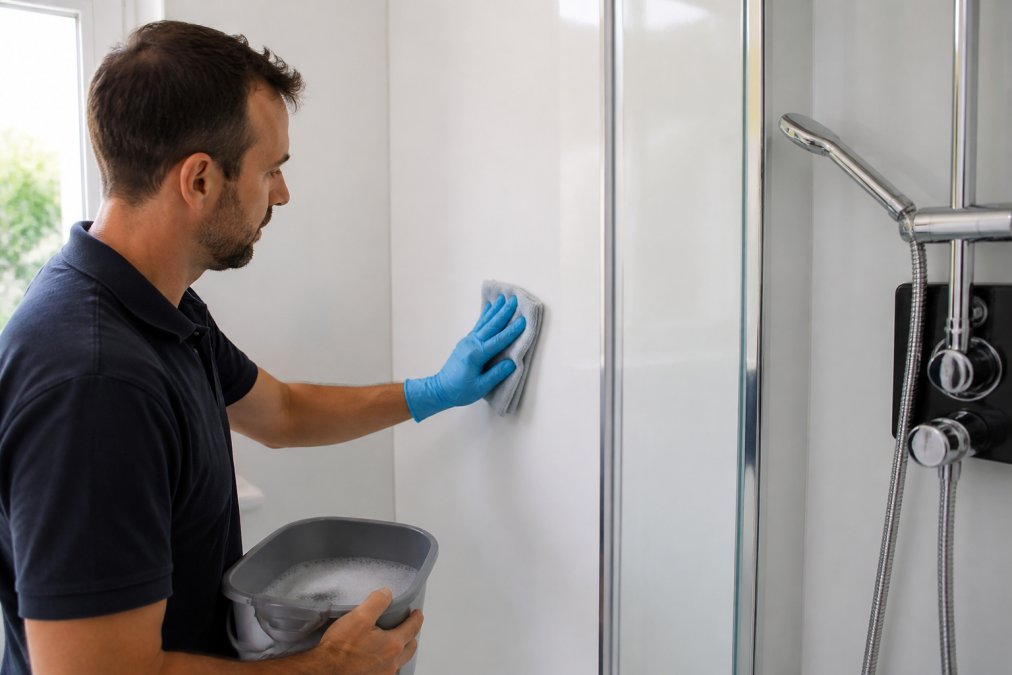
Step 1: Remove loose debris. Use a soft brush or your hand to wipe away dust, loose soap residue, or hair before adding water.
Step 2: Prepare your cleaning solution. Mix warm water with a few drops of mild washing-up liquid in a spray bottle or bucket. Warm water dissolves soap residue more effectively than cold water.
Step 3: Apply the solution. Spray or wipe the solution onto the panels, working from top to bottom so drips carry dirty water downward. Let it sit for 2-3 minutes on stubborn spots.
Step 4: Wipe with a microfibre cloth. Use gentle circular motions rather than hard scrubbing. Pay special attention to seams and corners where soap scum accumulates.
Step 5: Rinse thoroughly. Use a clean, damp cloth or spray bottle filled with plain water to remove all soap residue.
Step 6: Dry immediately. Wipe panels with a dry towel or chamois cloth to prevent water spots and mineral deposits.
Daily Maintenance
After each shower, simply squeegee the panels or wipe them with a dry cloth. This removes 80% of the moisture that leads to mould and limescale buildup. Wipe off soap scum and toothpaste splatter immediately, fresh residue comes off easily.
Keep your bathroom ventilated. Run the extractor fan for at least 20 minutes after showers to remove excess moisture from the air (the CDC).
Deep Cleaning
Deep cleaning should happen monthly or quarterly. Mix equal parts white vinegar and warm water in a spray bottle, spray panels generously, and let sit for 15-20 minutes. Wipe with a soft cloth using gentle circular motions. For seams, use an old toothbrush to work the solution into joints where mould and limescale hide. Rinse thoroughly and dry completely.
For mould in seams, a solution of tea tree oil and water is gentler than bleach-based products. Mix 10-15 drops of tea tree oil in a spray bottle of water, spray affected areas, and let sit for 10 minutes before wiping.
How to Remove Limescale from Shower Panels
Limescale appears as white, chalky deposits and is purely cosmetic but unsightly. The white vinegar method works best: mix equal parts white vinegar and warm water, spray affected areas, and let sit for 15-20 minutes. The acetic acid dissolves calcium deposits without harsh chemicals. Wipe with a soft cloth, rinse, and dry.
For heavy buildup, repeat the process two or three times rather than trying to remove it all at once. Prevention is easier than removal, squeegee or wipe panels dry after each shower to prevent water from sitting long enough for minerals to crystallise.
Hard water deposits on high-gloss panels can sometimes be buffed out with a soft, dry cloth. This works best for light deposits caught early.
Preventing Mould on Bathroom Wall Panels
Run your extractor fan during and for at least 20 minutes after showers to remove moisture from the air before it settles on panels and seams.
Keep seams and joints sealed properly. If your sealant is cracked or pulling away, mould will develop behind panels. Inspect seams regularly and reseal if needed using GP200 General Purpose Silicone Sealant, which includes fungicide to actively resist mould growth.
Wipe panels dry after showers, mould needs moisture to grow. Clean seams regularly with a soft brush and mild detergent solution. Spray a solution of tea tree oil and water on seams and corners once a week to inhibit mould growth.
Avoid storing damp items against panels. Towels, bath mats, or sponges pressed against the wall trap moisture and create pockets where mould thrives.
What to Avoid When Cleaning Wall Panels
Never use bleach or bleach-based cleaners, bleach degrades PVC and causes discolouration, brittleness, and cracking. Avoid abrasive scrubbing pads, scouring powders, and steel wool, which scratch the surface and create micro-cracks where water seeps in.
Don't use high-pressure washers or steam cleaners, which drive water behind panels and into seams. Acetone, turpentine, and solvent-based cleaners dissolve PVC and should never be used. Avoid furniture polish, wax, or oil-based products, which leave residue that attracts dirt.
Don't leave cleaning solutions on panels for extended periods. Always rinse thoroughly within a few minutes of application.
Don't install panels without proper waterproofing. Use Decorwall Panel Adhesive Pro and quality silicone sealant to create a watertight barrier. Never ignore signs of water damage, if panels bubble, warp, or pull away from the wall, water has penetrated the adhesive bond and requires repair.
Repairing Surface Scratches and Damage
Light surface scratches can sometimes be buffed out with a soft cloth and a tiny amount of furniture polish designed for plastic. Test on an inconspicuous area first.
For deeper scratches, a plastic repair pen or touch-up marker designed for PVC can help. For small chips or cracks, a two-part epoxy putty designed for plastic can fill the gap. Mix according to instructions, press into the damaged area, and smooth with a wet finger before it sets.
Large cracks or significant damage means the panel should be replaced. Prevention is the best approach, avoid hitting panels with hard objects and don't lean or apply pressure unnecessarily.
Cleaning Textured vs High-Gloss Panels
High-gloss panels are smooth and reflective, making them easier to clean but more prone to showing water spots. Wipe them dry immediately after cleaning using a microfibre cloth. Use circular motions to distribute cleaning solution evenly and prevent streaking.
Textured panels have grooves that trap dirt and soap residue. Cleaning these requires a soft brush to work solution into the texture without damaging it. Allow cleaning solution to sit slightly longer before wiping. Drying textured panels takes longer because water collects in the grooves, use a towel to remove excess moisture, then allow air to circulate.
Both types benefit from the same gentle cleaning approach. The difference is mainly in drying technique and how you work solution into the surface.
Keeping bathroom wall panels clean doesn't require specialist knowledge or expensive products. A consistent routine using mild detergent, warm water, and a microfibre cloth handles 95% of maintenance.
When planning a bathroom renovation or installing new panels, start with quality installation materials. Decorwall Panel Adhesive Pro creates a secure, waterproof bond that prevents water damage. Pair this with GP200 General Purpose Silicone Sealant to seal joints and actively resist mould growth. At Wetwall Wonders, we supply both products alongside a full range of PVC panels in various sizes and finishes. A proper installation foundation means your cleaning routine stays simple and your panels look new for years.
Frequently Asked Questions
What is the best cleaner for PVC wall panels?
Mild detergent mixed with warm water is the safest choice for PVC wall panels. Use a soft, non-abrasive cloth or microfibre cloth to apply the solution. For stubborn stains, a specialised bathroom panel cleaner works well, but always check the manufacturer's instructions first. Avoid bleach-based products and abrasive sponges, as these can damage the waterproof finish and cause surface discolouration over time.
How often should I clean bathroom wall panels to prevent mould?
Daily dry wiping with a soft cloth after showering helps prevent mould growth significantly. A full wash with soapy water should be done weekly. If you notice mould starting to develop in panel joints, increase cleaning frequency to twice weekly and ensure proper ventilation. Mould thrives in damp environments, so reducing moisture is as important as cleaning itself.
Can I use bleach on bathroom wall panels?
No, bleach should be avoided on bathroom wall panels. Bleach can corrode the waterproof finish, cause yellowing or discolouration, and potentially damage the panel surface permanently. Instead, use bleach-free cleaning solutions or natural alternatives like white vinegar for stubborn stains. Always test any cleaning product on a hidden area first to ensure it won't harm your panels.
How do I remove limescale from shower wall panels?
White vinegar is highly effective for limescale removal. Spray undiluted white vinegar onto affected areas and allow it to soak for 15-20 minutes, then wipe with a damp cloth. For heavier limescale buildup, use a soft-bristled brush in gentle circular motions. Alternatively, a commercial limescale remover designed for bathrooms works well. Rinse thoroughly with clean water and dry with a soft cloth to prevent water spots and residue.
This article was written using GrandRanker

