

Modern Bathroom Wall Panel Design Ideas
Table of Contents
- Why Modern Bathroom Wall Panels Transform Your Space
- Best Waterproof Wall Panels for Showers: Materials and Performance
- Pros and Cons of Bathroom Wall Panels vs Traditional Tiling
- Design Styles: Stone, Marble, and Wood-Effect Panels
- Modern Slat Wall Bathroom Ideas and Textured Finishes
- Installation, Maintenance, and Longevity
- Environmental Impact and Sustainable Choices
- Repairing Damaged Panels and Extending Lifespan
Why Modern Bathroom Wall Panels Transform Your Space
Modern bathroom wall panels have fundamentally changed how homeowners approach bathroom renovation. Installing grout-free cladding transforms a tired bathroom into a contemporary space in days, eliminating the maintenance nightmare of traditional tiling, no more mould creeping into joints or crumbling grout lines, just seamless, hygienic surfaces that look sharp for years.
Wall panels offer genuine practical advantages: they're easier to install than tiles, fully waterproof without the weak points tiles create, and come in finishes that tiles can't replicate. Whether you're working with a tight ensuite or a sprawling wet room, modern panels adapt to your space. Below, we'll show you exactly how to select, install, and maintain panels that deliver both style and durability.
Best Waterproof Wall Panels for Showers: Materials and Performance
The material you choose determines everything: how long your panels last, how they look five years from now, and whether you're genuinely getting a waterproof solution or just a water-resistant one.
PVC Panels: Durability and Moisture Resistance
PVC panels are the workhorse of modern bathroom cladding. These panels are 100% waterproof, meaning water doesn't penetrate the material itself, it runs off. This is fundamentally different from traditional tiles, where water can seep through grout joints and into the substrate behind.
PVC panels typically measure 8mm to 10mm thick. The thicker the panel, the more impact-resistant it becomes. Installation is straightforward: panels either use tongue and groove systems that lock together, or they're adhered directly to the wall using specialist adhesive. Once installed, they require only a warm cloth to clean.
The moisture-resistant properties of PVC make it ideal for shower enclosures and wet rooms. Unlike laminate alternatives, PVC won't delaminate if water reaches the edges. For homeowners in damp climates or those installing panels in poorly ventilated bathrooms, PVC offers genuine protection that other materials can't match.
Wetwall Wonders stocks premium PVC options like the Decorwall Maxi Panels in Beige Marble and Antique Marble finishes, both at £54.00 per panel. These panels feature tongue and groove design, making installation accessible for DIY enthusiasts. The 10mm thickness provides durability, and the 5-year guarantee reflects confidence in the material's longevity.

Acrylic and Laminate Options
Acrylic panels offer a middle ground between PVC and traditional materials. They're water-resistant rather than fully waterproof, meaning they handle bathroom humidity well but shouldn't be used directly in shower spray zones without additional protection (the CDC). Acrylic provides a smoother, more polished aesthetic than PVC and resists yellowing better over time.
Laminate panels are the budget option, but they come with real limitations. While marketed as water-resistant, laminate can delaminate if water reaches the edges or if the substrate swells. This makes them unsuitable for high-moisture areas like shower walls.
For showers specifically, PVC remains the superior choice. It's genuinely waterproof, it won't delaminate, and it handles the temperature fluctuations that showers create.
Pros and Cons of Bathroom Wall Panels vs Traditional Tiling
Panels win on installation speed and maintenance. Tiling requires grout, which means curing time, ongoing maintenance, and eventual degradation. Panels install faster, require no grouting, and stay hygienic indefinitely. The seamless finish also means no trapped moisture in joint lines, a genuine health benefit in humid bathrooms.
Tiles win on one specific front: heat retention. Ceramic tiles hold heat longer, which some people prefer.
The cost comparison is closer than many assume. While individual tiles might be cheaper, the labour cost of tiling a bathroom is substantial. Panels reduce labour time significantly, and DIY installation becomes genuinely feasible. Over a five-year period, accounting for maintenance and potential repairs, panels can be a cost-effective alternative to tiles.
The real advantage of panels comes down to this: they're low-maintenance, genuinely waterproof, and they look contemporary without requiring specialist installation skills.
Design Styles: Stone, Marble, and Wood-Effect Panels
Modern bathroom wall panel design isn't limited to plain white. Contemporary finishes replicate natural materials while delivering the practical benefits of engineered panels.
Stone and Marble Finishes for Contemporary Aesthetics
Stone and marble-effect panels create luxury aesthetics without the cost or maintenance of real stone. These finishes work particularly well in ensuite bathrooms where space is limited but visual impact matters.
Decorwall Maxi Panels in Beige Marble (£54.00) and Antique Marble (£54.00) deliver this effect convincingly. The stone-effect finish catches light naturally, creating depth and visual interest. These larger panels (2400mm x 900mm) mean fewer seams, which enhances the seamless aesthetic that modern design demands.

The Decorwall Maxi Panel in Matt Misty Stone (£59.00) offers a contemporary take on natural stone. The matt finish reduces gloss and creates a more understated, sophisticated appearance.
Smaller format panels like the Decorwall Elegance Mineral range (300mm width, £22.00 each) offer stone-effect finishes in Calcite and Agate. These narrower panels work brilliantly in tight spaces where larger panels would create awkward seams, avoiding the gaps and seams that plague small spaces when using oversized panels.
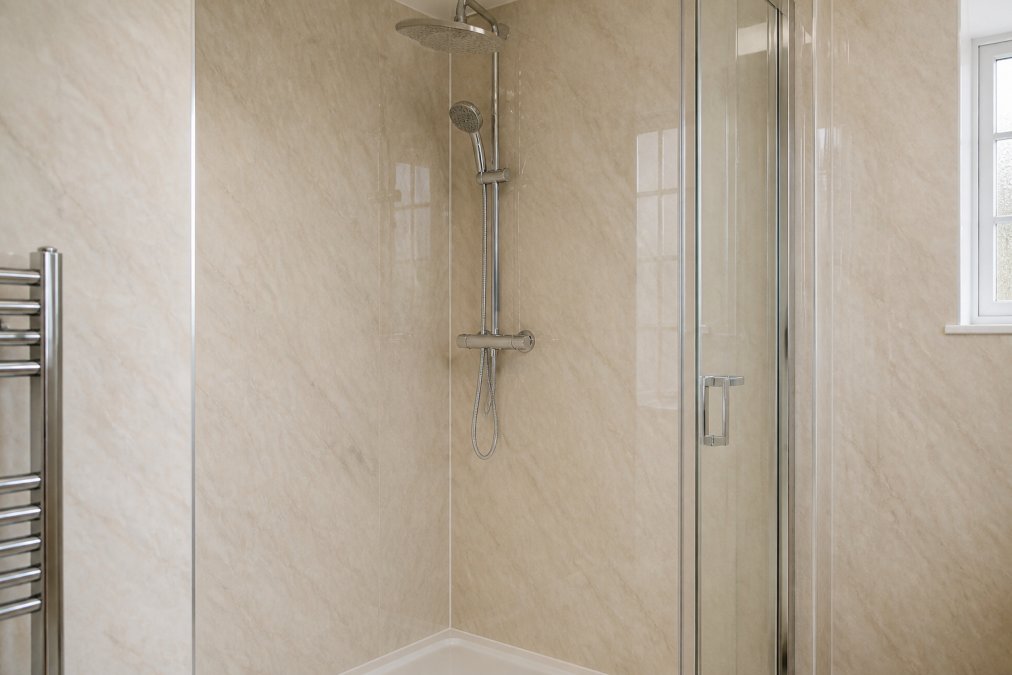
Wood-Effect Panels for Warm Modern Interiors
Wood-effect panels bring warmth to bathrooms without the moisture problems that actual wood creates. Use them on feature walls or on the wall opposite the shower, where they add character without moisture exposure.
The Kerradeco range offers a contemporary alternative. Kerradeco Stone Grey (£209.00 per pack of 8) and Kerradeco Loft Concrete (£209.00) provide textured, industrial finishes inspired by natural materials. Each pack covers 3.186 m², making it straightforward to calculate quantities for your space.
Modern Slat Wall Bathroom Ideas and Textured Finishes
Slat walls feature evenly spaced grooves or slots, creating visual rhythm and contemporary character. Textured finishes on slatwall panels catch light differently than flat surfaces, adding depth and visual interest.
Linerio slatwall options available through Wetwall Wonders provide this contemporary grooved aesthetic. Slatwall panels work brilliantly as feature walls, behind a basin, opposite the shower, or along the entire wet room wall. The textured finish disguises minor imperfections better than flat panels, which is a practical advantage in DIY installations.
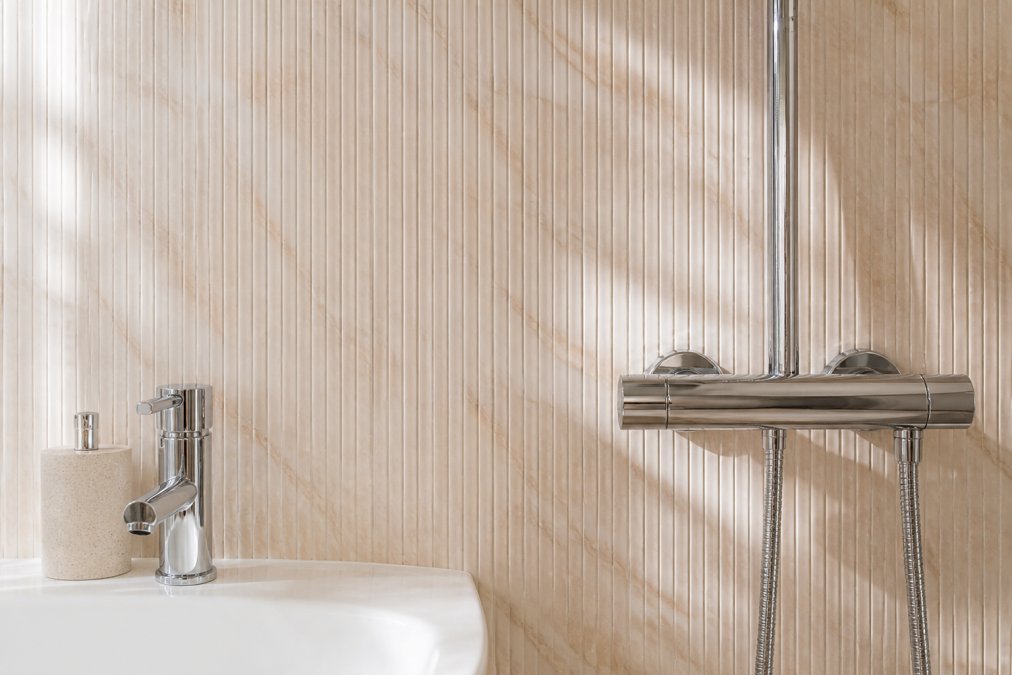
The acoustic properties of textured panels are an unexpected benefit. The grooved surface absorbs some sound, making bathrooms feel less echo-y than hard, flat surfaces. A small bathroom clad in slatwall feels intentionally designed rather than simply functional.
Installation, Maintenance, and Longevity
Getting panels installed correctly determines whether they deliver their promised benefits. The good news is that modern panels are genuinely DIY-friendly when you understand the process.
DIY-Friendly Installation with Tongue and Groove Systems
Tongue and groove systems make panel installation accessible to homeowners without specialist skills. The panels lock together like a jigsaw, with the tongue of one panel sliding into the groove of the next.
Installation begins with preparation. You need a level surface, either existing tiles or plasterboard. If you're installing over tiles, ensure they're firmly bonded to the wall. Most installers recommend removing old tiles entirely and working from a fresh substrate.
Adhesive selection matters significantly. Standard tile adhesive won't work; you need specialist panel adhesive formulated for the specific panel material. Wetwall Wonders supplies installation materials including adhesives and silicones designed to work with their panel range.
The actual installation follows a logical sequence: apply adhesive to the wall in a grid pattern, press the first panel firmly, then slide subsequent panels into the groove of the previous one. A rubber mallet helps seat panels fully without damaging them. Most homeowners complete a shower wall in a single day.
Trimming requires neat edges, which means cutting panels to fit around fixtures and at corners. A fine-tooth saw works, but a circular saw with a fine blade produces cleaner cuts. The cut edge needs sealing with silicone to prevent water ingress. This sealing step is critical and often overlooked by DIY installers.
Cleaning and Long-Term Care
The maintenance advantage of panels is genuine. A warm cloth and mild soap clean panels completely. No grout to scrub, no bleach required, no special techniques needed.
Water spots can appear on panels, particularly in hard water areas. These aren't permanent damage; they're mineral deposits that wipe away with a soft cloth and a solution of equal parts white vinegar and water.
The silicone seals around panel edges and at corners require occasional attention. Over years, silicone can degrade or develop minor cracks. Replacing silicone is straightforward: remove the old silicone with a caulk removal tool, clean the joint thoroughly, and apply fresh silicone.
Longevity depends on installation quality and water management. Panels installed correctly, with proper adhesive and sealed edges, remain functional and beautiful for 10+ years (peer-reviewed research).
| Maintenance Task | Frequency | Time Required | Impact |
|---|---|---|---|
| Routine cleaning | Weekly | 5 minutes | Keeps panels looking new |
| Silicone inspection | Quarterly | 2 minutes | Prevents water damage |
| Silicone replacement | Every 3-5 years | 15 minutes | Extends panel lifespan |
| Deep clean (vinegar solution) | Monthly | 10 minutes | Removes mineral deposits |
Environmental Impact and Sustainable Choices
The environmental argument for panels versus tiles isn't straightforward. PVC panels generate manufacturing emissions, as does ceramic tile production. However, panels require less energy-intensive installation because they don't require grouting, curing, and sealing.
The longevity comparison matters environmentally. A panel installation lasting 10+ years with minimal maintenance has a lower environmental cost per year than tiles requiring regrouting, sealing, and eventual replacement. Panels also generate less waste during installation.
Recycling is where panels currently lag. PVC panels aren't easily recycled in most waste streams, whereas ceramic tiles can be reclaimed and reused. However, this advantage only applies if old tiles are actually reclaimed rather than skipped.
For environmentally conscious homeowners, the practical approach is this: choose panels designed for longevity, install them correctly to maximize lifespan, and maintain them properly. Wetwall Wonders' lead-free composition in products like the Decorwall Elegance Ultimo Tile range represents a genuine environmental consideration.

Repairing Damaged Panels and Extending Lifespan
Despite best efforts, panels occasionally suffer damage. Understanding repair options determines whether damage means replacing a single panel or redoing an entire installation.
Minor damage, small cracks or surface scratches, can be sealed with waterproof epoxy filler. Clean the damaged area, apply epoxy according to product instructions, and sand smooth once cured.
Larger damage typically requires panel replacement. The advantage of tongue and groove systems becomes apparent here: you can remove a damaged panel without disturbing surrounding panels. Cut through the adhesive at the panel edges using a utility knife, carefully pry the panel away from the wall, then install a replacement following standard installation procedures.
The practical challenge is matching panels if your installation is several years old. If you're replacing a single panel in a visible location, contact the supplier for a matching panel from the same batch if possible.
Prevention is more practical than repair. Protect panels during and after installation by avoiding impact in the first few weeks while adhesive fully cures. Ensure proper ventilation to prevent condensation buildup, which can stress adhesive bonds over time.
Extending lifespan comes down to three things: proper initial installation, regular silicone maintenance, and prompt attention to minor damage before it becomes major. Panels installed correctly and maintained properly can last for many years.
Modern bathroom wall panels deliver genuine advantages over traditional tiling, but only when you select the right material for your specific situation and install them correctly. Wetwall Wonders provides the complete solution: premium panels in contemporary finishes, installation materials including specialist adhesives and silicones, and the product range to handle everything from tiny ensuite bathrooms to full wet room installations. Start with the Decorwall Maxi Panels or Elegance Mineral range, follow proper installation procedures, and you'll have a bathroom that looks contemporary and requires minimal maintenance for years to come.
Frequently Asked Questions
Q: What are the latest bathroom wall trends in 2026?
A: Modern bathroom wall panel design now emphasises seamless, grout-free solutions with stone-effect, wood-effect, and textured finishes. Waterproof PVC panels dominate because they offer durability without maintenance headaches. Slat wall designs and contemporary marble effects are particularly popular for creating a high-end aesthetic. Homeowners increasingly choose panels over tiles for faster installation and superior moisture resistance in wet rooms and shower enclosures.
Q: Are bathroom wall panels cheaper than ceramic tiling?
A: Wall panels typically offer better value overall. Initial material costs can be comparable, but panels eliminate grouting labour and reduce installation time significantly. Decorwall Elegance Mineral panels start at £22.00, while Dumawall tile-effect options begin at £3.95 per panel. Over time, panels can save money because they require no grout maintenance, resist mould growth, and come with a manufacturer's guarantee. No specialist fitter is always needed, many homeowners install them as a DIY project.
Q: What type of wall panelling is best for a bathroom?
A: 100% waterproof PVC panels are the industry standard for bathrooms and shower enclosures. Look for panels with tongue and groove systems for seamless fitting and grout-free installation. Decorwall Maxi Panels (£54.00) and Kerradeco ranges (£209.00 per pack) combine durability with contemporary aesthetics. For smaller spaces or narrow ensuite bathrooms, 250mm and 300mm width panels like Decorwall Elite Print (£11.00) prevent awkward seams. Ensure panels come with a 5-year minimum guarantee.
Q: How do I prevent water damage behind bathroom wall panels?
A: Proper installation is critical. Use high-quality silicone sealant and adhesive specifically designed for wet areas, Wetwall Wonders supplies these alongside panels. Seal all edges, joins, and corners thoroughly to create a continuous moisture barrier. Ensure the wall surface is clean and dry before installation. Tongue and groove panel systems lock together to create seamless joints that resist water ingress. If water does penetrate, damaged sections can be replaced individually without removing the entire installation, making repairs straightforward and cost-effective.
This article was written using GrandRanker

