
Floorstowalls Alternatives: Best Bathroom Wall Panels 2026
Table of Contents
- Why Homeowners Switch From Floorstowalls to Alternative Bathroom Wall Panels
- Bathroom Wall Panels vs Tiles Cost: What You Actually Pay
- Top Bathroom Wall Panel Alternatives: Materials and Finishes
- How to Install Bathroom Wall Panels: DIY vs Professional Fit
- Waterproofing, Moisture Resistance, and Long-Term Durability
- Where to Buy Bathroom Wall Panels Online
- Maintenance and Cleaning Your Wall Panels
- Conclusion
Last Updated: August 25, 2026
Why Homeowners Switch From Floorstowalls to Alternative Bathroom Wall Panels
Many homeowners abandon traditional bathroom wall solutions due to three core frustrations: installation complexity, long-term moisture problems, and limited design flexibility. Floorstowalls products aren't defective; they're designed around rigid tongue and groove systems that require precise alignment, with sealing treated as an afterthought. Modern bathroom wall panels from suppliers like Wetwall Wonders address these directly: simplified installation, integrated waterproofing, and finishes requiring minimal maintenance. The real driver isn't brand loyalty but practical frustration, water pooling behind panels months after installation, or grout lines trapping moisture despite grout-free claims. These are design compromises that newer alternatives have eliminated.
Bathroom Wall Panels vs Tiles Cost: What You Actually Pay
The cost comparison between bathroom wall panels vs tiles depends on materials, labour, and long-term maintenance. Ceramic tiles cost £15-£40 per square metre for materials, plus £30-£60 per square metre for installation labour. Grouting, sealing, and future repairs add ongoing expense.
Modern wall panels cost £20-£50 per square metre installed, with faster labour because installation is simpler. Adhesive replaces complex grouting; no sealing is required. Over 10 years, tile maintenance accumulates: grout cleaning, resealing, tile replacement, and mould remediation. Panels require only occasional wiping.
The real savings emerge in time and disruption. Tiling takes 3-5 days; panel installation typically completes in 1-2 days. The Decorwall Elegance Mineral panels at £22.00 per panel cover a defined area with minimal waste, whereas tile installation incurs 15% waste through breakage and cuts. Specialist tools (tile cutters, grout mixers, sealing equipment) further increase tile costs.
| Cost Factor | Ceramic Tiles | Wall Panels |
|---|---|---|
| Material per m² | £15-£40 | £20-£50 |
| Installation labour per m² | £30-£60 | £15-£25 |
| Grouting/sealing | £10-£20 per m² | Included |
| Annual maintenance | £5-£15 | £0-£2 |
| Typical bathroom (8 m²) total | £360-£640 | £280-£400 |
Top Bathroom Wall Panel Alternatives: Materials and Finishes
The market for bathroom wall panels alternatives now offers genuine choices. Understanding material differences is essential because each performs differently in wet environments.
PVC Wall Panels: Waterproof and Low Maintenance
PVC panels are solid, 100% waterproof boards engineered for high-moisture environments. No grout, no sealing, no porous surfaces where mould establishes itself.
The Kerradeco Stone Grey panels exemplify modern PVC design. Each pack contains eight boards (1350mm × 295mm × 9mm), covering 3.186 m² per pack at £209.00. The natural stone texture mimics slate or granite without weight, cost, or maintenance burden. Installation uses adhesive and simple clicking mechanisms, no specialist tools required.
Quality PVC panels resist impact and UV degradation better than budget alternatives. The Kerradeco range uses premium formulations that resist discolouration and cracking. Stone texture hides minor scratches and water marks that show on high-gloss finishes.
PVC works particularly well in small ensuite bathrooms where space constraints make tile installation awkward. The 250mm and 300mm width options from Wetwall Wonders address narrow spaces that generate too many seams with standard panels, allowing balanced vertical divisions rather than awkward edge gaps.
Ceramic and Porcelain Tile Effect Panels
Tile-effect panels replicate traditional aesthetics without grout-line maintenance. The Dumawall+ High Gloss Mura at £3.95 per pack (eight boards) delivers tile-effect finish with contemporary high-gloss surface that brightens smaller bathrooms.
Homeowners accustomed to tiled bathrooms often hesitate with solid-colour panels. Tile-effect panels bridge that gap. The Dumawall+ range includes micro grout lines moulded into the surface, you see grout line detail without actual grout, eliminating the primary maintenance complaint: dirty grout lines that darken and harbour mould.
High-gloss finishes reflect light effectively, making bathrooms feel larger and brighter. The trade-off is that they show water spots and fingerprints more readily, but a microfibre cloth addresses this instantly. These panels perform well in commercial applications, hotel bathrooms, and healthcare facilities where durability and easy cleaning justify the aesthetic compromise.
Marble Effect and Stone Finishes
For homeowners seeking luxury aesthetics without real marble's cost and maintenance, effect panels deliver genuine visual impact. The Decorwall Maxi Panels in Beige Marble (2400mm × 900mm × 10mm) at £54.00 create a feature-wall statement costing thousands in real marble.

Real marble is porous, stains easily, requires professional sealing, and develops visible wear quickly. Stone effect panels replicate visual appeal while eliminating these issues. The 10mm thickness provides substantial presence; tongue and groove design ensures seamless joints.
Stone-effect finishes work best as feature walls rather than full coverage. A marble-effect wall behind the vanity draws the eye without overwhelming the space. Combined with simpler finishes elsewhere, this creates visual hierarchy and sophistication.
How to Install Bathroom Wall Panels: DIY vs Professional Fit
Installation difficulty separates genuine alternatives from false economy. A system requiring professional fitting negates cost advantages over tiles; a system too flimsy for DIY installation wastes time and materials.
Preparing Your Surface and Measuring
Success begins with surface preparation. Assess your existing wall: is it tiled, painted plaster, or bare brick? Each requires different preparation.
For existing tiles, either remove them completely using a cold chisel and hammer (or rent an electric tile stripper), then fill holes with flexible filler and sand smooth. Alternatively, install panels directly over firmly bonded tiles if the wall is flat, though this adds height and creates edge problems.
Painted plaster walls need light sanding with 120-grit paper to remove gloss and improve adhesion. Fill cracks with flexible filler, sand smooth, and wipe away dust.
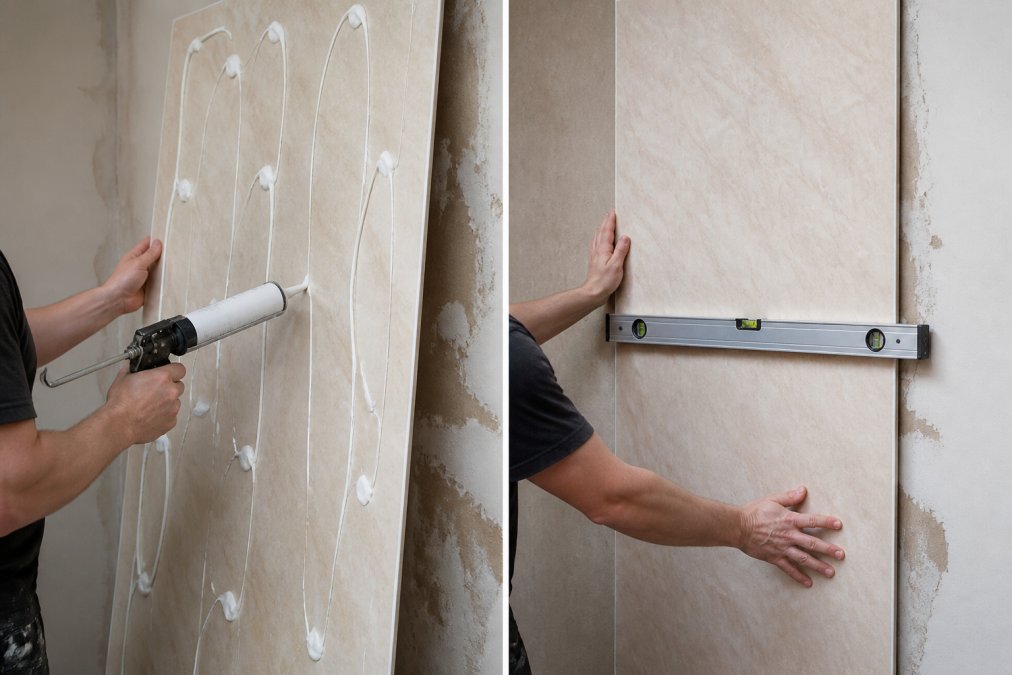
Measuring requires precision. Measure wall height at three points (left, centre, right) because walls are rarely perfectly vertical; use the highest measurement as reference. Measure width at top, middle, and bottom. Mark a vertical reference line with a spirit level to prevent gradual drift.
Adhesive Application and Fixing Methods
Use adhesive specifically formulated for wall panels, typically solvent-based or hybrid products that remain flexible after curing. Wetwall Wonders supplies appropriate adhesives alongside panels, ensuring compatibility.
Apply adhesive in a grid pattern: dabs at corners and edges, plus vertical strips spaced 300mm apart. This prevents air pockets that trap moisture. Press each panel firmly, starting from your reference line and working outward. Use a spirit level frequently to catch drift early. If a panel sits proud of neighbours, tap gently with a rubber mallet to seat it properly.
Some panels feature tongue and groove joints creating mechanical interlock, more forgiving than adhesive-only systems. Professional installers complete a standard bathroom (8 m² coverage) in 4-6 hours. DIY timescale depends on experience; expect 8-12 hours across two days, allowing adhesive to cure between sections.
Sealing and Waterproofing Your Panels
Once panels are installed, sealing joints is critical. Gaps between panels, at corners, and where panels meet the ceiling must be sealed with flexible silicone rated for bathrooms, not grout or standard caulk.
Apply silicone with a caulking gun, running a continuous bead along each joint. Smooth with a wet finger or plastic tool, pressing sealant into the gap. Allow silicone to cure fully, typically 24 hours, before exposing it to water. For seams where water runs directly (around shower trays), apply two coats with 24 hours between applications.
Waterproofing, Moisture Resistance, and Long-Term Durability
The critical difference between panels that fail and those performing for decades comes down to waterproofing strategy. Traditional tiles rely on grout and external sealers; these fail as grout cracks and sealers degrade. Modern panels take a different approach: the panel itself is waterproof; sealants protect only joints.
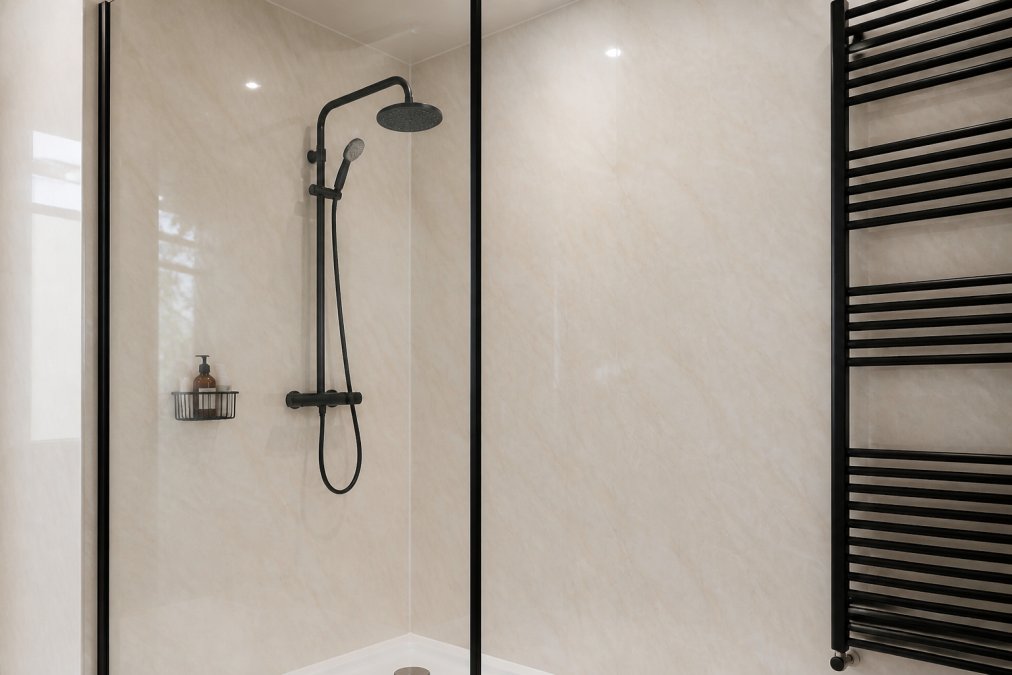
PVC panels are inherently waterproof, water cannot penetrate the material itself. This eliminates the primary failure mode of tiled bathrooms: water seeping behind tiles, saturating substrate, and promoting mould. The Kerradeco and Decorwall ranges specify 100% waterproof construction.
Mould prevention depends on joint sealing and ventilation. Extract fans rated for bathroom size (typically 15-20 air changes per hour) are essential (the CDC). Run extraction during and for 20 minutes after showers to remove humidity before it condenses (the EPA).
Durability depends on material quality and installation precision. Budget panels use thinner PVC that flexes under thermal stress, creating gaps where water penetrates. Premium panels use rigid formulations with consistent thickness and precise tolerances. The 9mm and 10mm thicknesses in Wetwall Wonders products reflect this durability focus.
Long-term integrity also depends on substrate stability. Panels installed over unstable substrates, damp walls, loose plaster, or shifting brick eventually fail as the substrate moves. Proper surface preparation and substrate moisture management are prerequisites.
According to Building Research Establishment guidance on bathroom moisture control, condensation-related failures represent the largest category of bathroom defects in residential properties. Panels address this by eliminating porous surfaces where moisture accumulates, but only if ventilation is adequate.
Where to Buy Bathroom Wall Panels Online
The online market for bathroom wall panels has matured, with specialist retailers offering comprehensive ranges alongside installation support. Buying online requires understanding what you're purchasing: panels alone, or a complete system including adhesives, sealants, trims, and installation guidance.
Wetwall Wonders operates as a complete solution provider rather than a simple retailer. The range includes Decorwall Maxi Panels, Kerradeco systems, and Dumawall+ alternatives, alongside all necessary installation materials. This integration matters practically, ordering panels from one supplier and adhesive from another risks incompatibility. Wetwall Wonders supplies matched systems where every component is tested together.
The product range spans multiple price points and aesthetics. The Dumawall+ High Gloss Mura at £3.95 per pack represents the entry point for budget-conscious renovators. The Kerradeco Stone Grey at £209.00 per pack addresses homeowners seeking premium stone aesthetics. The Decorwall ranges bridge the middle ground.

Online purchasing provides access to specialist products that physical retailers rarely stock. The 250mm and 300mm width panels specifically address small ensuite installations, a niche that general retailers often ignore.
When buying online, verify stock status before committing. Panel colours vary slightly between production batches, so order everything at once to prevent colour mismatches. Confirm delivery timeframes; some suppliers quote 5-7 days, others offer next-day delivery at premium cost. For planned renovations, order 2-3 weeks ahead to prevent rush charges.
Maintenance and Cleaning Your Wall Panels
The maintenance advantage of panels over tiles becomes apparent within weeks. Tiles require regular grout cleaning, periodic resealing, and occasional deep cleaning. Panels require none of this.
Weekly maintenance involves wiping panels with a damp microfibre cloth to remove soap residue and water spots. For stubborn stains, add mild detergent to water. Never use abrasive cleaners or scouring pads, which scratch the surface.
Monthly deep cleaning uses a cloth dampened with 50:50 white vinegar and water. This dissolves mineral deposits and kills surface mould spores before they establish. Wipe thoroughly and dry.
Mould prevention is primarily a ventilation issue. If mould appears despite regular cleaning, the problem is inadequate extraction. Run the bathroom fan during and after showers, ensuring it vents outside. A timer running the fan for 20 minutes after the shower switches off prevents most moisture problems.
Impact marks from dropped items typically don't penetrate the material. Scratches on high-gloss finishes are visible but don't affect function. If a panel cracks, replacement is straightforward: remove silicone around the damaged panel, unclip or un-adhere it, install a new panel, and reseal. This takes 30 minutes and costs the price of a single panel.
Conclusion
The shift from Floorstowalls and traditional alternatives to modern bathroom wall panels reflects genuine practical advantages. Simpler installation, integrated waterproofing, and minimal maintenance address real frustrations homeowners experience with older systems. Wetwall Wonders supplies comprehensive panel systems, including Decorwall Maxi Panels in Beige Marble, Kerradeco Stone Grey, and Dumawall+ High Gloss Mura, alongside all necessary adhesives and sealants. This integrated approach eliminates compatibility problems plaguing DIY projects. Whether refreshing a small ensuite or undertaking complete bathroom renovation, quality panels, proper installation technique, and appropriate sealing create a durable, low-maintenance finish performing reliably for decades. Get started with Wetwall Wonders and transform your bathroom with panels that simplify installation, eliminate grout maintenance, and deliver waterproof protection.

Frequently Asked Questions
What's the real cost difference between bathroom wall panels and ceramic tiles?
Wall panels typically cost less upfront than ceramic or porcelain tiles. PVC panels like Dumawall+ High Gloss Mura start at £3.95 per pack, while traditional tiles run £15-40 per m². Labour costs also favour panels: installation is faster and simpler, reducing professional fitting charges by 30-50%. Over 10 years, panels save money on maintenance too, since they need only soap and water, not grout cleaning.
Can I install bathroom wall panels myself, or do I need a professional?
Most homeowners can install bathroom wall panels as a DIY project. Tongue-and-groove panels click together easily and stick with adhesive or nails. Preparation is key: clean and level your substrate, measure carefully, and use silicone sealant at joints and edges. For small ensuites or tight spaces, panels like Decorwall Elegance Mineral (300mm width, £22) are especially manageable. If you're unsure about waterproofing or have uneven walls, hiring a fitter for 4-8 hours is cheaper than retiling.
How do I know bathroom wall panels won't peel or bubble after installation?
Peeling and bubbling happen when adhesive fails or moisture gets behind panels. Prevent this by: using the correct PVC adhesive (not general-purpose glue), applying even pressure across the entire back, sealing all edges and joints with silicone, and ensuring your substrate is clean and dry. Proper surface prep and correct silicone sealant are your best insurance.
What bathroom wall panel materials work best for wet rooms and showers?
PVC and solid composite panels perform best in wet rooms because they're 100% waterproof and grout-free. Look for panels marketed as shower-safe with tongue-and-groove joints and UV-resistant finishes. Decorwall Maxi Panels in Beige Marble (£54, 5-year guarantee) and Dumawall+ High Gloss Mura (£3.95 per pack) are both engineered for high-moisture environments. Ceramic tile-effect panels offer aesthetics without grout maintenance, but genuine ceramic tiles absorb water around edges if not sealed perfectly.
This article was written using GrandRanker

