
What Is the Benefit of Using Wetwall Panels? A 2026 Guide
Table of Contents
- Why Wetwall Panels Are Replacing Tiles in 2026
- The Core Benefits: Waterproofing, Hygiene, and Speed
- Choosing the Right PVC Bathroom Wall Panels
- Cost of Wetwall Panels vs Tiles: A Realistic Breakdown
- Installation Prerequisites: Substrate and Wall Preparation
- Bathroom Wall Panel Maintenance Beyond Cleaning
- Environmental Impact and Long-Term Durability
- Conclusion: Are Wetwall Panels Right for Your Renovation?
- Frequently Asked Questions
Last Updated: September 26, 2026
Why Wetwall Panels Are Replacing Tiles in 2026
Wetwall panels are large-format wall coverings, usually made from PVC or similar composites, that clip or glue directly onto bathroom walls to create a waterproof, grout-free surface. At Wetwall Wonders, we've watched homeowners and fitters move away from tiling for one reason: panels solve the problems tiles create.
Grout is the weak point of any tiled bathroom: it stains, cracks, and holds moisture against the wall.
The Core Benefits: Waterproofing, Hygiene, and Speed
The main benefit of wetwall panels is a waterproof, hygienic surface in a fraction of the time tiling takes, but the practical detail matters more than the marketing version.
100% Waterproof and Mould-Resistant Surfaces
A tiled wall is only as waterproof as its grout and sealant; panels are waterproof through and through. Our Decorwall Maxi Panels in Beige Marble are 100% waterproof across the full panel face, not just the surface coating.

Grout-Free Maintenance and Easy Cleaning
Cleaning a grout-free surface takes minutes, not an afternoon: a warm cloth handles most marks, with no scrubbing brush, grout pen, or annual re-sealing.
Choosing the Right PVC Bathroom Wall Panels
PVC bathroom wall panels come in a wide spread of sizes and finishes, and matching the panel to the space separates a clean install from a patchwork of seams. The wrong size means more joins, more silicone lines, and more places for water to sit.
Panel Sizes and Styles for Different Spaces
Narrow ensuites are where panel sizing earns its keep: a 250mm or 300mm panel is easier to handle in a tight space and lets you finish a wall without cutting a wide board down to a sliver.
| Panel | Size | Best For | Price |
|---|---|---|---|
| Decorwall Maxi Panels | 2400mm x 900mm x 10mm | Full shower walls, fewer seams | £54.00 |
| Decorwall Elite Print | 2700mm x 250mm x 8mm | Narrow spaces, splashbacks | £11.00 |
| Kerradeco Stone Grey | 1350mm x 295mm x 9mm (pack of 8) | Stone-effect feature walls | £209.00 |
| Dumawall+ High Gloss Mura | 65cm x 37.5cm x 5mm (pack of 8) | Tile-effect wet rooms | £3.95 |
| Decorwall Elegance Mineral | 300mm width, 8mm thick | Kitchens, bathrooms, feature walls | £22.00 |
Cost of Wetwall Panels vs Tiles: A Realistic Breakdown
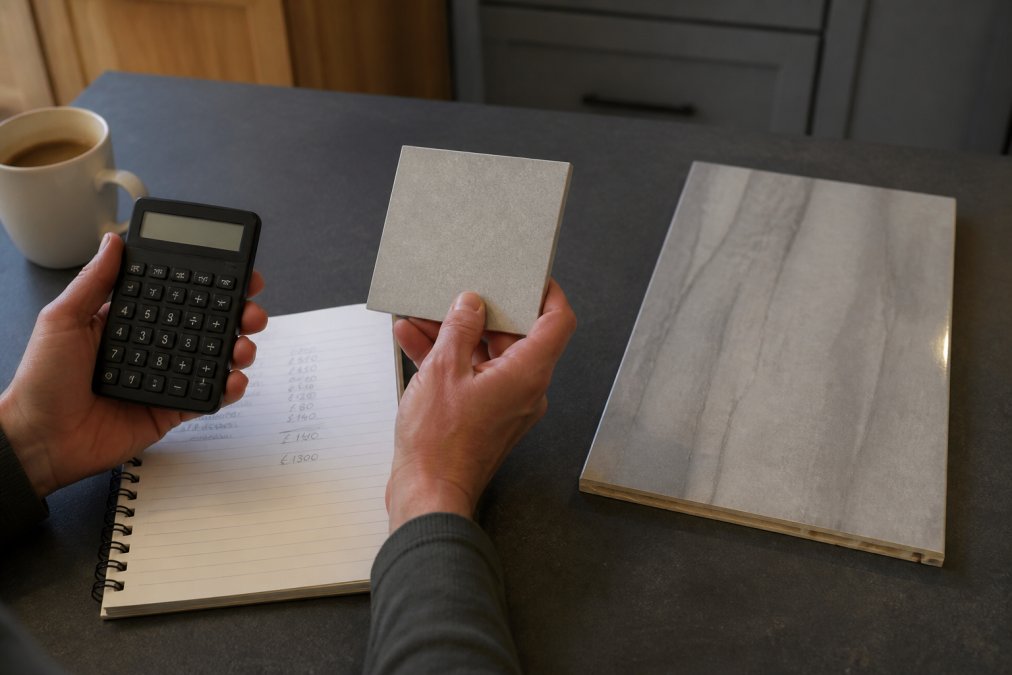
The cost of wetwall panels vs tiles usually favours panels once you count the full job, not just materials. Tiles look cheaper per square metre on the shelf, but the gap closes fast once you add adhesive, grout, sealant, spacers, and labour.

What You Actually Pay For
A tile job is not one purchase but eight or nine. For a typical 6m² shower enclosure you're buying:
- Tiles: priced per square metre, plus a wastage allowance of roughly 10% for cuts and breakages
- Tile adhesive: sold in 20kg bags, with coverage printed on the bag
- Grout: sold in 5kg or 10kg tubs, often in a colour you have to match to the tile
- Silicone sealant: sanitary-grade, plus a cartridge gun if you do not own one
- Spacers and levelling clips: cheap individually, but they add up across a full wall
- Backer board or tanking membrane: required in wet areas, and frequently forgotten in DIY budgets
- Trims: tile edge trim for every exposed corner
- Labour: a tiler is typically charged at a day rate or per square metre, and a shower enclosure is rarely a one-day job once drying times are counted
The Labour Difference Is the Real Saving
Materials are only half the story. Tiling is a sequence: prepare the wall, apply adhesive, set tiles, wait for the adhesive to cure, grout, wait for the grout to cure, then silicone. That sequence is why a tiled shower can take two to three days of a tradesperson's time even on a small enclosure.
Ongoing Costs Competitors Leave Out
A tiled bathroom carries costs after the invoice: grout is porous and needs periodic re-sealing, silicone lines discolour and need cutting out and replacing, and water behind a tile means removing tiles, drying the substrate and re-tiling a section, a repair bill rather than maintenance.
Installation Prerequisites: Substrate and Wall Preparation
Installation is straightforward, but the wall behind the panel decides whether the job lasts, the part most guides skip, and where failures start.
Decorwall Maxi Panels-Beige Marble →
- Check the wall is flat across its full width
- Confirm the surface is dry, with no damp patches
- Remove loose plaster, old adhesive, or flaking paint
- Fill any holes or cracks and let them dry fully
- Seal the wall where water exposure is highest
- Apply the correct adhesive for the substrate and panel
Bathroom Wall Panel Maintenance Beyond Cleaning
Bathroom wall panel maintenance is mostly cleaning, but a few checks keep the installation sound for years. Seals and joints age, not the panels themselves, the section most guides skip, because "wipe it down" is easier to write than "here's what to do in year seven".
The Annual Check List
Run a finger along the silicone line at the base of the shower every few months; if it's lifting or discoloured, replace it before water gets behind it. Check the edge and corner trims too, simple jobs that take minutes and prevent the moisture damage panels are designed to stop.
Once a year, do a fuller pass:
- Press along each panel seam to check the adhesive bond has not failed
- Inspect internal and external corner trims for movement or gaps
- Check the end caps at the top and bottom of each panel run
- Look behind the shower screen hinges and any wall-mounted fittings
- Confirm the silicone at the tray or bath edge is still flexible, not brittle
Repairing Scratches and Scuffs
Panels are more scratch-resistant than grout, but not indestructible, a dropped tool or a child's toy can leave a mark. Most surface scuffs on a gloss or matt panel come out with a non-abrasive plastic polish applied with a soft cloth in small circles. Deep gouges are different: a filled and colour-matched repair is possible on some finishes, but on a heavily textured stone-effect panel a single damaged board is usually replaced rather than repaired.
Trims, End Caps and Edge Seals
Trims do the same job grout does in a tiled wall: they close the gaps. Internal and external corners, end caps and ceiling trims come as matching profiles, and they're the parts most likely to need attention. If a trim works loose, water can track behind it, so re-seat it and re-silicone the joint before moisture reaches the substrate.
What the Guarantee Actually Covers
There's also the question of what happens if something goes wrong, so look for a clear guarantee: our Decorwall Maxi Panels carry a 5-year guarantee, and Dumawall+ panels come with a 10-year manufacturer's warranty.
Environmental Impact and Long-Term Durability
Durability is where panels quietly outperform tiles environmentally: a surface that lasts decades without re-grouting or re-sealing avoids the waste of repeated repairs and replacement materials.
Conclusion: Are Wetwall Panels Right for Your Renovation?
The benefit of using wetwall panels comes down to three things: a waterproof surface, grout-free upkeep, and a faster install. If you want a bathroom that stays clean and dry with minimal effort, panels win; if you want the specific feel of ceramic on the walls, tiles still have their place.
Frequently Asked Questions
What are the disadvantages of wet wall panels?
Wetwall panels are not without drawbacks. They can be more expensive upfront than basic ceramic tiles, and some homeowners find the hollow sound when tapping them less solid than tiling. If the substrate behind the panels is uneven, the finished surface may show imperfections. Additionally, while they are durable, they can be scratched by abrasive cleaners, so a gentle wipe with a warm cloth is best. Unlike tiles, they cannot be easily repaired if deeply damaged; a section may need replacing.
How long do wet wall panels last?
The lifespan of wetwall panels depends on the product and installation quality. Entry-level PVC panels might last 5 to 10 years, while heavier-duty options like Dumawall+ come with a 10-year manufacturer's warranty. High-quality panels such as Decorwall Maxi Panels offer a 5-year guarantee. Proper substrate preparation and using the correct adhesives and silicones are critical to achieving this longevity. With good care, many panels can exceed their warranty period.
Do wet wall panels require professional installation?
No, many wetwall panels are designed to be DIY-friendly. Tongue and groove systems click together and can be fixed with adhesives, nails, or staples. However, achieving a seamless, leakproof finish requires careful measuring and cutting around fixtures. If your walls are uneven or you are installing in a wet room, a professional fitter may be needed to ensure proper sealing and substrate preparation. Always follow the manufacturer's instructions for the specific panel.
Are wet wall panels any good for modern bathrooms?
Yes, wetwall panels suit modern bathrooms well. They come in a variety of finishes, from high-gloss tile effects like Dumawall+ High Gloss Mura to stone-effect panels like Kerradeco Stone Grey. These options provide a sleek, seamless look without grout lines, which aligns with contemporary design trends. They are also practical for wet rooms and shower enclosures because they are 100% waterproof and easy to clean, making them a popular choice for renovations.

