
Best Slatwall Panels for Modern Bathrooms
Table of Contents
- Why Slatwall Panels Transform Modern Bathrooms
- Top Slatwall Panels for Bathrooms: Quick Comparison
- 1. Thermo-Slat PVC Slat Panels: Thermal Insulation Meets Modern Aesthetics
- 2. Linerio Slat Panels: Lightweight Polystyrene with 3D Texture Effect
- How to Install Bathroom Wall Panels: Step-by-Step Guide
- Waterproof Acoustic Slat Panels: Moisture Resistance and Durability
- Maintenance Tips for Bathroom Panelling
- Slatwall vs. Traditional Tiling: Cost and Longevity
Last Updated: August 13, 2026
Why Slatwall Panels Transform Modern Bathrooms
Modern bathrooms demand moisture resistance, aesthetic appeal, and simple installation, three things traditional tiling struggles to deliver efficiently. Slatwall panels address all three concerns at once, offering a practical alternative whether you're refreshing a cramped ensuite or renovating a sprawling master bath.
Slatwall panels are genuinely easy to fit, require minimal substrate preparation, and create the high-end contemporary look most people associate with designer bathrooms. Beyond speed, they offer acoustic insulation, are grout-free (eliminating major maintenance headaches), and handle high-humidity environments without the long-term mold risks that come with poorly sealed grout joints.
Top Slatwall Panels for Bathrooms: Quick Comparison
Finding the best slatwall panels means weighing performance against budget and aesthetic preference. The market offers two main categories: thermally insulated PVC options and lightweight polystyrene panels with 3D texture effects.
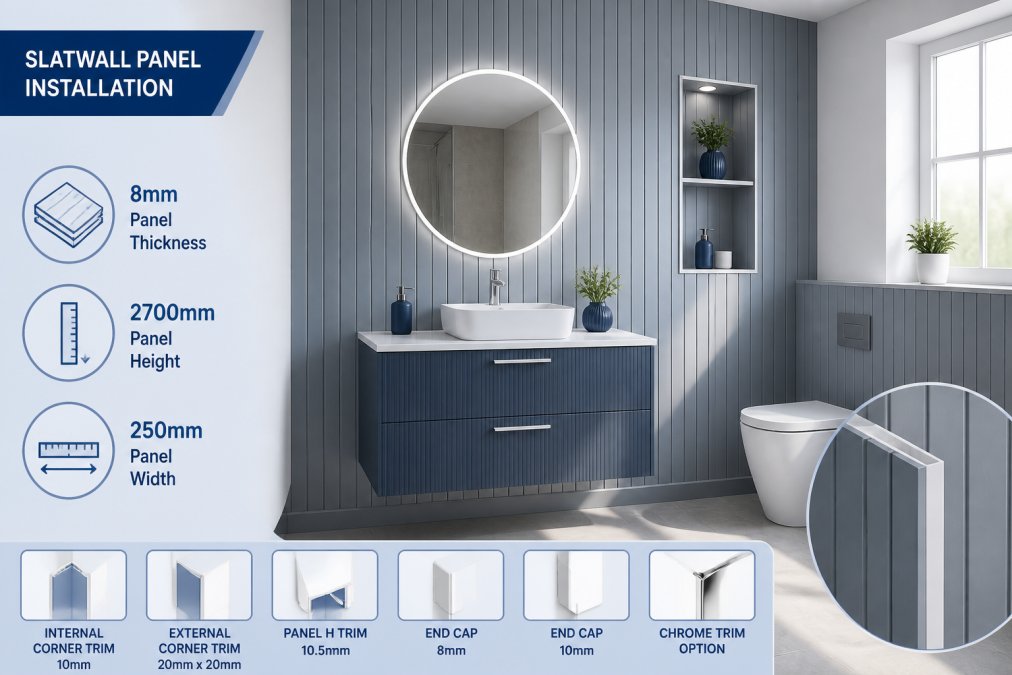
Quick Picks:
- Best Overall: Thermo-Slat PVC Slat Panels, thermal insulation meets durable aesthetics, multiple colour options
- Best for Lightweight Installation: Linerio Slat Panels, polystyrene construction, 3D texture effect, fastest installation
- Best Value: Linerio S-Line, five slats per panel for detailed visual effect at competitive pricing
| Panel Type | Material | Panel Thickness | Best For | Starting Price |
|---|---|---|---|---|
| Thermo-Slat PVC | PVC with thermal cavity | 12mm | Moisture-prone areas, thermal control | £24.00 per panel |
| Linerio L-Line | Polystyrene (hot-stamped) | 21mm | Bold 3D texture, feature walls | £30.00 per panel |
| Linerio M-Line | Polystyrene (hot-stamped) | 12mm | Balanced texture and subtlety | £30.00 per panel |
| Linerio S-Line | Polystyrene (hot-stamped) | 12mm | Detailed slatwall effect | £30.00 per panel |
If thermal insulation and maximum durability matter, Thermo-Slat PVC panels are the clear winner. If you're prioritising ease of installation and immediate visual impact, Linerio's polystyrene options deliver faster results with less substrate preparation.

1. Thermo-Slat PVC Slat Panels: Thermal Insulation Meets Modern Aesthetics
Thermo-Slat represents the premium choice for bathrooms where moisture resistance and longevity are non-negotiable. These PVC panels feature a cavity design that creates thermal air pockets, setting them apart from standard slatwall options. Available in five colours (Smoke Grey, Ash Grey, Charcoal Grey, Charcoal White, and Hickory Brown), they deliver contemporary aesthetics without compromising performance.
Each panel measures 2600mm length by 200mm width with 12mm thickness. The thermal cavity design promotes air circulation, reducing moisture accumulation that leads to hidden mold growth. PVC construction is inherently waterproof and moisture-resistant, meaning you don't need complex sealing systems to protect against water damage. The sealant around edges and seams prevents water ingress at joints, the only vulnerable points.
Charcoal Grey and Smoke Grey variants are most popular for bathrooms because they complement both minimalist and contemporary design schemes. Installation typically takes 1-2 days for a standard bathroom.
2. Linerio Slat Panels: Lightweight Polystyrene with 3D Texture Effect
Linerio represents maximum visual impact with minimum installation complexity. These polystyrene panels are covered with hot-stamped print that mimics timber slat panelling. The material is 100% recyclable, lightweight, and durable, making it ideal for DIY installers and professionals who need speed without sacrificing aesthetics.
Linerio comes in three variants based on slat density: L-Line (2 slats per 122mm), M-Line (3 slats), and S-Line (5 slats). More slats create finer texture; fewer slats produce bolder effects. All measure 2650mm in length and 12mm thickness. Installation requires no substrate preparation beyond ensuring the wall is clean and dry. Panels cut easily with a standard saw, allowing vertical, horizontal, or diagonal installation. Most homeowners complete a full bathroom in a single weekend.
When sealed correctly with bathroom-grade adhesive and silicone around all edges and seams, Linerio performs excellently in moisture-rich bathrooms. The polystyrene itself is moisture-resistant; the sealant prevents water from reaching the substrate behind panels.
Available in white and anthracite finishes, Linerio works particularly well as an accent wall. The 3D texture creates visual depth that flat painted walls cannot match.
Pricing sits at £30.00 per panel across all Linerio variants.
How to Install Bathroom Wall Panels: Step-by-Step Guide
Installing slatwall panels is achievable for homeowners without professional experience, provided you follow the process methodically. What matters is substrate preparation, adhesive application, and proper sealing.
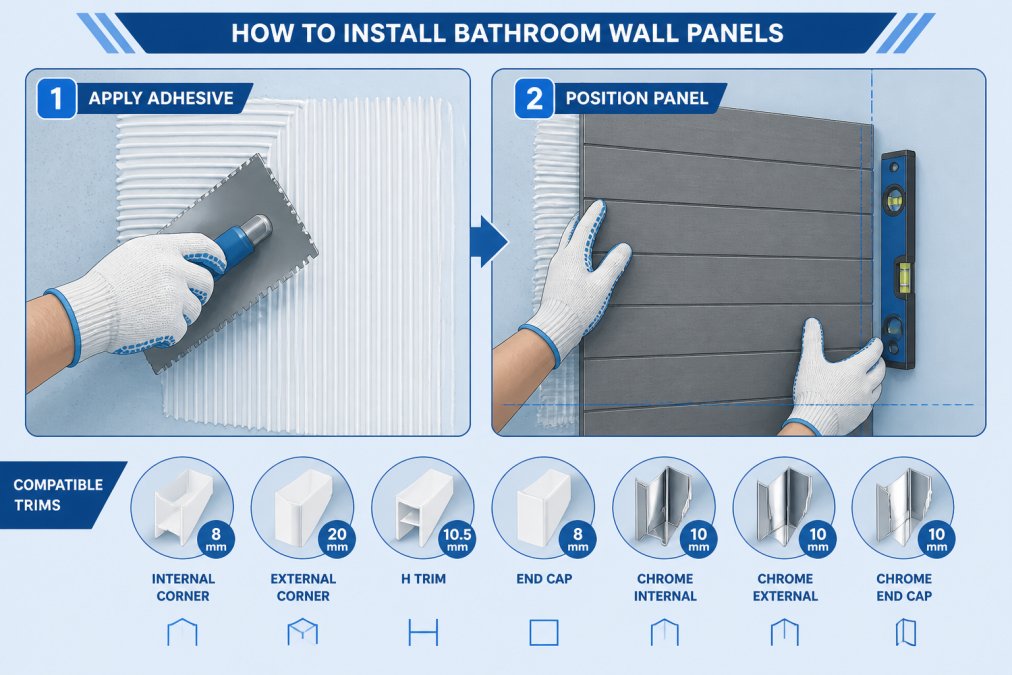
What You'll Need Before Starting
- Adhesive: Bathroom-grade panel adhesive
- Sealant: Waterproof silicone caulk for all edges and seams
- Tools: Notched trowel (6mm notch), spirit level, saw or jigsaw, measuring tape, pencil, utility knife
- Safety: Work gloves, dust mask, safety glasses
- Substrate: Clean, dry wall surface (plasterboard, existing tiles, or concrete)
- Trims: Corner and edge trims matching your panel colour
The substrate must be clean, dry, and stable. If installing over existing tiles, ensure they're firmly bonded; loose tiles must be removed and the wall made flat. Uneven substrates lead to panel gaps and poor adhesive contact.
Installation Process
Step 1: Plan Your Layout (15-30 minutes)
Measure wall height and width. Mark a vertical line using a spirit level as your starting point. Any deviation compounds across the wall.
Step 2: Apply Adhesive (10-15 minutes per panel)
Apply bathroom-grade adhesive using a 6mm notch trowel held at 45 degrees to create consistent ridges. Cover approximately 70-80% of the panel back, avoiding very edges.
Step 3: Position and Level (5-10 minutes per panel)
Press the panel firmly onto the wall, starting from the top. Use a spirit level immediately to check vertical alignment. Press firmly across the entire surface to ensure full contact.
Step 4: Seal All Seams and Edges (10-15 minutes per panel)
Once adhesive cures (typically 24 hours), apply waterproof silicone caulk along all vertical seams and around all edges. Run the bead smoothly using a wet finger or caulk tool. This is the single most important step for long-term moisture protection.
Step 5: Install Trims (5-10 minutes)
Fit corner and edge trims using adhesive for a professional appearance.
Common Installation Mistakes to Avoid
Mistake 1: Skipping Substrate Preparation
Installing over dirty, wet, or unstable substrates causes adhesion failure. Always clean thoroughly and allow 48 hours for drying. Test existing tiles for stability; loose tiles must be removed.
Mistake 2: Applying Adhesive Unevenly
Inconsistent adhesive creates air pockets leading to bubbling weeks later. Use a notched trowel consistently across each panel.
Mistake 3: Neglecting Sealing
Waterproof silicone around seams and edges is not optional. This is where most DIY installations fail long-term.
Mistake 4: Installing Before Adhesive Cures
Adhesive needs 24 hours to cure fully. Installing seams or applying weight before this compromises bonding.
Mistake 5: Ignoring Weight-Bearing Capacity
Slatwall panels can support light fixtures and shelves but have limits. Check maximum weight ratings for your specific panel type. Never install heavy fixtures without consulting manufacturer specifications.
Waterproof Acoustic Slat Panels: Moisture Resistance and Durability
Waterproof acoustic slat panels combine visual appeal with acoustic insulation properties, useful if your bathroom is adjacent to living spaces or noise transmission is a concern. The acoustic benefit comes from air cavities and material density that absorb sound, reducing noise transmission through walls.
Moisture resistance depends on material selection and sealing. Polystyrene-based acoustic panels are moisture-resistant but not waterproof like PVC. Both types perform equally well in bathrooms when installed correctly with proper sealing.
Properly sealed slatwall panels outlast traditional tiling in high-humidity bathrooms. Grout degrades as water penetrates microscopic cracks. Slatwall panels, being non-porous and sealed at seams, avoid this degradation. Ten-year longevity is typical; many installations last 15+ years.
Most slatwall panels meet UK building regulations for fire performance. PVC panels typically achieve Class B-s1, d0 rating. Confirm the rating with your supplier if fire safety is a specific concern.
Maintenance Tips for Bathroom Panelling
One genuine advantage of slatwall panels is minimal maintenance compared to traditional tiling. Grout-free construction eliminates the biggest maintenance headaches.
Weekly Cleaning:
Wipe panels with a soft, damp cloth and mild soap solution. Avoid abrasive scrubbers or harsh chemicals. For polystyrene panels, gentle wiping is sufficient; PVC panels tolerate slightly firmer cleaning.
Monthly Deep Clean:
Use bathroom cleaner or diluted white vinegar to remove soap residue and hard-water marks. Spray lightly and wipe clean. Avoid excess moisture at seams.
Quarterly Sealant Check:
Inspect silicone caulk around all seams and edges. Reapply fresh silicone if you notice cracks or deterioration. Sealant typically lasts 3-5 years before requiring renewal.
Avoid These:
- Bleach or harsh chemical cleaners
- Abrasive scouring pads
- Excessive water pressure or steam cleaning
- Impact damage from dropped objects
Mold prevention comes down to ventilation and moisture control. Ensure your extractor fan runs during showers and for 20-30 minutes afterward. Well-sealed panels with good ventilation behind them rarely develop mold issues.
Slatwall vs. Traditional Tiling: Cost and Longevity
Installation Cost:
Traditional ceramic or porcelain tiling typically costs £50-£100+ per square metre with labour included. A standard bathroom (12-15 square metres of wall area) means £600-£1,500 in labour alone, plus materials. Installation takes 5-10 days with curing time.
Slatwall panels cost £24-£30 per panel. A standard bathroom requires approximately 15-20 panels, totalling £360-£600 in materials. Installation can be completed in 1-2 days. Labour costs for professional installation are substantially lower.
Total Project Cost: Slatwall typically runs 40-60% less than quality tile installation.
Longevity:
Both last 15+ years in properly maintained bathrooms. Grout deteriorates gradually as water penetrates microscopic cracks. After 10-12 years, grout lines often require resealing or replacement. Slatwall panels don't experience this degradation because they're non-porous and sealed at seams.
Tile can crack from impact or substrate movement. Slatwall panels are more flexible and tolerate minor substrate movement better.
Maintenance Burden:
Tiling requires annual grout sealing or replacement and regular deep cleaning of grout lines where mold accumulates. Over 15 years, this adds significant time and cost.
Slatwall requires quarterly sealant checks and basic weekly cleaning. The maintenance difference is substantial.
Moisture Performance:
Both perform well when installed correctly. Slatwall panels eliminate the grout-line vulnerability that's the primary source of water infiltration in tiled bathrooms, making slatwall objectively superior for long-term moisture protection in high-humidity environments.
For homeowners planning a bathroom renovation, slatwall panels deliver comparable longevity at lower cost with minimal maintenance. The aesthetic appeal is modern and clean. The installation is fast enough for DIY. The moisture protection is excellent.
Modern bathroom design has shifted toward solutions that balance aesthetics, performance, and practicality. Slatwall panels tick all three boxes, which is why they've become the go-to choice for homeowners and professionals alike. Whether you choose the thermal insulation benefits of Thermo-Slat PVC panels or the lightweight installation speed of Linerio polystyrene options, you're investing in a bathroom that will look contemporary and function reliably for years.
Wetwall Wonders supplies everything you need for a complete installation: panels in multiple colours and styles, adhesives, silicones, and trims. Our team understands the real questions homeowners ask about durability, warranty coverage, mold prevention, and whether DIY installation is genuinely achievable. The answer is yes, provided you follow proper substrate preparation and sealing protocols. Get started with Wetwall Wonders and transform your bathroom with panels that deliver both style and performance.
Frequently Asked Questions
Are slatwall panels waterproof and suitable for high-humidity bathrooms?
Yes. Slatwall panels made from PVC and polystyrene are inherently moisture-resistant and designed for bathroom environments. PVC options like Thermo-Slat provide superior water resistance, whilst Linerio polystyrene panels resist moisture absorption. Proper installation with quality silicone sealant and adhesive prevents water ingress behind the panels, which is the primary cause of mold. Ensure substrate preparation and sealed seams to maintain long-term protection in high-humidity areas.
How do I know which panel size works for narrow or small bathrooms?
Panel width and thickness determine fit in tight spaces. Linerio panels (122mm wide) work well for narrow ensuites without excessive seaming, whilst thinner 12mm options reduce visual bulk. Measure your wall area and calculate coverage before ordering. Vertical installation in narrow spaces creates the illusion of height and minimises visible joints. Wetwall Wonders supplies panels in multiple widths to accommodate various bathroom layouts without awkward gaps.
What warranty and durability can I expect from quality slatwall panels?
Slatwall panels from reputable suppliers typically offer durability of 10-15 years in standard bathroom use. PVC options resist warping and moisture damage better than cheaper alternatives. Polystyrene panels remain stable when installed correctly on proper substrate. Longevity depends on installation quality, moisture control, and maintenance. Whilst warranties vary by supplier, investing in panels from established brands like Linerio ensures consistent quality and protection against premature peeling or bubbling.
Do slatwall panels require special adhesives or sealants to prevent mold?
Yes. Specialist bathroom adhesives and silicone sealants are essential for preventing water ingress and mold growth. Use waterproof adhesive rated for bathroom environments and seal all panel joints with bathroom-grade silicone. Wetwall Wonders provides a complete range of installation accessories including silicones and adhesives designed to work with their panel systems. Proper sealing of substrate edges and seams creates a moisture barrier that prevents water from pooling behind panels, which is the root cause of mold.
This article was written using GrandRanker

