

Reliable Bathroom Panel Supplier for Fitters
Table of Contents
- What Makes a Reliable Bathroom Panel Supplier
- Types of Bathroom Wall Panels and Material Options
- Trade Discounts for Bathroom Panel Installers
- How to Install Bathroom Wall Panels Efficiently
- Bathroom Panel Adhesive and Sealant Recommendations
- Moisture-Resistant Properties and Warranty Coverage
- Cost Comparison and Budget Planning
- Conclusion
Last Updated: August 18, 2026
What Makes a Reliable Bathroom Panel Supplier
A reliable bathroom panel supplier for fitters is a partner who understands the trade, delivers consistent quality, maintains stock reliability, and backs every product with genuine support. The difference comes down to three things: product consistency, supply chain reliability, and technical knowledge. When you're fitting panels in customer bathrooms, you can't afford delays, substitutions, or products that fail after installation.

What separates reliable suppliers from the rest is their commitment to specifications. Bathroom panels must be 100% waterproof, properly fire-rated, and manufactured to exact dimensions. Inconsistency in any of these areas creates problems downstream, a fitter who receives panels that don't fit properly or adhesive that doesn't cure correctly will spend hours troubleshooting instead of moving to the next job.
Types of Bathroom Wall Panels and Material Options
Bathroom wall panels come in three primary material categories, each with distinct performance characteristics and installation considerations.
PVC Panels: Durability and Waterproofing
PVC panels are the industry standard for bathroom cladding because they deliver complete waterproofing without the maintenance burden of grout. Tongue and groove joints create a tight, grout-free surface that's easier to clean and far more resistant to mold growth. Products like the Decorwall Elite Print in Arctic Grey (2700mm x 250mm x 8mm) at £11.00 per panel offer this performance at a competitive price point.
PVC panels are UK fire-rated, meeting Building Regulations requirements for bathroom installations. Quality PVC panels resist staining, don't yellow over time, and maintain their appearance with basic cleaning. Unlike tiles that can crack or grout that can discolor, PVC panels look the same after five years as they do on installation day.
MDF Core and Plywood Substrates
MDF and plywood-based panels offer a different approach to bathroom cladding, typically used in less wet environments or as structural backing for decorative finishes. MDF panels work well where moisture exposure is moderate and ventilation is adequate, but they require proper sealing and waterproofing to prevent water absorption and swelling.
The critical distinction is that MDF panels depend entirely on the adhesive and sealant system to prevent moisture penetration. Unlike PVC, which is inherently waterproof, MDF-based solutions require installer skill and careful material selection.
Trade Discounts for Bathroom Panel Installers
Professional bathroom fitters qualify for trade pricing that significantly improves project margins. A reliable bathroom panel supplier for fitters recognizes the volume potential of installers and structures pricing accordingly. Wetwall Wonders offers trade accounts that deliver meaningful savings on bulk orders while maintaining the same quality standards as retail purchases.
Trade discounts typically apply at two levels: per-unit pricing on standard orders and volume-based tiering for larger projects or regular monthly purchases. For fitters managing multiple installations per month, these savings accumulate quickly. An installer completing four bathroom projects monthly sees the difference between 10% and 15% discounts translate to thousands of pounds annually.
Beyond per-unit discounts, reliable suppliers offer trade accounts with simplified ordering, dedicated support contacts, and priority stock allocation. Many trade accounts also include access to sample packs and next-day or two-day delivery options, reducing the time between order and installation.
How to Install Bathroom Wall Panels Efficiently
Efficient installation depends on proper preparation, correct adhesive selection, and understanding common failure points. Most installation failures trace back to inadequate wall preparation or incorrect adhesive application rather than panel defects.
Wall Preparation and Substrate Requirements
Wall preparation determines whether panels will adhere properly and remain secure for years. The substrate must be clean, dry, sound, and smooth. Any loose paint, plaster, or debris creates gaps between the panel and wall, allowing moisture to accumulate behind the installation.
Start by assessing the existing wall condition. Remove any loose or flaking paint, sand high spots, and fill significant gaps with appropriate filler. Moisture is critical, walls must be dry before panel installation begins. If you're installing over existing tiled surfaces, ensure all grout is sound and tiles are secure.
For bathrooms with existing dampness issues, address the root cause before installing panels. Poor ventilation, leaking pipes, or rising damp must be resolved. Panels will trap moisture against the wall, accelerating any existing problems. Primer or primer-sealer may be required depending on the wall type. New plasterboard benefits from primer application before panel installation.
Fitting Instructions and Common Mistakes to Avoid
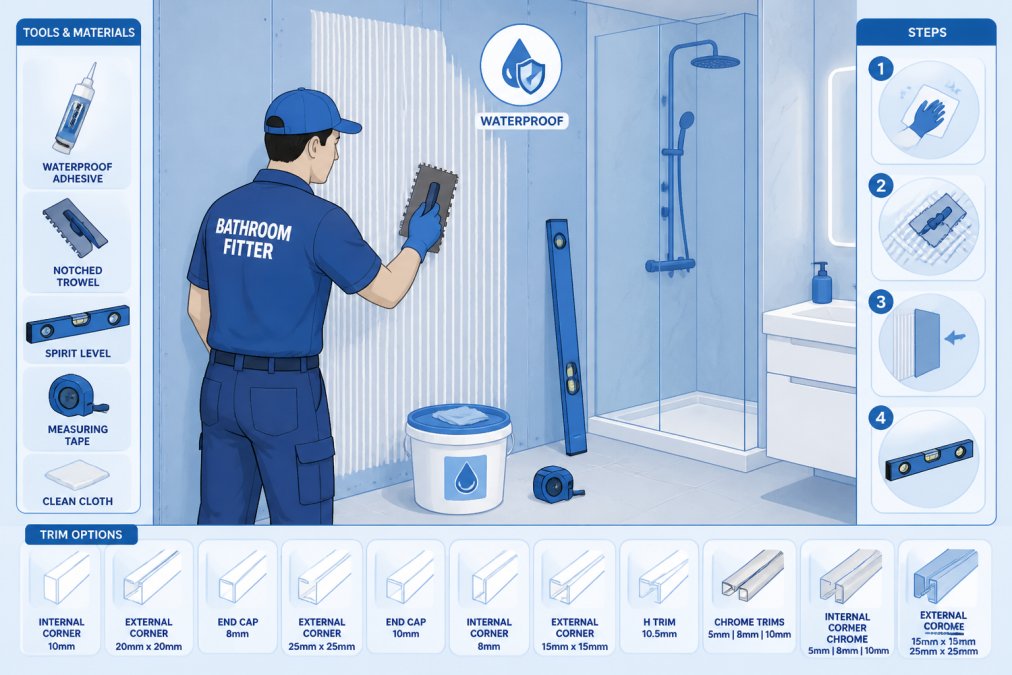
Panel installation follows a logical sequence that, when executed correctly, produces professional results. Start at the bottom of the wall and work upward, using spacers to maintain consistent gaps between panels.
Apply adhesive to the wall using a notched trowel, creating uniform ridges that collapse when panels are pressed into place. Decorwall Panel Adhesive Pro (£9.00 per 310ml tube) is specifically formulated for this application, bonding panels while remaining flexible enough to accommodate minor substrate movement. Press each panel firmly into the adhesive, working from the bottom upward. Use a spirit level to ensure panels are plumb and properly aligned.
Common installation mistakes include insufficient adhesive coverage, inadequate pressing pressure, and improper joint sealing. Insufficient adhesive leaves voids that allow moisture behind panels. Inadequate pressure prevents proper adhesive transfer to the panel back, reducing bond strength. Another frequent error is installing panels before wall preparation is complete. Take the time to prepare properly, and installations remain trouble-free for years.
Bathroom Panel Adhesive and Sealant Recommendations
Adhesive and sealant selection is as critical as panel choice. The right products ensure panels remain secure and moisture stays outside the wall assembly. Decorwall Panel Adhesive Pro (£9.00) is water-based and bonds panels to most surfaces, from plasterboard to existing tiles. For hybrid applications or areas requiring faster cure, Decorwall Megabond Adhesive (£9.00 per 295ml tube) offers hybrid polymer technology that bonds under wet conditions and cures faster.
Sealants prevent water ingress at joints and edges. GP200 General Purpose Silicone Sealant (£24.00 per pack of three) is UKCA-approved and includes fungicide, making it ideal for bathroom applications. It cures quickly, remains permanently flexible, and resists mold growth in high-humidity environments.
The choice between products depends on your specific application. Interior corners and panel-to-panel joints typically use adhesive alone if panels are tongue and groove, or sealant if they're butt joints. External corners and wall-to-ceiling joints require sealant to prevent water running behind panels. Application technique matters as much as product selection, adhesive should be applied in consistent ridges using a notched trowel, not spread as a continuous bed.
Moisture-Resistant Properties and Warranty Coverage
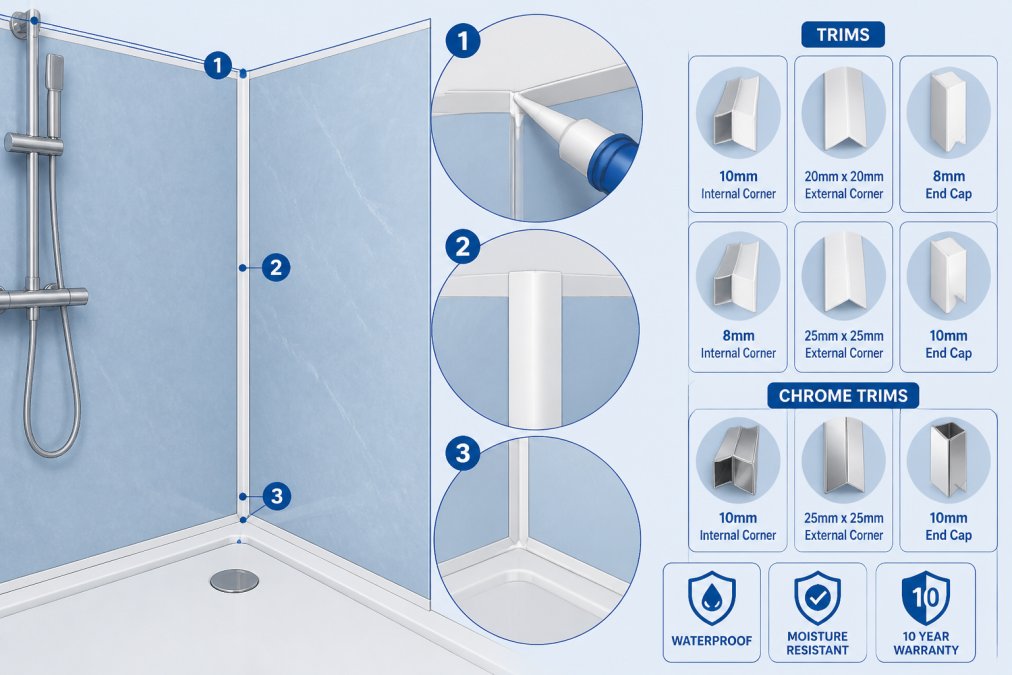
100% waterproof panels are the foundation of reliable bathroom installations. This specification means water cannot penetrate the panel material itself, regardless of exposure duration. Decorwall Maxi Panels in both Beige Marble and Antique Marble (£54.00 each) deliver this performance with a 5-year guarantee covering manufacturing defects.

Waterproofing in panels is achieved through the material composition and manufacturing process. PVC panels are inherently waterproof because the material doesn't absorb moisture. This differs from grout-based tile systems, where water can migrate through grout joints and into substrate layers, causing mold and structural damage.
The warranty coverage from a reliable bathroom panel supplier for fitters should specify what's protected. Manufacturing defects, material failures, and adhesive bond failures are typically covered. What's usually excluded is installation-related failure, substrate issues, or damage from improper maintenance. A five-year warranty is standard for quality bathroom panels and reflects manufacturer confidence in product durability.
Cost Comparison and Budget Planning
Budget planning for bathroom panel installations requires understanding both material costs and labor implications. Panel costs represent only part of the total project expense. Adhesives, sealants, trim, and labor typically add 40-60% to material costs.
Decorwall Elite Print panels at £11.00 each offer excellent value for smaller projects. A typical bathroom requiring 250mm-width panels (approximately 12-15 panels for standard wall areas) costs £132-£165 in materials. Add adhesive (£9.00 per tube, typically 2-3 tubes per bathroom), sealant (£24.00 per pack), and trim pieces (£12.00 each), and total material costs reach £200-£250.

Larger format panels like Decorwall Maxi Panels (£54.00 each) cover more area per panel, reducing total panel count but increasing per-unit cost. Kerradeco Stone Grey (£209.00 per pack) covers approximately 3.2 square meters, making it cost-effective for larger installations.
| Panel Type | Cost Per Unit | Coverage Per Unit | Best For |
|---|---|---|---|
| Decorwall Elite Print (250mm) | £11.00 | 0.68 m² | Small bathrooms, tight spaces |
| Decorwall Maxi Panels (900mm) | £54.00 | 2.16 m² | Standard bathrooms, larger areas |
| Kerradeco Stone Grey (pack of 8) | £209.00 | 3.2 m² | Premium finishes, large installations |
Professional installers typically plan for 10-15% waste on custom cuts and edge fitting. Total project budgets for a typical bathroom (8-10 square meters of wall area) range from £600-£1,200 including materials and labor. Premium finishes and larger spaces can exceed £2,000.
Choosing a reliable bathroom panel supplier for fitters fundamentally changes how you approach bathroom installations. The right partner provides consistent products, reliable delivery, technical support, and competitive pricing that improves your margins while maintaining quality. Wetwall Wonders delivers all of these through an extensive range of panel options, comprehensive installation materials, and a commitment to trade professionals who build their reputation on reliable materials. Start with a sample order to evaluate quality and service, then scale to regular supply as you expand your installation capacity.
Frequently Asked Questions
What should professional fitters look for in a bathroom panel supplier?
Professional fitters should prioritise suppliers offering consistent stock, quick turnaround times, and bulk trade discounts. A reliable bathroom panel supplier stocks a full range of materials, adhesives, silicones, and trims so you don't source from multiple places. Look for suppliers with proven waterproofing credentials, 5-year guarantees, and technical support for installation queries. UK fire-rated panels and UKCA-approved sealants are essential for compliance.
How do I prevent water damage and mould behind bathroom wall panels?
Proper installation is critical. Use recommended bathroom panel adhesive and sealant products like Decorwall Panel Adhesive Pro or Megabond Adhesive, which bond securely to wall surfaces and cure fully within 24 hours. Apply silicone sealant (such as GP200 with fungicide) at all joints, corners, and edges where moisture could penetrate. Ensure wall preparation removes damp, loose plaster, and uses a suitable primer. Moisture-resistant panels with 100% waterproof properties combined with correct sealant application prevent water ingress.
Are bathroom wall panels genuinely easy to install for DIY homeowners?
Yes, tongue and groove bathroom wall panels are designed for straightforward installation. Panels like Decorwall Elite Print (250mm wide, £11.00 per panel) and Decorwall Maxi Panels (900mm wide, £54.00 per panel) fit together seamlessly without grout. Most homeowners can install them with basic tools and adhesive. However, proper wall preparation, using the correct adhesive, and careful sealant application are essential to avoid bubbling or peeling. First-time installers should follow fitting instructions closely and allow adhesive to cure fully before exposing panels to moisture.
What's the cost difference between bathroom panels and traditional tiles?
Bathroom wall panels offer better value than tiles when you factor in labour and materials. A Decorwall Maxi Panel at £54.00 covers 2.16 m² and includes a 5-year guarantee. Decorwall Elite Print panels at £11.00 each cover smaller areas (0.675 m² per panel). Installation is faster because there's no grouting, and panels are grout-free and easy-clean. You'll also need adhesive (£9.00) and sealant (£24.00 for a pack of three), but total material costs are typically lower than equivalent tile solutions, and labour time is significantly reduced.
This article was written using GrandRanker

