
Bathroom Wall Panels vs Ceramic Tiles: 2026 Comparison
Table of Contents
- Bathroom Wall Panels vs Ceramic Tiles: Quick Comparison
- Best Waterproof Wall Panels for Showers: Material Breakdown
- Installation Process and Complexity
- Bathroom Wall Panel Installation Cost vs Tiling Expenses
- Pros and Cons of Shower Wall Panels
- Maintenance and Long-Term Care
- Moisture Resistance and Mould Prevention
- Which Option Suits Your Bathroom?
Last Updated: August 17, 2026
Bathroom Wall Panels vs Ceramic Tiles: Quick Comparison
Choosing between bathroom wall panels and ceramic tiles affects aesthetics, installation time, maintenance, durability, and cost. Both deliver waterproof surfaces but work fundamentally differently. Wall panels have gained traction among DIY renovators and professionals seeking faster installation and lower maintenance. Ceramic tiles remain the traditional standard with proven longevity and design flexibility. The right choice depends on your priorities, skill level, budget, and bathroom use patterns.
| Aspect | Wall Panels | Ceramic Tiles |
|---|---|---|
| Installation Time | 1-2 days | 3-7 days |
| Grout Maintenance | None required | Regular cleaning needed |
| Material Cost (per m²) | £30-60 | £20-50 |
| Waterproofing | 100% seamless | Grout-dependent |
| Moisture Resistance | Excellent | Good (if grout sealed) |
| Mould Risk | Very low | Moderate to high |
| DIY Difficulty | Easy to moderate | Moderate to difficult |
| Lifespan | 10-15+ years | 15-20+ years |
| Aesthetic Variety | Growing | Extensive |
| Resale Value Impact | Neutral to positive | Positive |
Best Waterproof Wall Panels for Showers: Material Breakdown
Modern bathroom wall panels come in distinct material types, each with different performance characteristics and durability profiles.
PVC Wall Panels: Durability and Water Resistance
PVC (polyvinyl chloride) dominates the wall panel market because it delivers genuine waterproofing with straightforward installation. Unlike tiles relying on grout to prevent water ingress, PVC panels are solid throughout, water cannot penetrate the material itself.
Wetwall Wonders stocks several PVC-based solutions. The Decorwall Elite Print panels use 77% PVC composition at 8mm thickness, delivering strong moisture resistance in a lightweight format. The Decorwall Maxi Panels reach 900mm width and 10mm thickness, reducing seams and installation time. These panels feature tongue-and-groove connections that lock together seamlessly with no exposed edges where water could penetrate.

The Dumawall+ High Gloss range offers tile-effect appearance using solid PVC construction. Sold in packs of 8 (covering 1.95m² per pack), these panels include micro grout line detail mimicking traditional ceramic tiles whilst eliminating actual grout maintenance. PVC panels resist impact damage better than ceramic tiles, a dropped object will dent or crack ceramic tile; the same impact on a PVC panel typically leaves a superficial mark invisible from normal viewing distance.
Ceramic Tiles: Porcelain vs Standard Options
Ceramic tiles split into two material types: standard ceramic and porcelain, with porcelain being superior for wet areas.
Standard ceramic tiles are made from clay fired at lower temperatures, creating a porous material absorbing roughly 3-6% of their weight in water, making them unsuitable for constant moisture areas. Porcelain tiles fire at much higher temperatures, creating a denser, non-porous surface absorbing less than 0.5% moisture. For bathroom walls, porcelain is the only sensible ceramic choice.
Ceramic tiles offer extensive aesthetic advantages, colours, patterns, sizes, and textures range from traditional metro tiles to large-format planks to intricate mosaics. However, grout lines are porous and prone to mould growth in humid environments. Even sealed grout degrades over time, requiring periodic resealing and regular cleaning.
Installation Process and Complexity
Installation difficulty reveals the practical difference between these approaches.
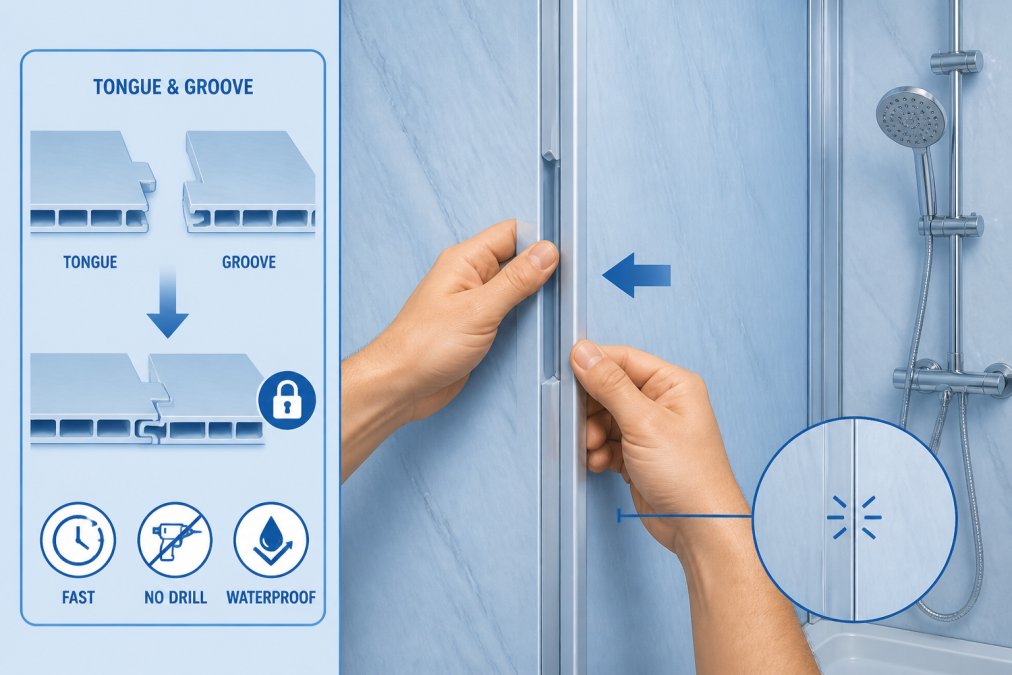
Wall panel installation follows a straightforward sequence: prepare the substrate, apply adhesive or mechanical fixings, and connect panels using tongue-and-groove or click-lock systems. Most wall panels require no special tools beyond a spirit level, tape measure, and basic saw. An experienced DIY renovator completes installation in one to two days.
Ceramic tile installation demands more technical skill. The process requires mixing and applying tile adhesive at consistent thickness, placing tiles with proper spacing, allowing adhesive to cure, then grouting joints and sealing grout. The wall must be perfectly level and structurally sound, as any movement causes grout cracking and water ingress. Wall panels are more forgiving of minor substrate irregularities.
Grouting introduces another skill requirement. Improper grouting, the most common DIY mistake, leaves gaps where water penetrates behind tiles. Professional tile installers spend years developing this skill. Ceramic tiles typically require 1-2 days substrate preparation, 3-7 days installation, and 2-3 days grout curing before the bathroom is usable. Total project timeline: 6-12 days versus 1-3 days for wall panels.
Bathroom Wall Panel Installation Cost vs Tiling Expenses
Cost comparison requires separating material costs from labour costs.
Material Costs
Wall panel material costs range from £30 to £60 per square metre. Wetwall Wonders' Decorwall Elite Print panels cost approximately £16-17 per m². Larger Decorwall Maxi Panels cost approximately £25 per m².

For a typical small bathroom shower wall (roughly 5m²), material costs range from £80-300 depending on panel selection. Ceramic tile material costs typically range from £20 to £50 per m² for decent quality porcelain. A 5m² shower wall requires 5.5-5.75m² of material (including waste). Add substrate preparation materials, grout and adhesive at £50-100. Total tile material costs: £215-330.
Wall panels require adhesive and silicone sealant at £20-40 total. Total material costs: £100-340 depending on panel selection. At material level, costs are roughly equivalent.
Labour and Installation Expenses
Professional installation labour for wall panels typically costs £200-400 for a small bathroom. Ceramic tile installation labour runs £40-80 per hour. A 5m² wall with simple rectangular tiles requires 8-12 hours of skilled work, totalling £320-960 in labour.
Total installation costs:
- Wall panels: £200-400 labour + £100-300 materials = £300-700 total
- Ceramic tiles: £400-1000 labour + £215-330 materials = £615-1330 total
Wall panels deliver 40-50% labour cost savings. For DIY renovators, wall panels are genuinely achievable; ceramic tiles demand either significant learning investment or professional help.
Pros and Cons of Shower Wall Panels
Wall panels deliver genuine advantages in specific situations, but they're not universally superior to tiles.
Advantages of Wall Panels
Speed of installation stands out as the primary advantage. A bathroom renovation taking a professional tiler two weeks completes with wall panels in three days. DIY renovators benefit even more.
Maintenance simplicity is the second major advantage. Wall panels have no grout lines, eliminating the primary source of mould growth in bathrooms. Cleaning requires only warm water and a soft cloth. Over a 10-year period, this time savings accumulates significantly.
Moisture resistance is built into the material itself rather than depending on grout integrity. Water cannot penetrate solid PVC panels, whereas ceramic tiles rely on grout to prevent water from entering the wall cavity behind them.
Cost efficiency favours panels when labour is considered. A DIY project saves £300-400 in professional installation; even with professional installation, panels cost 30-40% less than ceramic tiles.
Impact resistance is practically important. Ceramic tiles crack or chip from dropped objects; PVC panels dent superficially and continue functioning perfectly.
Substrate tolerance makes panels more forgiving. Minor wall irregularities pose no problem for panels. Tiles demand perfectly prepared substrates, adding preparation time and cost.
Drawbacks to Consider
Aesthetic limitations remain the biggest weakness. Whilst options have expanded dramatically, the range doesn't match ceramic tiles. If your design vision requires specific tile sizes, patterns, or finishes, panels may not deliver the exact look.
Perceived quality affects resale value perception. Many homeowners and estate agents still associate wall panels with budget renovations, whilst ceramic tiles feel more premium.
Long-term durability questions surround some panel types. Whilst quality PVC panels carry 10-15 year warranties, they haven't been in widespread use long enough to have a 25-year performance history. Ceramic tiles have centuries of proven performance.
Water ingress risk exists if installation is poor. Panels rely on proper adhesive application and silicone sealant around edges and seams. If these aren't applied correctly, water can penetrate behind panels, causing hidden mould.
Maintenance and Long-Term Care
Maintenance requirements diverge dramatically between these options, affecting both time investment and long-term costs.
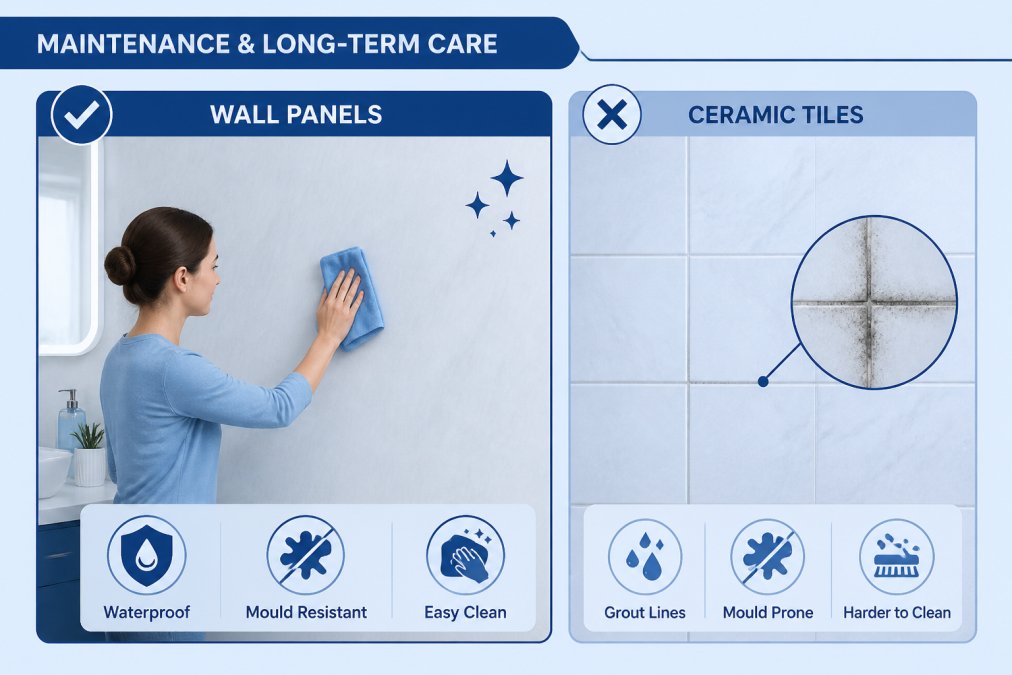
Wall panel maintenance is minimal. Weekly cleaning with warm water and a soft cloth removes soap residue and keeps surfaces hygienic. PVC panels resist staining and don't discolour over time the way grout does. Annual maintenance is essentially non-existent.
Ceramic tile maintenance is more involved. Grout lines require regular cleaning because they trap dirt, soap scum, and moisture. Weekly scrubbing with a grout brush prevents discoloration and mould. Every 2-3 years, grout sealer should be reapplied to maintain water resistance. If grout fails, regrouting becomes necessary, typically requiring professional help.
Over 10 years, the time spent scrubbing grout lines, dealing with mould, and managing sealer reapplication totals dozens of hours. Wall panels eliminate this burden entirely. Long-term cost of maintenance also favours panels. Grout sealer costs £10-20 per application and requires reapplication every 2-3 years. Over a 15-year period, sealing costs £50-100. Professional grout resealing costs £200-400. Wall panels have zero ongoing maintenance costs.
Moisture Resistance and Mould Prevention
Moisture resistance determines bathroom longevity. Wall panels deliver inherent moisture resistance because the material itself is non-porous. Water cannot enter PVC panels; it simply sits on the surface and drains away. This eliminates the mechanism by which mould grows. Mould requires moisture, organic material to feed on, and darkness. Solid PVC panels provide none of these conditions.
The silicone sealant used at panel edges and seams is the only potential moisture vulnerability. Quality silicone remains flexible and waterproof for 10+ years if properly applied.
Ceramic tiles are porous at the grout level. Even sealed grout absorbs some moisture, and grout naturally degrades over time as water and humidity cycles cause expansion and contraction. Once grout cracks or the seal fails, water penetrates into the wall cavity behind tiles. In that dark, moist environment, mould thrives invisibly.
The difference compounds in high-humidity areas. Ensuite bathrooms, wet rooms, and showers with poor ventilation create constant moisture stress. Grout fails faster in these conditions. Wall panels are indifferent to humidity levels, performing identically whether your bathroom is well-ventilated or perpetually steamy. For mould prevention specifically, wall panels are objectively superior.
Which Option Suits Your Bathroom?
The right choice depends on your specific situation, priorities, and constraints.
Choose wall panels if:
You're renovating on a tight timeline and can't afford extended bathroom downtime. You want minimal ongoing maintenance. You're a DIY renovator without professional tiling skills. Your bathroom has high humidity or poor ventilation. You're budget-conscious and factoring in labour costs. You prioritise mould prevention.
Choose ceramic tiles if:
Your design vision requires specific tile sizes, patterns, or finishes that panels can't match. You're renovating an upmarket property where buyer expectations favour traditional finishes. You're planning to stay in your home for 20+ years and want proven long-term performance. You're willing to invest in proper maintenance. You want maximum design uniqueness.
Choosing between wall panels and ceramic tiles reflects your priorities: speed and simplicity versus design flexibility and traditional aesthetics. Wall panels have matured significantly in recent years, with quality tile-effect options like Dumawall+ and premium finishes delivering genuine aesthetic appeal alongside practical advantages. Wetwall Wonders supplies complete panel systems with adhesives, silicones, and installation accessories, eliminating the need to source materials from multiple suppliers.
If you're ready to explore wall panel options, browse Wetwall Wonders' range including Decorwall Elite Print panels starting at £11, Decorwall Maxi Panels at £54, and Dumawall+ tile-effect options from £3.95 per pack. Each product includes comprehensive installation guidance and compatible adhesives, ensuring your renovation delivers professional results whether you're tackling this as a DIY project or coordinating professional installation.
Frequently Asked Questions
Are bathroom wall panels cheaper than ceramic tiles?
Wall panels typically cost less upfront and are faster to install, reducing labour charges. Decorwall panels start from £11 per panel, whilst ceramic tiles require grouting, sealing, and often professional installation. However, total cost depends on room size and finish quality. Panels offer better value for DIY projects and small bathrooms where installation speed matters.
How do bathroom wall panels handle moisture compared to grout?
Wall panels are 100% waterproof with no grout lines, eliminating water ingress behind surfaces. Ceramic tiles rely on grout, which can crack, absorb water, and harbour mould growth over time. Panels with silicone sealant at edges provide superior moisture resistance. This makes panels ideal for wet rooms and shower enclosures where water exposure is constant.
Do bathroom wall panels require professional installation?
Most wall panels are DIY-friendly. Tongue and groove designs allow panels to click together, and they adhere with standard adhesive or silicone. Ceramic tiles require skill in substrate preparation, adhesive spreading, and grout application. Panels suit homeowners tackling small ensuites or tight spaces without calling a fitter, though professional installation ensures flawless results in larger bathrooms.
What is the long-term resale value impact of wall panels versus tiles?
Ceramic tiles remain the traditional choice and may appeal to some buyers, but quality wall panels with tile-effect finishes (like Dumawall or Decorwall Ultimo) now compete favourably. Panels show better durability in wet areas, resist mould, and require minimal maintenance. Buyers increasingly prefer low-maintenance finishes, making modern panels a genuine asset rather than a liability for property value.
This article was written using GrandRanker

