
Wetwall Works Alternatives for Installers
Table of Contents
- Why Installers Choose Wetwall Works Alternatives
- Waterproof Bathroom Wall Panels Trade: Key Differences
- Laminate vs Acrylic Shower Panels: Which Performs Better
- Top Alternatives to Wetwall Works for Professional Installers
- Bathroom Wall Panel Installation Tips for Trade Professionals
- Substrate Preparation and Compatibility
- Cost Comparison and Long-Term Value
- Conclusion
Last Updated: August 14, 2026
Why Installers Choose Wetwall Works Alternatives
Professional installers evaluating wetwall works alternatives often find themselves weighing performance, cost, installation speed, and long-term durability. The market has expanded significantly beyond the original market leader, offering genuine alternatives that solve specific problems installers face on site.
The core issue isn't that Wetwall Works lacks quality, it's that different projects demand different solutions. A tight ensuite with awkward angles needs something different from a large family bathroom. A fitter working on volume jobs needs rapid turnaround. A designer specifying high-end finishes needs aesthetic flexibility. When you're managing multiple installations monthly, flexibility in material choice directly impacts your workflow, margins, and client satisfaction.
At Wetwall Wonders, we've worked with installers who've tested multiple panel systems. The common thread in their feedback: they value choice. The best alternative isn't always the cheapest. It's the one that performs where it matters most for that specific job.
Waterproof Bathroom Wall Panels Trade: Key Differences
The professional bathroom wall panel trade operates on different criteria than homeowner DIY projects. Trade installers prioritize substrate compatibility, installation speed, warranty coverage, and material consistency. These aren't luxury concerns, they directly affect labour costs, callbacks, and reputation.
Waterproof bathroom wall panels come in three primary construction types: solid composite, PVC tile-effect, and laminate-based systems. Each handles moisture differently, bonds to different substrates, and requires distinct installation approaches. Understanding these differences separates installers who work efficiently from those who encounter problems mid-job.
Solid composite panels like the Hardex Solid Wall Panel (£126.00) use wood plastic composite construction, offering durability suited to high-traffic commercial and residential environments. PVC tile-effect systems like Dumawall+ create grout-free surfaces with tongue-and-groove connections that click together rapidly. Laminate alternatives provide cost-effective solutions but demand more careful substrate preparation and moisture management.

The trade distinction matters because installers can't afford callbacks. A panel system that fails due to moisture ingress behind the surface costs time, materials, and reputation. Professional-grade alternatives address this by offering better adhesive compatibility, clearer installation protocols, and longer manufacturer warranties.
Laminate vs Acrylic Shower Panels: Which Performs Better
When comparing laminate versus acrylic shower panels, the performance gap widens in high-moisture environments. Acrylic-based systems handle sustained humidity better, whilst laminate alternatives require more rigorous substrate preparation to prevent edge swelling or delamination.
Acrylic panels resist water penetration at seams more effectively because they're non-porous throughout. Laminate panels have a veneer surface over a substrate core, if moisture reaches the core through damaged edges or improper sealing, failure accelerates. This doesn't mean laminate can't work; it means installation precision matters more.
For shower enclosures specifically, acrylic-based alternatives like Dumawall+ High Gloss Mura (£3.95 per panel, sold in packs of 8) perform better long-term. The solid PVC construction means no substrate to absorb moisture. For wall cladding in less wet areas, powder rooms, hallways, feature walls, laminate alternatives can deliver acceptable performance at lower cost if substrate prep is thorough.

The trade decision often comes down to project scope and client expectations. A high-end master bathroom renovation justifies acrylic-based systems. A budget renovation or secondary bathroom cladding may suit laminate alternatives if the installer controls substrate conditions properly.
Top Alternatives to Wetwall Works for Professional Installers
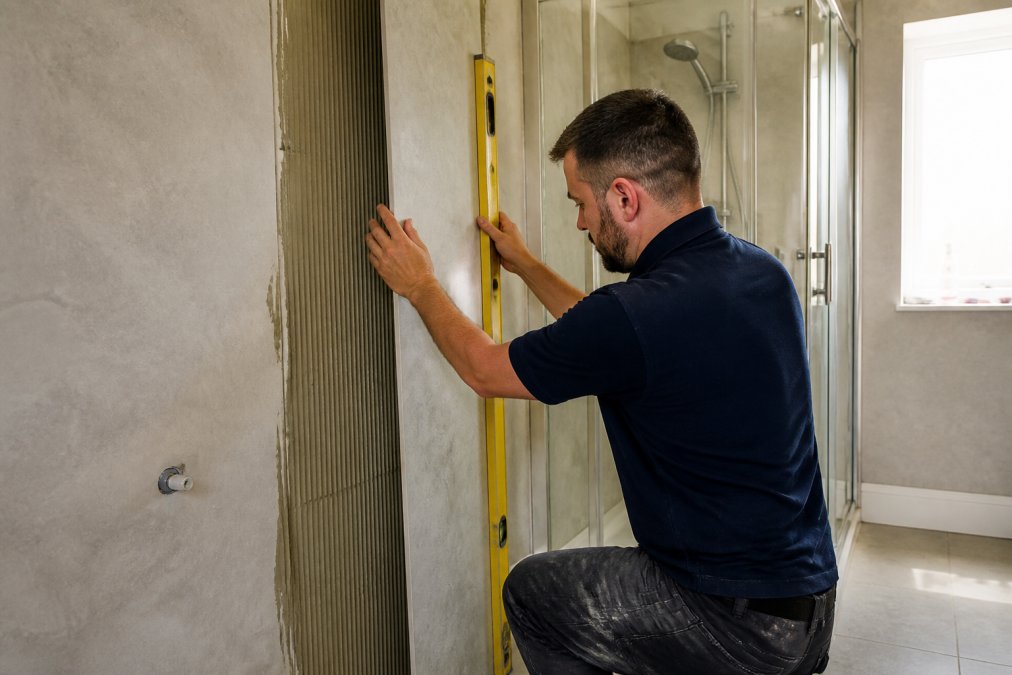
Hardex Solid Wall Panel
The Hardex Solid Wall Panel (£126.00) represents the premium composite alternative. Constructed from durable wood plastic composite, this system delivers commercial-grade durability for residential and commercial applications. The 2.4-metre length and 1220mm width suit large bathroom spaces, reducing visible seams and installation complexity.
What sets Hardex apart for installers is substrate flexibility. It bonds reliably to various substrates, plasterboard, tile, even existing ceramic, without requiring complete removal. The solid composite construction resists impact damage, making it suitable for high-traffic areas like gym changing rooms or commercial spa facilities.
Installation involves standard adhesive application and mechanical fixing if required. The flush square edge design creates clean transitions without complex trim work. Installers report that Hardex panels handle uneven walls better than tile-effect alternatives because the larger format spans minor substrate imperfections.
The trade-off is cost. At £126.00 per panel, material investment is higher than smaller tile-effect alternatives. For installers pricing jobs competitively, this affects margins unless clients specifically request premium composite finishes.
Dumawall+ High Gloss Panels
Dumawall+ High Gloss Mura (£3.95 per panel, sold in packs of 8) dominates the tile-effect segment for good reason. The tongue-and-groove connection system allows rapid installation, panels click together without adhesive dependency, though adhesive is recommended for permanent fixing. This design appeals to installers managing multiple jobs monthly.
The 100% waterproof PVC construction eliminates substrate moisture concerns. Unlike laminate alternatives, there's no core material to absorb water. The micro grout line design mimics traditional tile appearance without actual grouting, reducing cleaning complexity for clients.
Coverage per pack is 1.95 square metres, meaning a typical shower enclosure (2.4m height, 1.5m width) requires approximately 2 packs. The small panel size makes transport and manoeuvring easy, a significant practical advantage for installers working in tight spaces or upper-floor bathrooms.
Dumawall+ includes a 10-year manufacturer's warranty, providing client confidence and reducing callback risk. The high gloss finish creates contemporary aesthetics that appeal to design-conscious clients, justifying the panel cost in premium market positioning.
Kerradeco Stone Grey
Kerradeco Stone Grey (£209.00 per pack) targets installers seeking premium stone-effect aesthetics. Each pack contains 8 boards measuring 1350mm × 295mm × 9mm, delivering 3.186 square metres coverage. The premium PVC construction is 100% waterproof with a modern, hygienic finish inspired by natural stone textures.
For installers working on high-end residential projects or boutique hospitality installations, Kerradeco justifies premium pricing through visual impact. The stone-effect finish photographs well for portfolio work, supporting installer reputation in the design-conscious market segment.
Installation follows standard PVC panel protocols, adhesive application, vertical alignment, and sealant finishing. The 9mm thickness provides structural rigidity without excessive weight, reducing installation labour compared to heavier composite alternatives.
The limitation is cost sensitivity. At £209.00 per pack, material costs accumulate quickly for large projects. Installers must position Kerradeco as a premium upgrade rather than a standard specification to maintain client acceptance.
Decorwall Elegance Mineral Panels
Decorwall Elegance Mineral Calcite Wall Panel in 300mm width (£22.00 per panel) offers flexibility for installers needing modular sizing options. The 300mm width suits narrow spaces, ensuites, cloakrooms, sloped ceilings, where larger panels create awkward cuts and waste.
The stone-effect finish and 8mm thickness deliver durability whilst maintaining lightweight handling. Installation is straightforward: adhesive application and vertical alignment. The 100% waterproof PVC construction handles shower environments reliably.
What installers appreciate is the range of width options. Decorwall supplies 250mm, 300mm, 500mm, and 900mm widths, allowing specification flexibility without forcing custom cuts. For a tight ensuite where standard panels create gaps, the 250mm or 300mm options solve the problem elegantly.
Cost per panel is modest, £22.00, making material budgets predictable. For volume installers, Decorwall's modular approach reduces waste and speeds quoting because panel selection is straightforward rather than requiring custom calculations.
Bathroom Wall Panel Installation Tips for Trade Professionals
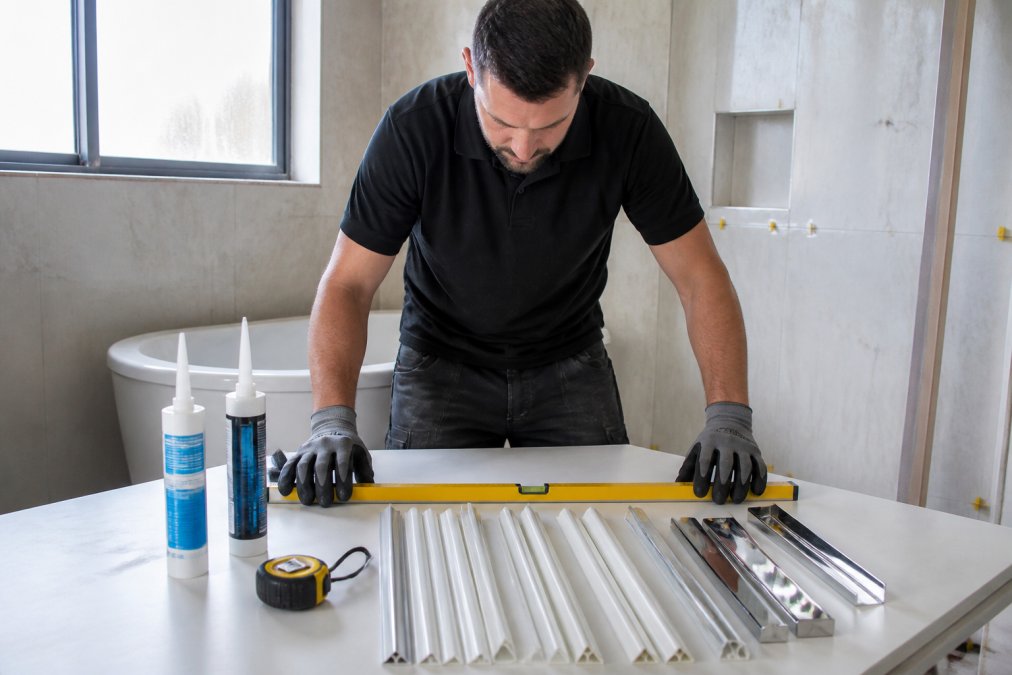
Installation success depends on substrate preparation, adhesive selection, and alignment discipline. Most callbacks result from substrate issues rather than panel defects, moisture trapped behind panels, uneven surfaces causing panel flexing, or inadequate sealant allowing water ingress at edges.
Begin with substrate assessment. Existing ceramic tile can remain if it's firmly bonded and level. Loose tiles must be removed. Painted plasterboard must be sanded to improve adhesive grip. Moisture-damaged plasterboard requires replacement. This assessment determines installation timeline, a straightforward job on sound substrate takes one day; a job requiring substrate repair extends to three days.
Level the substrate using skim coat or self-levelling compound if height variation exceeds 3mm across the panel width. This step is non-negotiable. Panel systems are rigid, they won't conform to undulating surfaces. Forcing panels onto uneven substrates causes flexing, adhesive failure, and eventual water ingress.
Apply adhesive using a notched trowel, creating consistent ridges. Panel weight and adhesive type determine trowel size, larger panels need deeper ridges. Leave no voids in the adhesive bed. Installers often rush this step; it's where most failures originate.
Start installation from a corner, working upward and outward. Use a spirit level continuously. Adjust panels immediately after placement, adhesive sets quickly, making repositioning difficult after 10-15 minutes. For tile-effect panels with tongue-and-groove connections, ensure grooves engage fully before pressing the panel against adhesive.
Sealant finishing is critical. Apply silicone sealant (not grout) at all edges, seams, and transitions. Silicone remains flexible as temperature and humidity fluctuate, preventing crack formation. Grout is rigid and will fail in bathroom environments where movement occurs.
Substrate Preparation and Compatibility
Substrate preparation determines panel longevity more than panel quality. Different panel systems have specific substrate requirements, understanding these prevents costly failures.
Solid composite panels like Hardex bond to multiple substrates: plasterboard, tile, even concrete. The strong adhesive compatibility means substrate options are flexible. However, the substrate must still be clean, dry, and level. Existing tile provides a stable base if firmly bonded; loose tile must be removed and the wall re-skimmed.
PVC tile-effect panels require different consideration. The lightweight construction means substrate must be sound, plasterboard must not flex. If existing plasterboard flexes under hand pressure, reinforce it with additional fixings or replace it. PVC panels amplify substrate movement, causing adhesive failure and water ingress.
Moisture is the universal enemy. Test substrate moisture using a moisture meter before installation. Plasterboard should read below 12% moisture content. If readings exceed this, identify and remedy the moisture source before proceeding. Installing panels over damp substrate guarantees failure within months.
Existing ceramic tile presents a decision point. If tile is firmly bonded and level, it can serve as substrate. If tile is loose, remove it completely. Attempting to install panels over partially loose tile creates hollow voids where water accumulates, leading to mould and structural damage.
For new installations, use moisture-resistant plasterboard (green board) rather than standard plasterboard. The additional cost is modest; the risk reduction is substantial. In high-moisture areas like shower enclosures, consider cement board as substrate, it resists moisture far better than plasterboard.
| Substrate Type | Suitability | Preparation Required | Risk Level |
|---|---|---|---|
| Sound ceramic tile | High | Clean, level check | Low |
| Loose ceramic tile | Poor | Complete removal required | High |
| Standard plasterboard | Medium | Moisture test, sanding | Medium |
| Moisture-resistant plasterboard | High | Clean, moisture test | Low |
| Cement board | High | Minimal | Low |
| Painted plasterboard | Medium | Sand surface | Medium |
| Concrete | Medium | Level assessment, priming | Medium |
Cost Comparison and Long-Term Value
Material cost alone doesn't determine value. Installation labour, warranty coverage, and long-term durability create the total cost picture.
Dumawall+ High Gloss Mura (£3.95 per panel) offers the lowest material cost. For a typical shower enclosure (approximately 4 square metres), material cost is roughly £80-90. Installation labour is rapid due to tongue-and-groove connections, reducing total project cost significantly. Long-term durability is excellent, the 10-year warranty reflects genuine material confidence.
Hardex Solid Wall Panel (£126.00) represents premium material investment. A 4-square-metre area requires approximately 2 panels, totalling £252. Installation labour is moderate, adhesive application and fixing take longer than tile-effect alternatives. However, the commercial-grade durability justifies the investment for high-traffic areas or premium market positioning.
Kerradeco Stone Grey (£209.00 per pack) costs more than Dumawall+ but delivers premium aesthetics. For a 4-square-metre area, 2 packs total £418. The stone-effect finish supports premium pricing in design-conscious markets, allowing installers to recover material costs through higher labour rates or project markups.

Decorwall Elegance Mineral (£22.00 per panel) offers flexibility for modular sizing. Cost varies by project, a standard bathroom might use 15-20 panels, totalling £330-440. The modular approach reduces waste compared to larger panels requiring custom cuts.
Long-term value emerges through warranty coverage and callback risk. A system with comprehensive warranty and proven durability reduces callback costs, labour, materials, and reputation impact. The cheapest panel system that fails within three years costs far more than a premium system lasting 15 years.
Installers should factor labour efficiency into pricing. A system that installs 30% faster reduces labour cost per square metre, offsetting higher material cost. A system requiring extensive substrate preparation increases labour cost, reducing net margin despite lower material cost.
For competitive positioning, installers often bundle material choice with labour cost transparency. Rather than competing purely on price, explaining material durability, warranty coverage, and installation efficiency justifies premium positioning and attracts clients valuing quality over lowest cost.
Professional installers succeed by matching panel systems to specific project requirements rather than defaulting to a single solution. Wetwall Wonders supplies multiple alternatives, from the premium Hardex Solid Wall Panel (£126.00) for commercial-grade durability to the rapid-install Dumawall+ High Gloss Mura (£3.95 per panel) for high-volume projects. Each system serves distinct purposes. Assess your project's moisture exposure, substrate condition, timeline, and client budget, then select the alternative that optimises for those variables. Get started with Wetwall Wonders and access complete installation materials, adhesives, silicones, and trims, ensuring you source everything from one reliable supplier rather than coordinating multiple vendors.
Frequently Asked Questions
What are the best waterproof bathroom wall panels alternatives to Wetwall Works?
Top alternatives include Hardex Solid Wall Panels (£126.00), Dumawall+ High Gloss tiles (£3.95 per pack), Kerradeco Stone Grey (£209.00), and Decorwall Maxi Panels (£54.00). Each offers 100% waterproof protection, grout-free installation, and durability. Hardex suits commercial and residential projects with its wood plastic composite construction. Dumawall+ delivers a tile effect with tongue-and-groove ease. Kerradeco provides premium PVC with natural textures. Decorwall Maxi offers larger format panels for faster coverage. Choose based on project scale, aesthetic preference, and installation timeline.
Are PVC wall panels a durable alternative to laminate shower boards?
Yes. PVC panels are highly durable for wet areas, offering superior moisture resistance compared to laminate. PVC is 100% waterproof, whereas laminate can absorb water at edges and seams if not sealed correctly. PVC panels resist impact, UV fading, and mould growth. Laminate requires more maintenance and careful sealing around joints. For professional installers, PVC panels deliver faster installation via tongue-and-groove systems, fewer callbacks due to water damage, and longer service life. Most trade-grade PVC options carry 5-10 year warranties.
How do I ensure water doesn't get behind wall panels during installation?
Proper substrate preparation and sealant application are critical. First, ensure the substrate is level, clean, and dry. Apply a moisture barrier if the wall shows any dampness. Use quality silicone sealants around all edges, seams, and transitions. Apply sealant to the top edge where panels meet the ceiling and the bottom edge at the floor or skirting. Check all vertical joints for complete sealant coverage. Use waterproof adhesives recommended by the panel manufacturer. Avoid gaps between panels and the wall surface. Professional installers should inspect the substrate for existing water damage before starting, as compromised surfaces can allow water ingress behind even premium panels.
What size panels work best in narrow ensuite spaces?
Smaller panel widths (250mm to 300mm) are ideal for tight spaces. Decorwall Elegance panels at 300mm width offer excellent flexibility for narrow ensuites, reducing awkward seams and waste. Dumawall+ at 37.5cm width provides similar advantages. Larger formats like the 900mm Decorwall Maxi work better in spacious bathrooms. For narrow spaces, measure wall width and plan layouts to minimise cuts and edge seams. Tongue-and-groove panels allow you to stagger joints naturally. Always account for trim profiles at corners and edges, which add 10-15mm to final dimensions. Test-fit layouts before adhesive application to avoid gaps.
This article was written using GrandRanker

