
Sustainable Stone-Effect Bathroom Wall Panels Explained
Last Updated: November 25, 2026
Quick Summary
Sustainable stone-effect bathroom wall panels are large-format wall coverings made from a rigid, usually PVC, core printed with a stone pattern and finished with a protective top layer. Their strongest sustainability argument is a long service life with wipe-down cleaning, though the petrochemical core and limited end-of-life recycling are real weaknesses.
- Ask suppliers for the recycled content percentage and whether it sits in the core, print film or packaging.
- Panels cut installation waste to trim offcuts and remove grout, which is the maintenance weak point of tiled walls.
- You can fit panels over existing tiles if the surface is sound, flat and clean, avoiding stripping the wall.
- The Decorwall Maxi panels measure 2400mm x 900mm x 10mm and carry a 5-year guarantee.
- Most PVC-core panels currently go to general waste, so maximise service life and repair rather than replace.
Table of Contents
- What Sustainable Stone-Effect Panels Are Made From
- Bathroom Wall Panels vs Tiles: Cost, Time and Waste
- Recycled Bathroom Wall Panels: Reading the Claims
- How to Install Bathroom Wall Panels Over Existing Tiles
- Low-Maintenance Bathroom Wall Panels: Cleaning and Longevity
- Stone Finishes, Panel Sizes and Matching Your Bathroom
- Ordering Panels, Adhesives and Trims in One Delivery
- Frequently Asked Questions
What Sustainable Stone-Effect Panels Are Made From
Sustainable stone-effect bathroom wall panels are large-format wall coverings built from a rigid core, printed with a stone or slate pattern and finished with a protective top layer. They mimic natural stone without quarrying it. Panels of this type are built this way, which is what makes the sustainability conversation possible and also what makes it complicated.
The core is the important part. Most panels in this category use a PVC composition, and PVC is where the environmental questions sit. It is durable and waterproof, which extends service life, but it is petroleum-derived and recycling infrastructure for it is patchy.
A stone-effect panel is a decorative surface bonded to a waterproof core, not a slice of stone. That distinction matters: you are buying a printed finish and a plastic substrate, so judge it on both.
What to ask before you accept a sustainability claim
A credible supplier should be able to answer these without deflection:
- What percentage of the total panel weight is recycled material, and is it post-industrial or post-consumer?
- Is the recycled content in the core, the print film, or only the packaging?
- Which certification body verified the figure, and what is the certificate number?
- What is the expected service life under normal bathroom conditions, and what guarantee backs it?
- Can the panel be returned, recycled, or safely disposed of at end of life, and through which route?
WRAP guidance on PVC and plastics sustainability sets out why recycled content claims need scrutiny rather than acceptance at face value.
Watch out: "eco-friendly" printed on a product page is marketing, not evidence. Ask for the recycled content percentage and where the material comes from before you pay.
How the construction compares with tile and natural stone
On a like-for-like wall, the trade-offs are not as one-sided as sales pages suggest. Ceramic tile is mineral-based, inert, and widely recyclable in principle, but it carries high embodied energy from firing, plus adhesive, grout, and the waste generated during cutting and breakage. Natural stone has the lowest processing impact per square metre in some cases but is heavy, needs sealing, and carries quarrying and transport impacts. A PVC-core panel avoids grout, cuts installation waste sharply, and is light to transport, but it depends on a petrochemical feedstock and has limited end-of-life recycling.
The honest position is that no option is unambiguously best. The panel's advantage is longevity and low maintenance; its weakness is material origin and disposal. Judge a supplier on whether they acknowledge both.
Longevity is the strongest sustainability argument
A panel with a long service life and simple wipe-down cleaning avoids repeated replacement, adhesive, grout, and skip waste. That avoided impact often outweighs a modest recycled percentage in the core. So when you compare products, weight the guarantee length, the thickness and rigidity of the core, and the quality of the joint sealing as heavily as any green badge. A thin panel that flexes and fails early is the least sustainable choice on the wall, whatever its label says.
Bathroom Wall Panels vs Tiles: Cost, Time and Waste
Bathroom wall panels can reduce installation time and waste compared with tiles. A tiled shower wall needs adhesive, grout, spacers, cutting, and a day or two of drying before it is usable. Panels are fixed with adhesive onto a prepared surface.
The waste difference is stark. Tiling generates offcuts, broken tiles, and leftover adhesive and grout that often ends up in a skip. Panels produce trim offcuts as their main waste.
Grout is also the maintenance weak point of any tiled wall. It harbours moisture and, over time, discolours. A grout-free finish removes that problem entirely.
| Factor | Ceramic tiles | Stone-effect panels |
|---|---|---|
| Installation time | Longer, plus drying | Shorter, same-day finish |
| Grout | Required, needs sealing | None |
| Waste | High offcuts and breakage | Low, trim only |
| Cleaning | Grout scrubbing | Wipe-down |
| Repair | Replace individual tiles | Replace a panel |
Recycled Bathroom Wall Panels: Reading the Claims
Recycled bathroom wall panels are panels that may incorporate recycled plastic in their core. The claim is worth having, but it is also easy to overstate. Treat it the way you would treat a nutrition label: read the detail, not the badge.
Here is how we would check a recycled content claim before buying:
- Ask for the recycled content as a percentage of total material
- Confirm whether it is post-industrial or post-consumer waste
- Check whether the recycled portion is the core or just packaging
- Look for a third-party certification, not a self-declared logo
- Ask what happens to the panel at end of life
That last point is the one most buyers skip. Recycled content matters, but so does whether the panel can be recycled at end of life and how long it lasts.
GOV.UK guidance on waste and recycling responsibilities explains how end-of-life material should be handled.
How to Install Bathroom Wall Panels Over Existing Tiles
You can install bathroom wall panels directly over existing tiles if the surface is sound, flat, and clean. This route avoids stripping the wall back and can keep dust and waste down. Our guide to installing bathroom panels over existing tile walks through the full method.
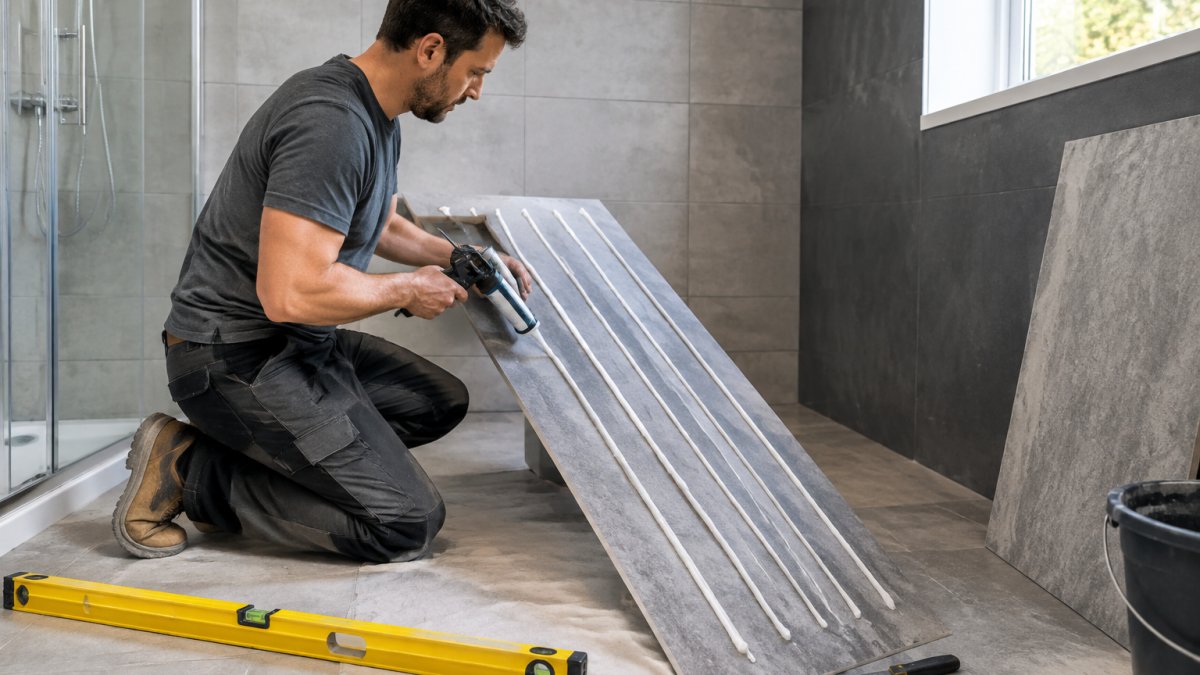
The steps in brief:
- Check every tile is firmly fixed and the wall is flat
- Clean and degrease the surface, then let it dry fully
- Measure and dry-fit the panels before cutting
- Apply panel adhesive in a consistent pattern
- Press the panel home and check with a spirit level
- Seal joints and edges with silicone
Common mistake: skipping the flatness check. A lumpy wall telegraphs through a rigid panel, and no amount of adhesive hides it.
Low-Maintenance Bathroom Wall Panels: Cleaning and Longevity
Low-maintenance bathroom wall panels need only a wipe-down with a damp cloth and a mild cleaner. There is no grout to scrub and no sealing schedule. That is the practical reason many homeowners switch from tiles.
A wipe-down after showering keeps the surface clean. A quick wipe after showering keeps the finish looking new. Avoid abrasive pads, which dull the printed surface over time.
Longevity depends on installation quality more than the panel itself. A well-sealed panel with correctly applied adhesive lasts for years; a rushed one can let water behind it. The Decorwall Maxi Panels carry a 5-year guarantee.
Watch out: water getting behind a panel is usually linked to how the edges and joints are sealed.
Stone Finishes, Panel Sizes and Matching Your Bathroom
Stone finishes range from pale marble effect to deeper concrete and slate tones, and the right choice depends on your light and space. A matt finish suits stone looks better than gloss, because it reads as natural rather than polished.
Panel size drives the look and the waste. Large panels mean fewer seams and a more seamless wall. The Decorwall Maxi panels are 2400mm x 900mm x 10mm. Panel widths include 250mm, 300mm, 500mm and 900mm.
If you are weighing up finishes, our comparison of high gloss versus matte bathroom wall panels covers the trade-offs. For a concrete example, the Decorwall Maxi Panel in Matt Grey Stone at £59.00 shows how a matt stone finish looks in the 2400mm x 900mm size.
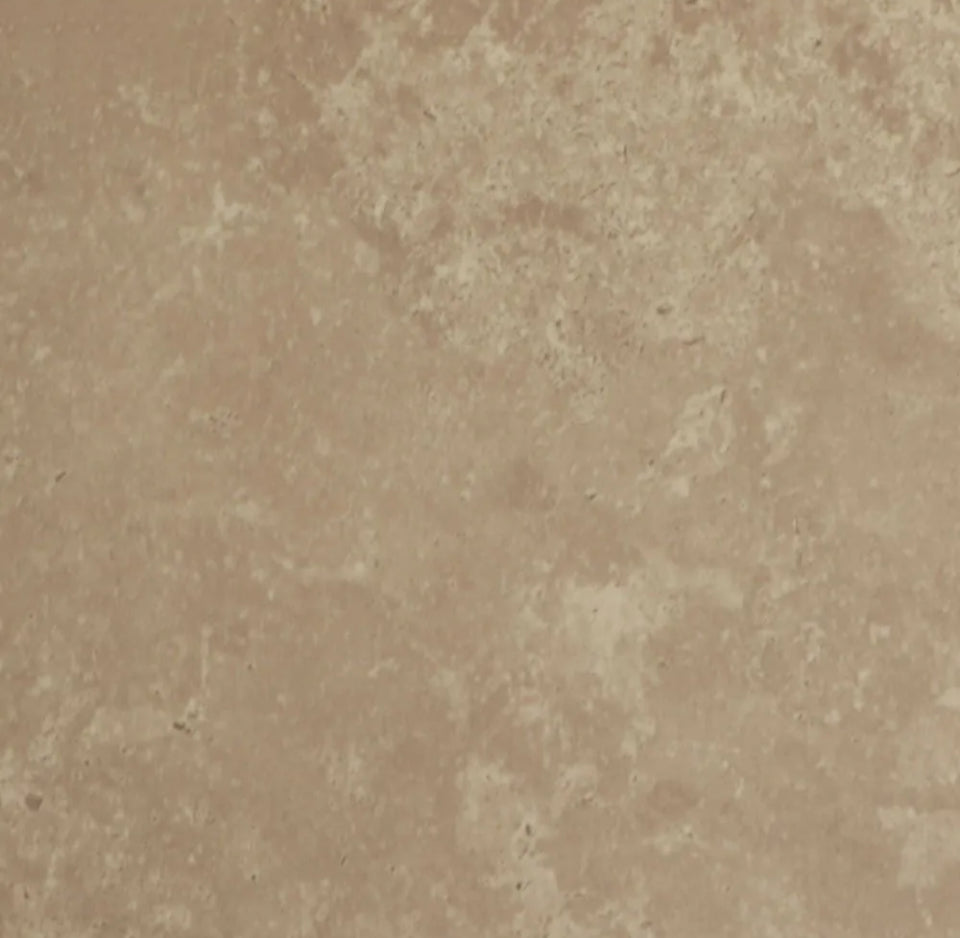
Panel thickness matters too. A 10mm panel feels more substantial and resists impact better than a thin one.
Choosing a finish you can live with, and repair
A matt, mid-tone stone effect hides minor scuffs and water marks better than a high-gloss pale finish, so it stays presentable for longer with less cleaning. That matters for longevity: a finish that still looks good after five years is less likely to be ripped out early. If a panel is damaged, replacing a single panel is far less wasteful than retiling a whole wall, so choose a range where individual panels remain available after your initial purchase.
What happens at end of life
This is the question almost no supplier answers, and it is where the sustainability case is won or lost. Before you buy, ask whether the panel can be returned to the manufacturer, whether your local household waste recycling centre accepts PVC-based panels, and whether the core and print layer can be separated.
GOV.UK guidance on waste and recycling responsibilities explains how end-of-life material should be handled.
Watch out: buying a cheap panel in a finish you will tire of quickly is the least sustainable choice available, it guarantees early replacement. Choose a finish and size you will keep, and check that replacement panels and trims will still be stocked in a few years' time.
Ordering Panels, Adhesives and Trims in One Delivery
Ordering everything together saves the mid-job scramble for a missing trim. Panels, adhesive, silicone, and joint trims should arrive as one delivery so the installation runs without a pause.
Choosing the right adhesive matters for shower walls, where moisture is constant. Our guide to the best adhesive for shower wall panels explains which type suits a wet area. You can add the Decorwall Panel Adhesive Pro 310ml to the same order as your panels and trims.
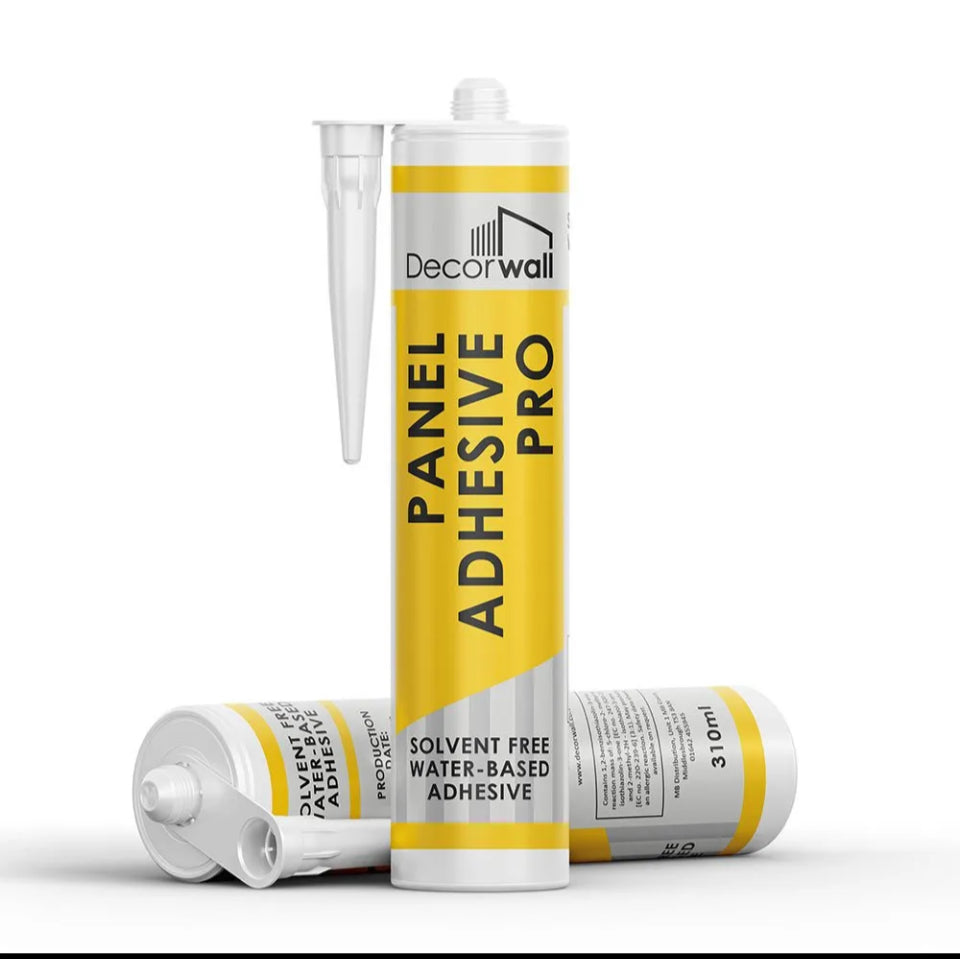
A common frustration is ordering panels, then discovering the trims are out of stock elsewhere. Buying from one supplier removes that risk. The installation accessories are supplied alongside the panels.
Check your order against this list before you confirm:
- Panels, with a spare offcut allowance
- Panel adhesive, enough for the wall area
- Silicone for joints and edges
- Joint trims and end trims
- A sealant gun and spacers
A bathroom refresh should not stall because a trim or a tube of adhesive is missing. Wetwall Wonders offers panels together with adhesives, silicones and trims. Our range includes wall panels in several sizes and installation accessories including silicones, adhesives and trims.
Frequently Asked Questions
What are stone-effect bathroom wall panels made from?
Most are made from PVC. The Decorwall Maxi Panel range from Wetwall Wonders, for example, is a 10mm thick PVC panel with a printed matt stone finish, UV protection and a UK fire rating, sold in 2400mm x 900mm sheets at £59.00 each. The printed decorative surface gives the stone look; the PVC core gives the water resistance. Ask for the material composition and thickness before you buy, because both affect how rigid the panel feels and how well it handles a wet shower enclosure.
Are bathroom wall panels more sustainable than tiles?
It depends on what you measure. Panels need no grout, so there is less cement-based material and less chemical cleaning over the panel's life. They also go up over existing tiles, which avoids stripping and landfill waste. Against that, PVC is petrochemical-based, so end-of-life disposal matters. Tiles last decades but carry the carbon of firing and the waste of removal. Ask suppliers for recycled content figures and take-back options rather than accepting a green label at face value.
Can bathroom wall panels be fitted over existing tiles?
Yes, in most cases, provided the tiles are sound and firmly bonded. Clean the surface, remove loose grout or flaking glaze, and check for any hollow-sounding tiles that need re-fixing first. You then bond the panels with a suitable adhesive and seal the joints and edges with silicone. This is the main reason panels suit a quick bathroom renovation: no tile removal, no skip, and no days of drying time before the shower is usable again.
How long do stone-effect wall panels last?
The Decorwall Maxi Panels sold by Wetwall Wonders carry a 5-year guarantee, which is a useful benchmark for a PVC panel in a domestic bathroom. Actual lifespan depends on installation quality more than the panel itself. Water getting behind a poorly sealed panel causes the problems, not the surface. Seal every joint and edge with silicone, use the recommended adhesive, and the panel should last well.


