
Why Choose PVC Shower Wall Panels: Benefits Explained
Table of Contents
- Why PVC Shower Wall Panels Are Worth Choosing
- Best Waterproof Wall Panels for Showers: What Makes Them Stand Out
- PVC vs Tile Bathroom Walls: A Practical Comparison
- Installation, Maintenance, and Long-Term Durability
- How to Install PVC Shower Panels: Process and Key Considerations
- Environmental Impact and Fire Safety Standards
- Choosing the Right PVC Panels for Your Space
Last Updated: August 21, 2026
Why PVC Shower Wall Panels Are Worth Choosing
PVC shower wall panels have transformed bathroom renovation. These panels deliver waterproofing, ease of installation, and aesthetic flexibility that ceramic tiles cannot match at the same cost.
The core appeal is straightforward: you get a grout-free, seamless finish that resists moisture without the maintenance headaches of traditional tiling. Unlike ceramic tiles, which rely on grout lines that crack, discolour, and harbour mould, PVC panels create a continuous, hygienic barrier. Installation takes hours instead of days, and the learning curve is shallow enough for confident DIYers to manage alone.
A typical tiled shower demands regular grout sealing, regrouting within 5-10 years, and constant vigilance against mould. PVC panels need only a wipe-down with warm water and mild soap. The long-term cost of ownership, accounting for maintenance, repairs, and eventual replacement, heavily favours panels. For small ensuites, the seamless finish eliminates awkward gaps and visual clutter. For larger installations, design variety through options like Dumawall tile effects and modern slat walls means you're not limited to standard white subway tile aesthetics.
If you value time, simplicity, and long-term durability over the traditional look of grouted tile, PVC panels deliver professional results without specialist labour.
Best Waterproof Wall Panels for Showers: What Makes Them Stand Out
The best waterproof wall panels for showers combine genuine 100% waterproof construction, reliable adhesive systems that prevent water ingress, and a finish that resists staining over years of use.
PVC panels achieve waterproofing through solid material composition. Unlike tiles, which are porous and rely on grout to seal gaps, PVC is inherently impermeable. Water cannot penetrate the panel itself. The critical detail is what happens at the seams and behind the panels. Quality panels paired with the right adhesive and sealant system eliminate moisture infiltration entirely.
Moisture resistance goes beyond waterproofing. A truly moisture-resistant panel doesn't swell or warp when exposed to steam and maintains structural integrity in high-humidity environments. PVC excels here because it's unaffected by prolonged moisture exposure. Ceramic tiles can develop micro-fractures from freeze-thaw cycles; PVC remains stable.
Mould resistance is the practical benefit homeowners notice immediately. Because PVC panels create a seamless, grout-free surface with no gaps where moisture accumulates, mould and mildew have nowhere to establish. A simple weekly wipe-down keeps the surface pristine indefinitely. Compare this to grouted tile, where mould colonises grout lines within months in high humidity.
The adhesive and sealant system matters as much as the panel itself. Professional-grade sealants, applied generously to panel edges and wall surface, create a continuous waterproof barrier. Wetwall Wonders supplies specialist adhesives and silicones designed specifically for PVC panel installation, ensuring your waterproofing is genuinely reliable.
PVC vs Tile Bathroom Walls: A Practical Comparison
The comparison between PVC panels and ceramic tiles reveals why so many renovators are switching. Both are waterproof and long-lasting, but practical differences accumulate quickly.
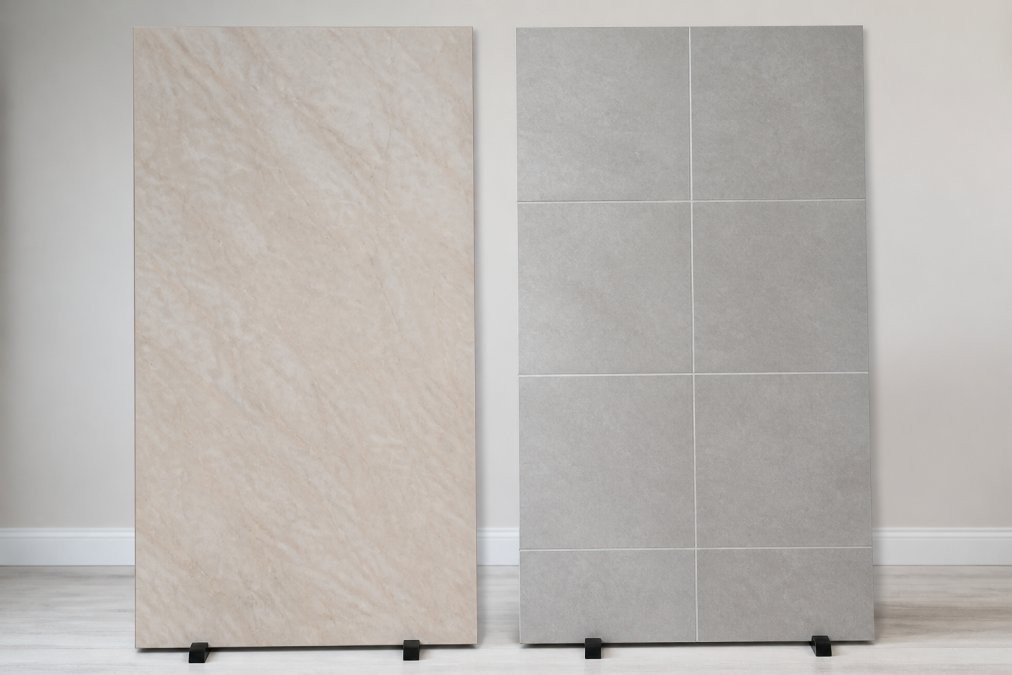
Installation speed is the first obvious win for PVC. Tiling takes 3-5 days minimum for a modest shower. PVC panels are applied with adhesive and sealant, clicked into place using tongue-and-groove connections, and are ready to use within 24 hours. For DIYers, this difference is transformative.
Maintenance diverges sharply after year one. Tiles require grout sealing every 1-2 years. Once grout cracks and becomes porous, water infiltrates behind tiles, causing structural damage and mould. Replacing grout means removing tiles, scraping out old grout, and regrouting, a costly, disruptive process. PVC panels need only regular cleaning. No sealing, no regrouting, no hidden damage to discover years later.
Total cost of ownership tells a different story than upfront price. Entry-level ceramic tiles cost less initially, but factor in adhesive, grout, sealing materials, and professional labour. Add maintenance costs over 10 years, grout sealing, regrouting, potential tile replacement, and PVC becomes substantially cheaper. A small ensuite tiled professionally might cost £800-1,200 installed. The same space with PVC panels costs £300-600 for materials, with DIY installation feasible. Over 15 years, including maintenance, the PVC option saves hundreds.
Aesthetic flexibility favours PVC. Ceramic tiles offer limited visual range. PVC panels now include tile-effect finishes like Dumawall that replicate ceramic appearance convincingly, alongside modern slat walls and minimalist designs. You're not constrained to standard options.
| Aspect | PVC Panels | Ceramic Tiles |
|---|---|---|
| Installation time | 1-2 days | 3-5 days |
| DIY feasibility | High | Moderate |
| Maintenance | Wipe clean weekly | Seal grout yearly, regrout every 5-10 years |
| Cost upfront | £300-600 (small space) | £800-1,200 (small space) |
| Long-term cost (15 years) | £400-700 | £1,200-1,800 |
| Mould risk | Very low | Moderate to high |
| Aesthetic range | Broad (tile effects, slat walls, modern) | Limited |
| Lifespan | 20+ years | 20+ years (if grout maintained) |
Installation, Maintenance, and Long-Term Durability
PVC panels are engineered for longevity when installed correctly. The typical lifespan is 20-25 years, with many installations remaining flawless after 15 years of daily use ([EXTERNAL_LINK: peer-reviewed research on PVC durability | pmc.ncbi.nlm.nih.gov/articles/PMC10779931/]).
Installation quality determines durability. Panels must be applied to a clean, dry, smooth surface. Any moisture trapped during installation will eventually cause adhesive failure and water ingress. Proper surface preparation, cleaning, drying, and light sanding if necessary, prevents future problems. The adhesive must be applied generously to the wall and panel back, ensuring full contact. Gaps or thin adhesive coverage create weak points where water can penetrate.
Sealant application is equally critical. Silicone sealant must be applied to all vertical and horizontal seams, edges where the panel meets the wall, and any transitions to other materials. The sealant should be continuous and smoothed to create a watertight seal. Skimping on sealant is false economy.
Maintenance is genuinely minimal. Weekly or bi-weekly cleaning with a soft cloth and warm water keeps the surface hygienic and prevents soap scum or mineral buildup. For stubborn stains, mild detergent works. Avoid abrasive cleaners or scouring pads, which can scratch the surface. That's it. No sealing, no special treatments, no annual maintenance rituals.
Long-term durability depends on panel quality and installation environment. UV-protected panels resist discoloration from sunlight over decades. In typical bathroom environments with limited direct sunlight, this is not a concern.
PVC's flexibility accommodates thermal cycling, expansion and contraction from temperature changes, without cracking or warping. Ceramic tiles, by contrast, are rigid and prone to cracking under thermal stress.
One durability factor that matters: impact resistance. Solid PVC panels resist impacts better than tiles. A dropped object will dent a PVC panel but rarely crack it. The same impact shatters ceramic tile. For households with children or in high-traffic areas, this is a practical advantage.
How to Install PVC Shower Panels: Process and Key Considerations
Installing PVC shower panels is straightforward enough for confident DIYers, though professional installation guarantees optimal results.
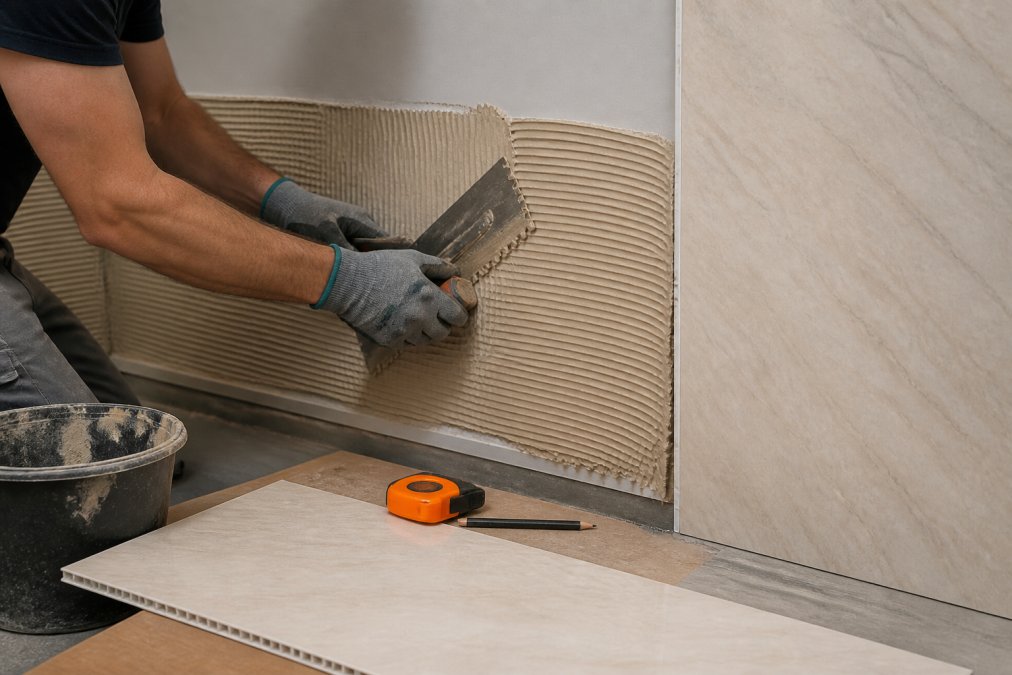
Surface preparation is the foundation. The wall must be clean, dry, and stable. Remove any existing tiles, wallpaper, or loose paint. If the substrate is uneven, skim coat with filler or sand high spots. The surface should be flat to within 3mm over 2 metres. Walls must be completely dry before adhesive application. Allow 48 hours after cleaning or repair before proceeding.
Choose specialist PVC panel adhesive, which offers better flexibility and water resistance than standard tile adhesive. Apply using a notched trowel to ensure consistent coverage. The adhesive should cover 80% of the panel back; gaps reduce holding strength.
Panel placement requires planning. Measure the wall height and width carefully. Decide whether to start from a corner or the centre, and plan cuts to minimise visible seams. Panels are typically installed vertically, with the tongue-and-groove connection running horizontally. The first panel sets the reference line; ensure it's perfectly vertical using a spirit level.
Press panels firmly into place, using a rubber mallet to tap them gently and ensure full adhesive contact. Work methodically from bottom to top or corner to centre, depending on your layout. Allow adhesive to set for 24 hours before applying sealant.
Sealant application is non-negotiable. Use high-quality silicone sealant rated for wet environments. Apply a continuous bead to all seams, panel edges, and transitions. Smooth the sealant with a wet finger or sealant tool to create a neat, continuous line. Allow sealant to cure for 48 hours before exposing panels to water.
Environmental Impact and Fire Safety Standards
PVC's environmental profile is more nuanced than popular perception suggests. The material's durability and long-lasting nature reduce replacement frequency and waste. A PVC panel lasting 25 years generates less environmental impact per year than a tile installation requiring grout replacement every decade.
PVC production involves petroleum derivatives, which carries environmental cost. However, modern manufacturing increasingly incorporates recycled content and improved production efficiency. Choosing a durable panel that lasts 20+ years is more environmentally responsible than replacing tiles every 10 years due to grout failure.
Fire safety is regulated in the UK through building standards. PVC panels must meet UK Fire Rated standards to be installed in residential bathrooms ([EXTERNAL_LINK: UK Government guidance on fire safety in buildings | gov.uk/guidance/approved-document-b-fire-safety-frequently-asked-questions]). Quality panels, including those from Wetwall Wonders, are tested and certified to meet these requirements. The Decorwall Elite Print range, for example, is UK Fire Rated, ensuring compliance. Always verify fire rating when purchasing panels; it's a non-negotiable safety requirement.
Choosing the Right PVC Panels for Your Space
Selecting the right panels depends on your space dimensions, aesthetic preferences, and budget.
Panel width is the first decision. Narrow widths (250mm, 300mm) suit small or tight spaces, creating more visual seams but allowing flexibility in awkward corners. Wide panels (500mm, 900mm) cover more area with fewer seams, creating a cleaner aesthetic on larger walls. For a small ensuite, 250mm or 300mm panels work well. For a full shower wall, 500mm or 900mm panels create a more seamless appearance.
Decorwall Elegance Mineral in Calcite (300mm width) at £22.00 per panel suits homeowners wanting a stone-effect finish in a compact format. The 8mm thickness provides durability, and the mineral aesthetic complements modern or traditional bathroom designs.

For maximum coverage, Decorwall Maxi Panels in Beige Marble (2400mm x 900mm) at £54.00 deliver impact. These large-format panels cover substantial wall area with minimal seams. The marble effect is contemporary and versatile.
Dumawall+ High Gloss Mura at £3.95 per pack (8 panels) is budget-friendly for larger projects. The high-gloss finish creates a bright, contemporary look, and the micro grout line detail replicates ceramic tile appearance without actual grout maintenance.
Kerradeco Stone Grey at £209.00 per pack of 8 provides premium stone texture in modern grey. With panels measuring 1350mm x 295mm, it covers 3.186 m² per pack, offering efficiency for larger installations.
If you're renovating a small ensuite on a tight budget, Dumawall+ tiles deliver excellent value. A typical small ensuite might need 12-15 packs, totalling £47-60 for panels, plus adhesive and sealant. Compare this to ceramic tiling at £200-400 in materials alone, plus labour costs.
Choosing PVC shower wall panels recognises that bathroom renovation doesn't require the complexity and cost of traditional tiling. Modern panels deliver genuine waterproofing, aesthetic flexibility, and maintenance simplicity that tiles cannot match. Wetwall Wonders provides the full range of panels, installation accessories, and specialist adhesives needed to complete your project professionally. Start with panels that match your space dimensions and aesthetic preference, prepare the wall properly, and install with attention to sealant application. The result is a bathroom that looks better, lasts longer, and demands minimal maintenance for decades to come.
Frequently Asked Questions
Q: Are PVC shower panels good for shower walls?
A: Yes. PVC shower wall panels offer 100% waterproof protection, making them ideal for wet areas. They resist mould and condensation, require minimal maintenance, and come with warranties ranging from 5 to 10 years. Products like Dumawall+ High Gloss offer high impact resistance and a seamless finish without grout lines, eliminating common tile problems like water seepage and crumbling grout.
Q: What are the pros and cons of PVC shower panels?
A: Pros: completely waterproof, mould-resistant, grout-free design, lightweight and easy to install, low maintenance (simple wipe-down cleaning), durable (10+ year lifespan), cost-effective compared to tile replacement, and aesthetic variety including tile effects and stone finishes. Cons: can discolour under prolonged UV exposure if not UV-protected, require proper adhesive and sealant application to prevent water ingress, and initial material costs may be higher than basic alternatives, though long-term savings offset this.
Q: How do PVC panels compare to traditional ceramic tiles?
A: PVC panels eliminate grout lines where mould thrives, offer seamless waterproofing without gaps, and install faster without skilled tiling work. Tiles require grouting, are prone to water damage behind the surface, and need ongoing grout maintenance. PVC panels like Decorwall Elegance Mineral and Kerradeco Stone Grey provide tile aesthetics without these drawbacks, whilst remaining hygienic and easier to clean.
Q: Do I need professional installation for PVC shower panels?
A: No. PVC panels are designed for DIY installation. Tongue and groove designs allow panels to click together, and they can be fixed using adhesives, nails, or staples. However, proper surface preparation, correct adhesive selection, and careful sealant application are essential to prevent water ingress. For tight spaces or complex layouts, professional fitting ensures optimal results and warranty compliance.
This article was written using GrandRanker

