
Bathroom Cladding for Small Rooms: Worth It?
Table of Contents
- Is Bathroom Cladding Worth It for Small Rooms?
- Bathroom Wall Panels vs Tiles: Key Differences
- Space Efficiency in Compact Bathrooms
- Bathroom Cladding Installation Cost and Labour
- Moisture, Condensation and Mould Resistance
- Maintenance and Long-Term Durability
- Design Impact and Visual Aesthetics
- Frequently Asked Questions
Last Updated: September 29, 2026
Is Bathroom Cladding Worth It for Small Rooms?
Bathroom cladding small rooms has become increasingly popular for compact spaces. Wall panels offer a practical alternative to traditional tiles, especially when space is limited, delivering durability, low maintenance, aesthetic appeal, and functional benefits.
This guide breaks down the genuine trade-offs between cladding and tiles: installation complexity, moisture management, long-term durability, and actual costs, so you'll understand when cladding makes financial and practical sense for small spaces, and when traditional approaches might still win.
Bathroom Wall Panels vs Tiles: Key Differences
Tiles require grouting, which creates visible seams and demands careful maintenance. Wall panels offer a seamless finish with no grout lines, meaning less surface area for mould and mildew to colonise.
Grout is porous and absorbs moisture, making it a weak point in humid bathrooms. Cladding eliminates this problem entirely, there's no grouting required, which is why installers prefer panels for bathrooms where moisture control is critical.
Cladding installs faster, typically in a single day for small bathrooms, versus several days for tiles. The tongue and groove design of many panels (like our Decorwall Maxi Panels) means they click together simply, reducing the skill required for installation.

Cladding delivers a seamless, contemporary aesthetic that makes small spaces feel less visually cluttered. For narrow en-suites, that unbroken line makes the room feel slightly larger because your eye isn't interrupted by grid patterns.
| Aspect | Tiles | Cladding |
|---|---|---|
| Installation Time | 3-5 days | 1-2 days |
| Grouting Required | Yes | No |
| Mould Risk in Grout | High | None |
| Seamless Finish | No | Yes |
| DIY Difficulty | High | Low-Medium |
| Long-Term Maintenance | Regular regrouting | Simple wiping |
| Moisture Resistance | Good (if sealed) | Excellent (100% waterproof) |
Space Efficiency in Compact Bathrooms
The real advantage of cladding in small bathrooms is visual space, how the room feels rather than its actual dimensions.
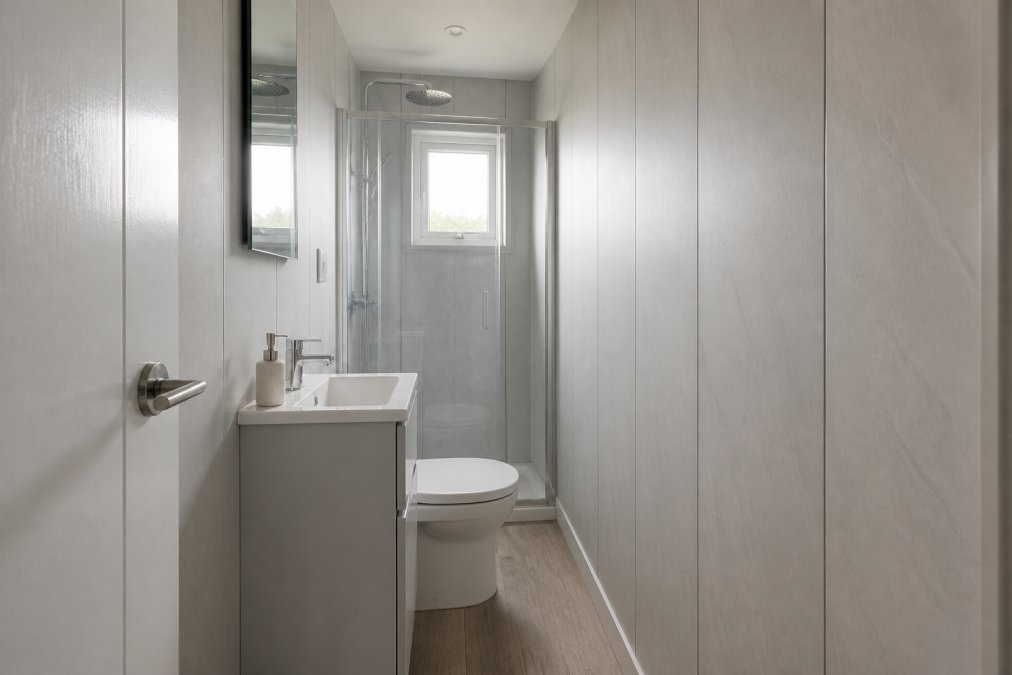
Cladding panels come in various widths: our Decorwall Elite Print panels measure 250mm wide, Decorwall Elegance Mineral panels are 300mm, and larger options extend to 500mm or 900mm. Using 250mm or 300mm panels in a narrow en-suite means fewer vertical seams, reducing visual clutter and making the space feel more open.

Tiles create grid patterns that make small bathrooms feel busier. Larger tiles reduce this effect but are harder to fit around fixtures and require more cutting, increasing installation complexity.
The flush-fitting design of quality panels means they sit perfectly flat against the wall without protruding edges or uneven surfaces that catch light and draw attention.
Bathroom Cladding Installation Cost and Labour
Cladding is cheaper to install than tiles, though upfront material cost varies depending on which panels you choose.
A typical small bathroom (around 2m × 2m with a shower area) requires roughly 10-15 square metres of wall coverage. Using Decorwall Elite Print panels at £11.00 per panel (250mm width), you'd need approximately 40-60 panels. Total material spend including adhesive, silicone, and trims is roughly £500-£750.
Tiles typically cost £15-£25 per square metre for mid-range ceramic options (£300-£375 materials), but require professional installation. Professional tilers charge £30-£50 per hour, and a small bathroom typically requires 20-30 hours of labour, adding £600-£1,500 to your project cost.
Cladding installation labour is significantly lower. Many homeowners handle it themselves, or hire a general handyperson. Professional installation costs £400-£800 for a small bathroom, roughly half the tiling cost.
The total project cost comparison:
- Tiles: £300-£375 materials + £600-£1,500 labour = £900-£1,875
- Cladding: £500-£750 materials + £0-£800 labour = £500-£1,550
For DIY homeowners, cladding wins decisively on cost. For those hiring professionals, the gap narrows but cladding still typically costs less overall. The real savings come from simpler installation and no specialist labour required.
Moisture, Condensation and Mould Resistance
Cladding's performance becomes nuanced in small, poorly ventilated bathrooms. The popular narrative is that cladding is superior to tiles for moisture resistance, but the reality is more complex when ventilation is limited.
Cladding panels are 100% waterproof by design, solid PVC with no porous surfaces. There are no grout lines where moisture can seep behind the surface and cause hidden mould growth, a common problem with tiles in bathrooms that lack proper ventilation.
In small bathrooms without an extractor fan or with minimal window ventilation, condensation is a structural risk that cladding can either mitigate or worsen depending on installation method.
Decorwall Elite Print- Arctic Grey →
Small en-suites without extractor fans experience rapid moisture buildup during and after showers. Humidity can reach 80-90% within minutes. With tiles, moisture seeps into grout lines, creating mould colonies over weeks. With cladding, water runs down the smooth surface and drains away, but only if panels are installed with proper ventilation behind them.
Cladding installed directly over damp plasterboard or without a moisture barrier can trap condensation behind the panels, creating a damp cavity that encourages mould growth on the wall substrate itself.
Proper installation requires a moisture-resistant backing board (such as cement board or moisture-resistant plasterboard), an air gap or ventilation cavity behind the panels, and silicone sealing at the base to prevent water pooling.
When installed correctly, cladding is genuinely superior. When installed over inadequate substrate in a poorly ventilated room, it can create hidden damp problems that are expensive to remediate.
In a small bathroom with an extractor fan: Cladding wins decisively. Moisture is extracted before it condenses heavily, and any surface condensation wipes away cleanly. In a small bathroom without ventilation: Both cladding and tiles will experience moisture accumulation. Tiles will develop mould in grout lines within weeks. Cladding will keep the visible surface clean if installed correctly (with proper backing and air gaps), but it is not a substitute for ventilation.
Cladding is more forgiving than tiles in humid small spaces, but it is not a solution for unventilated bathrooms. If your small room has no extractor fan, installing cladding without addressing ventilation will only delay the problem, not solve it.
If your small bathroom lacks an extractor fan, installing one should be your first priority. A basic extractor fan costs £150-£400 installed and transforms moisture management. With ventilation in place, cladding becomes the clear winner for mould resistance and maintenance. If you cannot install an extractor fan, cladding is still preferable to tiles, but expect to wipe down walls regularly and ensure the room dries fully between uses. For small rooms with adequate ventilation, cladding delivers superior moisture resistance and eliminates the grout maintenance burden entirely.
Maintenance and Long-Term Durability
Tiles require periodic regrouting. Grout deteriorates over 5-10 years, costing £300-£600 to regrout and taking 2-3 days. Cladding requires none of this, a simple wipe-down with a damp cloth keeps panels looking new indefinitely.
Quality cladding comes with manufacturer warranties (Dumawall+ High Gloss: 10 years; Decorwall Maxi Panels: 5 years), reflecting durability when properly installed.
Durability depends on material quality. PVC cladding from reputable manufacturers resists moisture, UV exposure, and impact.
Design Impact and Visual Aesthetics
In a small room, aesthetics and perceived space are closely linked. The wrong wall finish can make a compact bathroom feel cramped and dated, and also affects resale value.
Cladding adds perceived value when:
- The bathroom is modern and well-maintained overall. Cladding in a newly refurbished small bathroom signals contemporary design and low maintenance, which appeals to younger buyers and investors.
- The property is in a market where modern finishes command a premium. In urban areas and new-build-adjacent properties, contemporary aesthetics matter more to buyers.
- The cladding is high-quality, professionally installed, and visually indistinguishable from premium tiling. Budget cladding that looks cheap will detract from value.
- The small bathroom was previously dated or poorly maintained. Cladding transforms a neglected space into a functional, attractive room, which improves overall property perception.
Cladding may detract from value when:
- The property is traditional, period, or heritage-listed. Buyers of period properties often expect traditional tile finishes. PVC cladding can feel incongruous and signal cost-cutting rather than quality investment.
- The cladding is visibly plastic or low-quality. Some buyers perceive PVC cladding as a budget solution, even when it performs well. This perception can reduce perceived bathroom quality.
- The property is in a market where traditional finishes are the norm. Rural or conservative markets may not value contemporary cladding as highly as urban markets.
- The cladding is poorly installed, with visible gaps, uneven seams, or discolouration. Bad installation actively detracts from value.
The financial reality:
For small bathrooms, the resale value argument slightly favours cladding because:
- A small bathroom is harder to sell if it looks dated or poorly maintained. Cladding's contemporary finish appeals to a broader buyer base.
- Buyers of small properties (first-time buyers, investors, downsizers) often prioritise low-maintenance finishes. Cladding signals this benefit clearly.
- The cost of regrouting tiles (£300-£600) before a sale can be avoided with cladding, protecting your investment longer.
Frequently Asked Questions
Are bathroom wall panels cheaper than ceramic tiles?
Wall panels generally cost less upfront than tiles when you factor in labour and materials. Decorwall Elite Print panels start at £11 per panel, while tile installation requires grouting, sealing, and specialist fitting. However, total cost depends on room size and whether you DIY. Panels eliminate grouting costs and reduce installation time significantly, making them more economical for small bathrooms.
Will bathroom cladding panels work in a narrow ensuite without gaps?
Yes. Panels come in various widths including 250mm and 300mm options, designed specifically for compact spaces. The Decorwall Elite Print in 250mm width fits tight spaces without awkward seams. Tongue and groove designs create seamless finishes, and panels can be cut to size. Proper surface preparation and adhesive application prevent gaps. Many homeowners successfully install narrow panels in confined ensuites.
How do bathroom cladding panels prevent mould and water damage?
PVC cladding is 100% waterproof with no grout lines where moisture can penetrate. Unlike ceramic tiles, there are no porous surfaces or gaps for water to seep behind. Quality adhesives and silicones create a moisture-resistant barrier. The seamless finish prevents condensation from pooling. Dumawall+ panels include a 10-year manufacturer’s warranty. Proper ventilation and regular wiping down further prevent mould growth on the panel surface.
Can a homeowner install bathroom panels without professional help?
Yes. Most panels feature tongue and groove or flush-fit designs that are DIY-friendly. Installation requires basic tools, surface preparation, adhesive application, and silicone sealing. Decorwall and Dumawall+ panels are specifically marketed as easy to install. However, complex cuts, uneven walls, or plumbing obstacles may require professional fitting. Many homeowners successfully DIY small ensuite projects; larger bathrooms or poor wall condition may benefit from professional installation.

