
Wall Panel Alternatives for Bathroom Renovations
Table of Contents
- Why Wall Panel Alternatives Matter for Bathroom Renovations
- Pros and Cons of Shower Wall Panels
- Cost of Bathroom Wall Panelling vs Tiles
- How to Install Bathroom Wall Panels
- Key Wall Panel Alternatives: Comparison and Features
- Waterproof Properties and Moisture Resistance
- Fire Safety and Building Regulations
- Environmental Impact and Sustainability
Last Updated: August 10, 2026
Why Wall Panel Alternatives Matter for Bathroom Renovations
Choosing between traditional ceramic tiles and wall panel alternatives for bathroom spaces can determine whether your project finishes on time and within budget. Wall panels replace grout lines and labour-intensive installation with waterproof, low-maintenance surfaces that install in days rather than weeks.
According to Building and Engineering Services Association guidance on bathroom specifications, modern waterproof panels meet the same moisture-resistance standards as ceramic tiles whilst offering significant advantages in installation speed, durability, and maintenance. The right wall panel alternatives bathroom choice eliminates grout-related mould issues, reduces installation time by up to 70%, and provides surfaces that stay pristine for years.
Pros and Cons of Shower Wall Panels
Shower wall panels offer distinct advantages over traditional ceramic tiles, though trade-offs exist.
Panels install dramatically faster than tiles, most bathrooms complete in a weekend rather than two weeks. There's no grout to maintain, eliminating the primary source of mould and discolouration. Cleaning takes seconds; a simple wipe-down keeps panels looking new. Material costs typically run lower than ceramic tiles plus labour, and installation labour is substantially cheaper.
Downsides require acknowledgement. Some cheaper PVC panels lack the visual depth of high-quality tile effects and can appear plastic in certain lighting. Panels are less flexible for custom layouts, and matching damaged panels later may prove difficult if the product line has been updated. Installation quality matters more with panels than tiles; poor substrate preparation or incorrect adhesive can lead to panels lifting or moisture seeping behind them.
| Aspect | Advantage | Consideration |
|---|---|---|
| Installation Speed | 1-2 days for full bathroom | Requires careful substrate prep |
| Maintenance | Grout-free, wipe-clean surface | Less forgiving of installation errors |
| Cost | 30-50% lower than tiles + labour | Cheaper options look less realistic |
| Durability | 15-25 year lifespan typical | Damage repair less flexible than tiles |
| Aesthetics | Modern, seamless finishes available | Some PVC options appear plastic |
Cost of Bathroom Wall Panelling vs Tiles
Material costs favour panels. A typical bathroom wall using ceramic tiles costs £400-800 in materials. Comparable wall space using quality panels runs £300-500, with budget options below £200.
Labour costs shift the equation dramatically. A professional tiler charges £25-45 per hour and typically requires 40-60 hours for a standard bathroom, totalling £1,000-2,700 in labour. Panel installation requires 8-15 hours for the same space, roughly £200-675 in labour. Total project cost difference is substantial: tiles plus labour often exceed £2,000, whilst panels with professional installation typically stay under £1,200.
Many homeowners can install panels themselves with proper preparation, bringing labour to zero. Tile installation is far more technically demanding; most DIY attempts result in uneven grout lines requiring professional remediation.
Long-term maintenance costs favour panels significantly. Grout requires resealing every 2-3 years (£150-300 per bathroom) and ongoing mould treatment. Panels need only occasional cleaning and silicone reapplication at joints. Over a 20-year ownership period, maintenance costs for tiles often exceed £2,000, whilst panels might require £200-400 in silicone touch-ups.
How to Install Bathroom Wall Panels
Successful panel installation depends entirely on substrate preparation and following the manufacturer's specific adhesive and sealant requirements.
Substrate Preparation and Planning
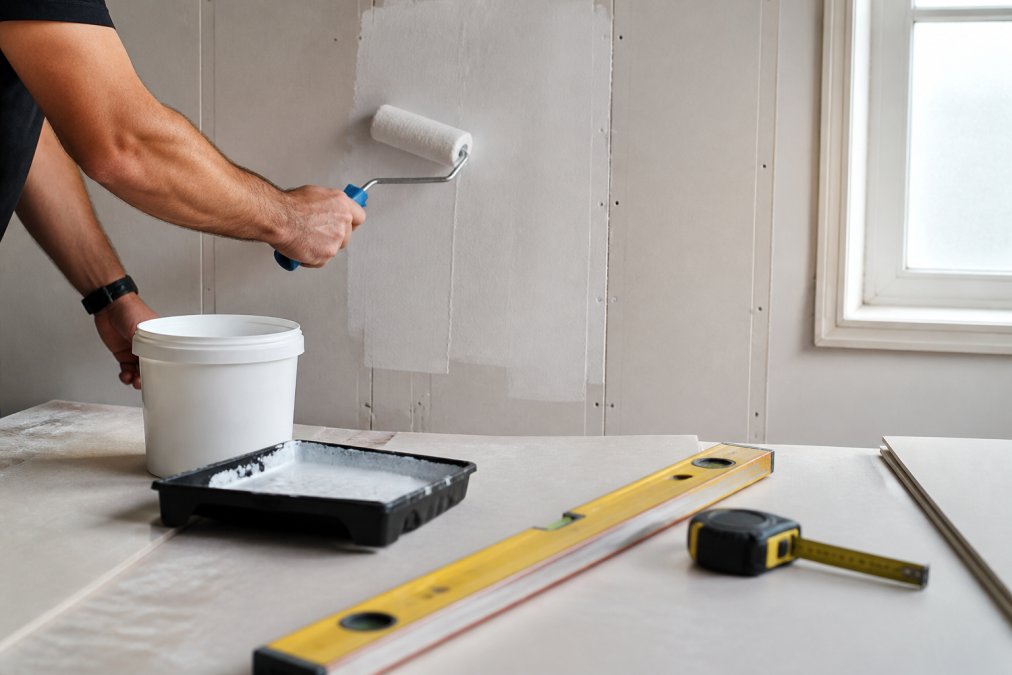
Before any panel touches the wall, your substrate must be sound, level, and dry.
If installing over existing tiles, they must be firmly adhered with no hollow spots. Tap the entire surface with a rubber mallet; any hollow sound indicates loose tiles that must be removed and voids filled. Use a straightedge to check for protruding tiles; sand these flush. For bare walls, the substrate must be plaster, plasterboard, or cement board. Moisture-resistant plasterboard (green or purple board) is required in wet areas.
Check your wall is vertical using a spirit level; walls out of plumb by more than 3-5mm should be shimmed level. Walls must be completely dry before panels install. If you've recently replastered or removed old tiles, allow at least 2-3 weeks drying time. Use a moisture meter to verify the substrate reads below 15% moisture content.
Clean the entire substrate surface thoroughly. Remove dust, loose paint, soap residue, and any mould. A clean surface allows adhesive to bond properly; contaminated surfaces cause poor adhesion and eventual failure.
Step-by-Step Installation Process
Once substrate is prepared, the actual panel installation follows a logical sequence.
Establish your starting point carefully by marking a perfectly horizontal line at the height where your first panel will sit. Mark vertical reference lines at regular intervals where panels will join, keeping everything square.
Apply adhesive according to your panel manufacturer's specifications. Different panel systems require different adhesives; using the wrong adhesive voids warranties and risks failure. Apply adhesive in a continuous bead around the perimeter and in vertical strips every 300mm across the panel back.
Position the first panel carefully, using your reference lines. Press firmly and hold for 30-60 seconds. Check that the panel is level and plumb using a spirit level. Continue panels across the wall, maintaining consistent joints. Ensure each joint is tight; gaps allow moisture behind panels. At internal and external corners, use appropriate corner trim or apply silicone sealant to create a waterproof seal.
Allow adhesive to cure fully before exposing panels to moisture. Most adhesives require 24 hours minimum; some require 48 hours. After curing, apply silicone sealant to all joints, corners, and where panels meet fixtures. Use only bathroom-grade silicone rated for wet environments.
Key Wall Panel Alternatives: Comparison and Features
The market offers several distinct panel system types, each with different core materials, aesthetic options, and price points.
Decorwall Maxi Panels: Premium PVC Solution
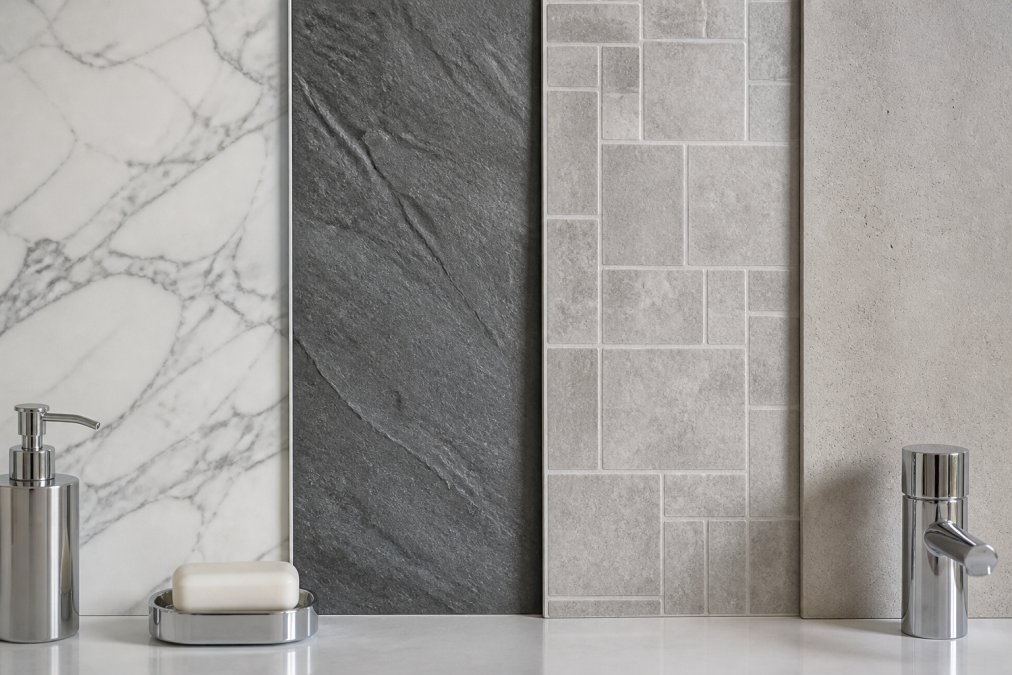
Decorwall Maxi Panels represent the premium PVC option, offering substantial panels that cover large wall areas quickly whilst maintaining aesthetic detail. These panels measure 2400mm × 900mm, covering substantial wall area in single pieces. The 10mm thickness provides rigidity and durability. The tongue-and-groove jointing system creates virtually invisible seams. Available finishes include realistic marble effects, misty stone, and contemporary designs. Decorwall panels are 100% waterproof, suitable for full-bathroom installations.
Installation is straightforward with standard PVC panel adhesive. The large format means fewer joints and faster completion. Maintenance involves simple wiping; glossy finishes resist staining and mould growth. The Decorwall Maxi Panel in Beige Marble costs £54.00 per panel, making a full bathroom wall accessible for under £500 in materials.

Decorwall panels suit budget-conscious homeowners, rental properties, and commercial bathroom installations where cost per square metre is critical.
Dumawall Tile Effect: Budget-Friendly Ceramic Look
Dumawall+ panels offer the most cost-effective path to a realistic tile appearance. These heavy-duty PVC panels replicate ceramic tile dimensions and grout lines, creating an authentic tiled look without grout maintenance.
Dumawall panels come in packs of 8, with individual tiles measuring approximately 300mm × 300mm. The High Gloss range includes finishes like Mura and Sintra, with realistic glazed tile appearance. Cost per tile is £3.95 (pack of 8), making this the most affordable option; a full bathroom wall costs under £200 in materials. You get authentic tile appearance at a fraction of traditional tiling cost, with zero grout maintenance.
Dumawall suits rental properties, guest bathrooms, commercial spaces, and homeowners who want tile appearance without tile maintenance cost or labour.
Fibo Wall Panels: Plywood Core Quality
Fibo panels represent the premium end of the market, using a 100% waterproof plywood core rather than PVC. This construction creates panels that feel more substantial and durable than hollow PVC alternatives.
Fibo panels feature the Aquaclick tongue-and-groove system, creating virtually invisible joints. Many designs include routed grout lines that replicate ceramic tiles convincingly. The 25-year manufacturer's warranty reflects confidence in durability. Fibo panels can be fitted directly over existing tiles, saving removal labour. Starting price is approximately £102.95 per panel.
The plywood core means superior impact resistance compared to hollow PVC. Installation requires acclimatisation for 3 days before fitting, as panels must adjust to bathroom humidity.
Fibo panels suit homeowners prioritising longevity and authentic appearance, properties where the bathroom will be heavily used for decades, and renovations where aesthetic perfection justifies higher material cost.
Bushboard Nuance: Seamless Premium Option
Bushboard Nuance offers panels that can be installed without external trims or extrusions, creating a completely seamless finish. The 12mm synthetic core is 100% waterproof, and the 15-year guarantee covers defects when installed correctly.
Nuance panels come in an extensive range of colours and finishes, including marble and stone effects. The seamless installation capability means no visible trim at edges or corners, just clean, continuous wall surface. Starting price is approximately £82.99 per panel. Installation requires Nuance Complete adhesive to maintain warranty coverage.
Nuance suits luxury bathroom renovations where seamless appearance is a priority.
Mermaid Panels: Antibacterial and Trim-Free
Mermaid Panels offer distinct advantages for those prioritising hygiene and seamless appearance. The Wetwall range features an antibacterial finish and comes in over 30 decorative options. The Elite range eliminates the need for trims entirely, creating a completely waterproof core without extrusions.
Mermaid panels are typically priced from £15.49 to £148.46 per panel depending on range. The antibacterial finish on Wetwall panels actively inhibits bacterial growth, a genuine hygiene benefit in damp bathroom environments.
Mermaid panels suit bathrooms where hygiene is a priority, healthcare facilities, and budget-conscious homeowners seeking antibacterial benefits.
Waterproof Properties and Moisture Resistance
All quality bathroom wall panels are rated 100% waterproof, but understanding what this means in practice prevents costly mistakes.
Waterproof ratings measure the panel material itself, not the installation. A panel rated 100% waterproof means the panel material will not absorb water or degrade when exposed to moisture. The real protection comes from the installation system: substrate preparation, adhesive choice, joint sealing, and corner protection. Moisture resistance in practice depends on these factors far more than the panel material rating.
Plywood-core panels like Fibo offer superior moisture resistance compared to hollow PVC because water cannot penetrate the core. Hollow PVC panels, if water reaches the back, can trap moisture inside, potentially causing long-term issues. This is why substrate preparation and joint sealing matter more with PVC panels.
Silicone sealant application at all joints and corners is your critical moisture barrier. Quality bathroom silicone rated for wet environments creates a waterproof seal that prevents moisture migration. This sealant requires reapplication every 5-7 years; it's the only maintenance panels genuinely need.
Fire Safety and Building Regulations
UK Building Regulations require bathroom wall materials to meet specific fire safety standards. Understanding these requirements ensures your renovation complies and maintains insurance validity.
Current regulations under Building Regulation 7 (Safety) specify fire performance standards for materials in certain locations. For bathrooms, materials must achieve European classification B-s1, d0 or better under EN 13823.
Most quality bathroom panels meet these standards. PVC panels from manufacturers like Decorwall, Dumawall, and Mermaid are tested and rated for compliance. Plywood-core panels like Fibo also meet requirements. Budget PVC panels from unknown manufacturers may not carry proper certification.
When specifying panels, request the manufacturer's fire certification documentation. Reputable suppliers provide this readily. According to UK Building Regulations guidance on fire safety in bathrooms, compliance documentation should be retained with your property records. This protects future resale and insurance validity.
Environmental Impact and Sustainability
The environmental profile of wall panels varies significantly by material type and manufacturing practices.
PVC panels have a mixed environmental profile. PVC production is energy-intensive and involves petrochemical processing. However, PVC panels last 15-25 years with minimal maintenance, avoiding the environmental cost of frequent replacement. Compared to ceramic tiles requiring grout maintenance chemicals and water-intensive cleaning over decades, PVC panels' low-maintenance profile offers environmental advantages. End-of-life disposal is the primary concern; PVC doesn't biodegrade, though some manufacturers are developing recycling programmes.
Plywood-core panels like Fibo use renewable, biodegradable materials. The sustainability advantage exists primarily if the plywood comes from responsibly managed forests with proper certification.
The most sustainable approach considers the full lifecycle: material sourcing, manufacturing energy, installation efficiency, maintenance requirements, longevity, and end-of-life disposal. Panels that install quickly, last 20+ years without maintenance chemicals, and eventually biodegrade offer environmental advantages over ceramic tiles requiring decades of maintenance.
If environmental impact is a priority, request manufacturer documentation on sourcing, manufacturing practices, and end-of-life options. According to UK environmental standards for building materials, sustainable material choices increasingly influence property valuation and environmental certification scores.
Choosing the right wall panel alternative for your bathroom renovation involves balancing cost, aesthetics, durability, and installation complexity. Quality panels from established manufacturers like Fibo, Bushboard, Mermaid, and Decorwall deliver decades of reliable performance. Proper substrate preparation and installation following manufacturer specifications determines success far more than panel material choice.
For homeowners seeking a complete solution with panels, installation accessories, and expert guidance, Wetwall Wonders provides comprehensive options including Decorwall Maxi Panels in premium finishes, Dumawall tile-effect panels for budget-conscious projects, and all necessary adhesives and silicones to complete your renovation professionally. Get started with Wetwall Wonders and transform your bathroom with a durable, low-maintenance surface that looks pristine for years.
Frequently Asked Questions
Are wall panel alternatives cheaper than ceramic tiles?
Wall panels typically cost less overall than traditional tiling. A basic PVC panel costs from £3.95 per tile unit (Dumawall), whilst premium options like Decorwall Maxi Panels are £54-£59 per 2400mm x 900mm panel. Ceramic tiles range from £15-£50 per square metre, but labour costs for tiling add significantly more. Wall panels install in days rather than weeks, reducing labour costs substantially. For budget-conscious homeowners, panels offer faster, cheaper installation without compromising durability.
Can I install bathroom wall panels myself as a DIY project?
Yes, most wall panels are DIY-friendly. The installation process involves preparing the substrate, applying adhesive, and fitting panels with tongue-and-groove joints or trim systems. Unlike tiling, which requires specialist skills and grouting, panels need only basic tools and careful measurement. Ensure your substrate is flat, clean, and dry before starting. Many homeowners complete small bathrooms in a weekend. If you're unsure about substrate preparation or sealing joints properly, hiring a professional fitter is recommended to avoid water damage.
What moisture resistance and waterproof properties do wall panels offer?
Quality wall panels are 100% waterproof when installed correctly with proper sealants and adhesives. PVC panels, plywood-core panels (like Fibo), and synthetic-core panels (like Nuance) all resist moisture penetration. The key is sealing joints and edges with appropriate silicones and adhesives. Panels eliminate grout, which commonly harbours mould in tiled bathrooms. Bushboard Nuance and Fibo systems include 15-25-year warranties against water damage when installed to specification. Ensure substrate preparation is thorough and use the manufacturer's recommended adhesive to maintain waterproof integrity.
Do wall panels meet UK building regulations for bathrooms?
Wall panels must comply with UK Building Regulations Part M (accessibility) and Part B (fire safety). Most premium panels meet these standards; check the product's fire rating (typically Class A1 or B-s1, d0). Regulations require adequate ventilation to prevent condensation and mould. Panels must be properly sealed and installed on appropriate substrates. Always verify the specific product's compliance documentation before purchase. For listed buildings or conservation areas, additional restrictions may apply. Consult your local building control office if undertaking major bathroom work.
What's the difference between PVC, laminate, and acrylic wall panels?
PVC panels are lightweight, affordable (from £3.95 per tile unit), and easy to cut, but less durable long-term. Laminate panels (MDF, plywood, or Hydrocore cores) are thicker, more durable, and better for full bathroom walls, costing £82-£148 per panel. Acrylic panels (4mm) offer high-gloss finishes and premium aesthetics but require careful handling. Plywood-core panels like Fibo (from £102.95) combine durability with quick installation. Choose based on budget, durability needs, and aesthetic preference. For shower enclosures, PVC or laminate suffice; for full bathroom walls, plywood or synthetic-core options offer better long-term performance.
This article was written using GrandRanker

