
Is Wall Panelling a Good Investment for Home Value?
Quick Summary

Wall panelling does not reliably raise a home's resale price or recover its installation cost. It can make a room look finished and well cared for, and the value it adds depends on fitting quality, a neutral style and how well it suits the rest of the house.
- Treat wall panelling as a presentation improvement rather than a guaranteed investment.
- Choose neutral, well-fitted finishes; bold or trend-led designs can put buyers off.
- A single feature wall often looks more deliberate than full-height panelling in every room.
- PVC panels handle moisture well and suit bathrooms and utility rooms.
- Compare total installed cost against expected life to judge whether the spend is proportionate.
Table of Contents
- Does Wall Panelling Add Value to a Home?
- How Panelling Affects Buyer Appeal and Saleability
- Wood Panelling and Resale Value: What the Evidence Shows
- Wall Panelling Cost and Maintenance
- Working Out the Return: A Simple Cost and Value Calculator
- Best Wall Panelling for Resale: Choosing Styles and Materials
- Planning Your Panelling Project Before You Sell
- Frequently Asked Questions
Does Wall Panelling Add Value to a Home?
Wall panelling can make a room look finished and deliberate, but it does not guarantee a higher resale price or the return of its installation cost. The value it adds depends on the quality of the fitting, the style chosen and how well it suits the rest of the house. Last Updated: November 7, 2026

That distinction matters, because many homeowners assume that any upgrade with visible craftsmanship will translate into pounds at completion. Our view is that panelling is best treated as a presentation improvement rather than a guaranteed investment. A well-fitted, neutral panel in a bathroom or hallway can help a home feel cared for, while a poorly installed or highly personal design can work against it.

Wood-panel accent walls, for example, may improve presentation, but they do not reliably repay their cost. Faux and PVC panels follow the same rule: a clean finish helps, while visible seams, uneven fixing or a clashing style can limit any perceived benefit. Wall panelling and resale value guidance
If you are planning a bathroom refresh, this is where a practical product choice matters. Our Decorwall Classic-Matt White Wall Panel (250mm) is a neutral option, and it is worth comparing the full range before you commit.
How Panelling Affects Buyer Appeal and Saleability
Panelling helps most when it makes a space look clean, modern and easy to maintain. Buyers tend to respond to finishes that look consistent and well kept, rather than to features that feel tied to one owner's taste.
The risk is trend-led design. Bold colours, unusual patterns or heavily textured boards can divide opinion, and a buyer who dislikes them may mentally subtract the cost of removing them. A plain, well-proportioned bathroom with tongue-and-groove panels usually reads as a clean upgrade.
Good saleability comes from restraint. Choose a finish that suits the age and style of the property, and avoid covering every wall in a room. A single feature wall often looks more deliberate than full-height panelling throughout.
Wood Panelling and Resale Value: What the Evidence Shows
The available information does not establish how much wood panelling adds to a sale price, so the resale question cannot be answered with confidence.
What the sources do support is a cautious conclusion. Wood-panel accent walls may improve how a home presents, but they do not guarantee a higher resale price or repayment of installation costs. Installation quality and suitability to the property matter as much as the material itself. UK property valuation and home improvement advice
Treat any claim of a precise percentage uplift with suspicion. Until you can see a clear, dated source for a specific return, plan on the work improving your enjoyment of the home first and its value second.
Wall Panelling Cost and Maintenance
Costs vary with the material, the size of the area and whether you fit the panels yourself. Materials are usually the largest single line on the budget, followed by adhesives, trims and silicones, which are needed to finish the job properly. Allow for these extras alongside the panel cost, and add labour separately if you are not fitting it yourself.
It helps to compare materials on lifecycle rather than sticker price alone. The table below sets out the common options on the factors that matter before a sale.
| Material | Typical upfront cost | Moisture suitability | Durability and lifespan | Upkeep | Best used in |
|---|---|---|---|---|---|
| Solid wood | Highest | Poor in wet rooms unless sealed | Long if maintained; can warp or split | Periodic sealing and recoating | Hallways, living rooms, period properties |
| MDF | Low to moderate | Poor; swells if water gets behind | Moderate; dents and chips | Repainting; careful sealing in damp areas | Painted feature walls in dry rooms |
| PVC | Moderate | Excellent; waterproof | Long; resistant to rot and moisture | Wipe clean with mild cleaner | Bathrooms, shower surrounds, utility rooms |
| Composite or slat | Moderate to high | Good | Long; stable in humid conditions | Dusting and occasional wipe | Modern bathrooms and feature walls |
Maintenance is usually light. PVC and gloss-finish panels can be wiped clean with a mild cleaner. Wood panels need more care, particularly in wet areas, so sealing and occasional recoating are sensible. MDF should be kept out of direct splash zones unless it is properly sealed on all edges, because water reaching the core causes swelling that cannot be reversed.
For bathrooms, check how the installation handles moisture. Sealing joints and edges with a suitable silicone and adhesive helps limit water getting behind the panels. Ventilation matters as much as the panel itself: an extractor fan or openable window limits condensation that would otherwise sit behind the boards. In damp-prone rooms, a waterproof panel such as PVC is usually the safer choice than wood or MDF.
Fire performance is worth checking before you buy, particularly in rented or leasehold properties and in rooms near a kitchen or boiler. Panels should carry a documented reaction-to-fire classification, and any installation around sockets, switches or downlights should keep wiring accessible and be carried out with appropriate care. If you are unsure, ask a qualified electrician before you fix panels over a wall containing cables.
Fitting panels over uneven plaster, or over a wall with rising damp, can trap moisture, so preparation and damp treatment should come before any panel goes up.
Professional installation is advisable where the wall is out of true, where panels must be cut around services, or where the room is a wet area that needs a reliable seal. If you want a step-by-step way to estimate quantities before pricing, our guide to calculating wall panels for your bathroom walks through the measurements. Our bathroom wall panel maintenance tips cover routine care.
Working Out the Return: A Simple Cost and Value Calculator
Use a simple method rather than a guess. Start with the total cost of materials, trims, adhesives and any professional fitting. Then estimate how many years you expect to keep the panelling in good condition.
A practical calculation looks like this:
- Total installed cost: materials + trims + adhesives + fitting
- Expected life in years
- Annual cost: total installed cost ÷ expected life
- Compare the annual cost against the visual benefit: does the room feel like a better place to live, and would a buyer notice it?
Compare this against paint, which is usually cheaper and easier to reverse. If panelling costs more than a repaint but solves a real problem such as damaged plaster or tiling you want to replace, the case for it is stronger. The point of the calculator is not to produce a precise number, but to show whether the spend is proportionate for your situation.
| Option | Typical upfront cost | Best for | Value to a buyer |
|---|---|---|---|
| Paint | Lowest | Quick refresh | Modest |
| Feature panel | Moderate | One statement wall | Can help if neutral |
| Full-height panelling | Highest | Bathroom or hallway transformation | Depends on style and fit |
Best Wall Panelling for Resale: Choosing Styles and Materials
For resale, neutral and durable beats distinctive. Matt and gloss finishes in white or soft greys suit most homes. Slat and marble-effect designs can work well in modern properties, but they are more likely to polarise buyers. The bigger gap in most guides is that they stop at style and never compare how materials actually behave over the years a buyer will own the home.
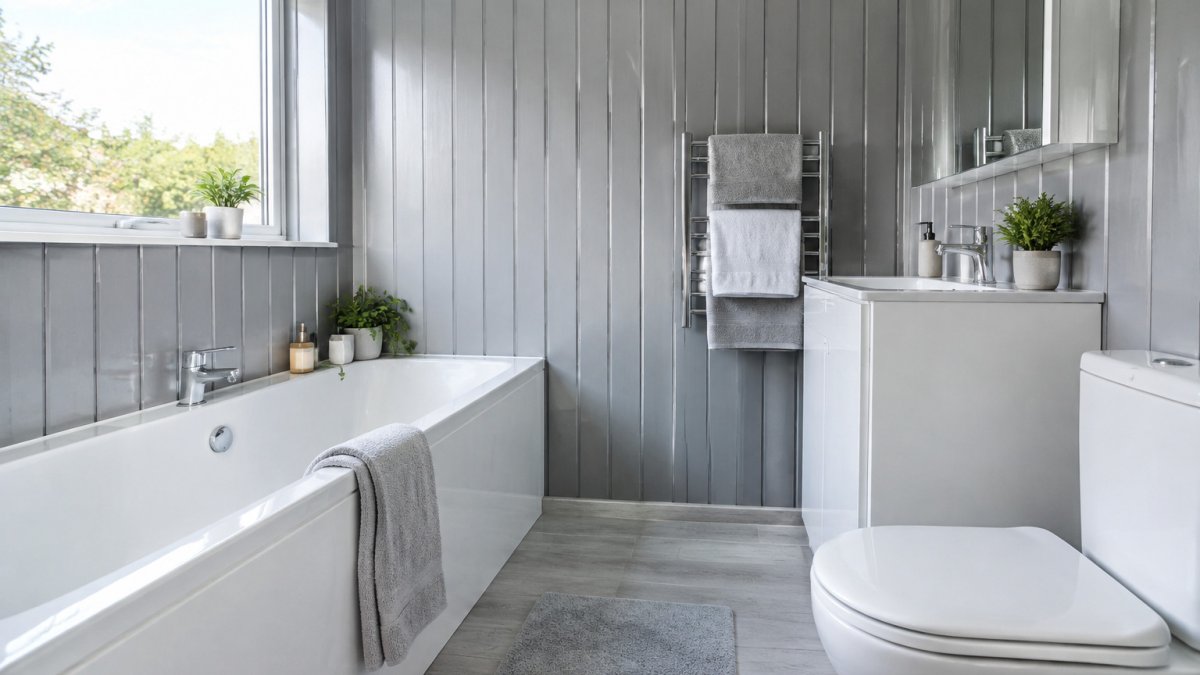
A material-specific view helps. Wood gives warmth and suits period properties, but it needs sealing in wet areas and can warp if moisture gets behind it. MDF takes paint well and is inexpensive, but it swells if water reaches the core, so it is better suited to dry rooms. PVC is waterproof, wipes clean and holds up well in bathrooms and utility rooms. Composite and slat panels are stable in humid conditions and suit modern interiors, though heavily textured or dark finishes narrow the pool of buyers.
Buyer and property context changes the answer more than the material label. A small flat benefits from light, plain panels that make rooms feel larger; a period home usually needs a restrained profile that matches existing joinery; a new-build may carry a modern slat or marble-effect finish without looking out of place. The amount and placement matter too: a single feature wall reads as deliberate, while full-height panelling in every room can feel oppressive and may prompt a buyer to budget for removal.
Reversibility is part of the resale calculation. Some panels lift away and leave the plaster sound, while others leave adhesive residue or damage that needs making good before a sale. Before you commit, check how the panel is fixed, whether it blocks access to wiring or plumbing, and what removal would cost in time and repair. A design that can be changed easily is easier to recommend to a cautious buyer.
For bathrooms, PVC panels are a practical choice because they handle moisture and are easy to clean. Our Decorwall Classic-Rose Marble Wall Panel (250mm) suits smaller rooms, and the Kerradeco Stone Grey panels are 100% waterproof for wet areas. If you prefer a textured, modern look, the Thermo-Slat Smoke Grey PVC Slat Panel is designed with a cavity for thermal insulation.
Match the style to the property, and treat any claim of a precise resale uplift with caution. Impact varies by local market and buyer preference, so the safer aim is a finish that is neutral, well fitted and easy to live with or remove.
Planning Your Panelling Project Before You Sell
If you plan to sell soon, sequence the work carefully. Fit panelling before you take photos and arrange viewings, and make sure the finish is complete, with no open joints or unfinished trims.
Consider reversibility too. Some panels can be removed and the wall repaired, while others leave adhesive residue or damage to the plaster. Check this before you start, particularly in rented or leasehold properties.
If the project extends beyond interior walls, such as an outdoor covered area, our external PVC cladding range may be worth reviewing alongside the interior options.
The most useful question to ask is simple: will this finish make the home easier to sell at the price you expect, and is it proportionate to what you will spend? Answer that honestly, and the decision usually becomes clear.
Frequently Asked Questions
Does wall panelling add value to a home?
Wall panelling can make a room look fresher and better kept, which helps a home present well to buyers. However, there is no reliable evidence that it guarantees a higher sale price or that installation costs will be recovered. Its effect depends on the quality of the fitting, whether the style suits the home, and how the rest of the property looks. Treat it as a presentation upgrade rather than a guaranteed return, and keep receipts and product details to show buyers the work was professionally finished.
Can wood panelling make a home harder to sell?
It can, if the style is dated, overly dark, or heavily personal. Bold colours or trend-led designs may put some buyers off, and poorly fitted panels with visible gaps look worse than a plain wall. Neutral, well-maintained finishes are the safer choice when resale is the goal. If you are unsure, choose a restrained design that suits the rest of the house rather than one that reflects a short-lived fashion.
Is wall panelling expensive to install?
Costs depend on the material, the size of the area and whether you fit it yourself. Our Kerradeco Stone Grey pack, for example, costs £209.00 and covers 3.186 m2 across eight boards, while our Decorwall Classic panels are £11.00 each in 250mm widths. Adding adhesive, silicone and trims increases the total. Measure the wall, order a little extra for cuts, and compare the full set of materials rather than the panel price alone.
How do you maintain wall panelling?
Most PVC and waterproof panels need only regular wiping with a mild cleaner and a soft cloth. Checking silicone seals around edges and corners periodically is sensible. Repair any loose or lifting boards promptly. Avoid abrasive pads that can dull gloss finishes. Good upkeep keeps the panels looking new, which matters more for saleability than the panels' age alone.


