
PVC vs Acrylic Shower Panels: Durability Comparison
Table of Contents
- PVC vs Acrylic Shower Panels: Key Differences at a Glance
- What Are PVC Shower Panels?
- What Are Acrylic Shower Panels?
- Durability Compared: Scratch, Impact and Moisture Resistance
- Pros and Cons of Acrylic Shower Panels
- Shower Panel Maintenance Tips for Both Materials
- How to Install Shower Wall Panels: PVC and Acrylic Compared
- Cost, Environmental Impact and Long-Term Value
- Frequently Asked Questions
Last Updated: September 18, 2026
PVC vs Acrylic Shower Panels: Key Differences at a Glance
Choosing between PVC vs acrylic shower panels for durability comes down to one question: which material still looks good after years of steam, splashes and the occasional dropped bottle? The short answer: PVC resists impact and moisture better in busy bathrooms, while acrylic wins on surface hardness and high-gloss shine.
| Feature | PVC Panels | Acrylic Panels |
|---|---|---|
| Material | Thermoplastic polymer, often layered | Solid acrylic sheet |
| Waterproofing | 100% waterproof, grout-free | Waterproof surface, sealed joints |
| Scratch resistance | Moderate, surface can mark | High, harder surface |
| Impact resistance | High, flexes rather than cracks | Lower, can crack on sharp impact |
| Weight | Lightweight, easy to handle | Heavier sheets |
| Best for | DIY installs, wet rooms, tight spaces | High-gloss feature walls |
What Are PVC Shower Panels?
PVC shower panels are wall cladding made from a thermoplastic polymer, usually built in layers around a rigid core and finished with a decorative skin. The layered construction keeps the panel lightweight while giving it structural integrity, so an 8mm board can span a shower wall without flexing.
Key traits of PVC panels:
- 100% waterproof surface with no grout to seal
- High impact resistance, so dents and cracks are rare
- UV stability on solid boards, which keeps colours from fading
- Lightweight enough for one person to lift and position
- Compatible with adhesive bonding, silicone sealant, nails or staples
What Are Acrylic Shower Panels?
Acrylic shower panels are sheets of solid acrylic, a clear polymer coloured and backed to create a deep, high-gloss finish. The surface is harder than PVC, which is why acrylic holds its shine and resists fine scratches so well.
The trade-offs in short:
- Excellent scratch resistance and colour depth
- Heavier and more awkward to handle alone
- Lower impact resistance than PVC
- Higher material cost per square metre
- Less forgiving if the wall behind it is uneven
Durability Compared: Scratch, Impact and Moisture Resistance
PVC wins on impact and moisture, acrylic wins on scratch resistance. Neither absorbs water, so durability is really about surface damage, how each panel handles movement, and whether damage can be repaired.
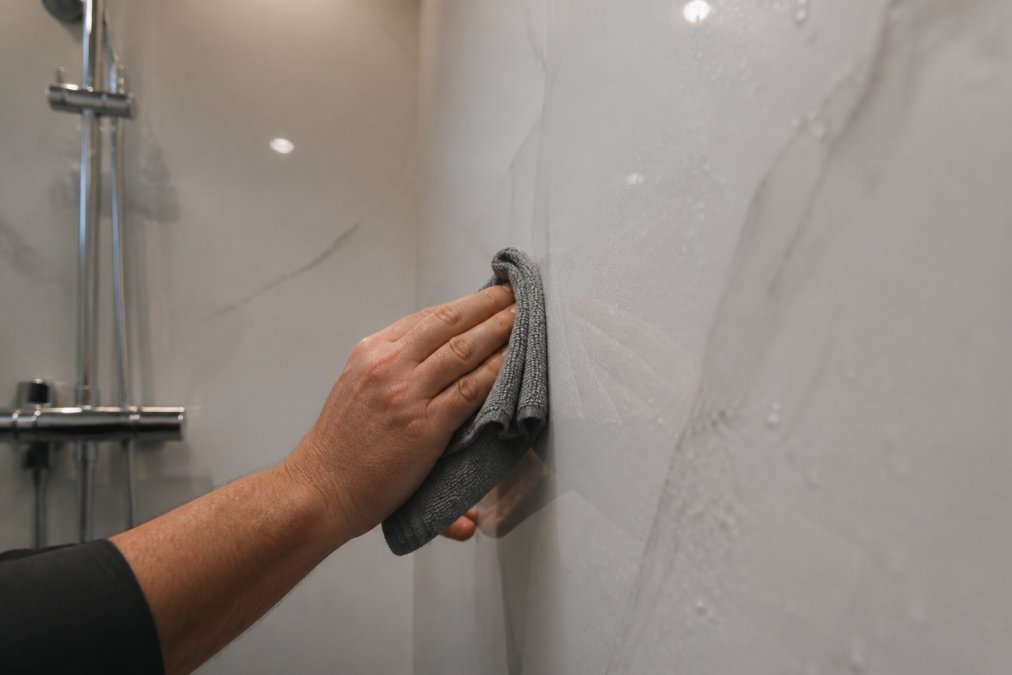
Scratch resistance: why acrylic holds its shine
Acrylic is harder on the surface, typically measuring higher on pencil-hardness scales than the decorative skin on most PVC boards, so it shrugs off fine scuffs from rings, sponges and body jewellery. PVC's softer surface marks more readily.
Impact resistance: why PVC survives the dropped bottle
On impact, the result flips. PVC is a thermoplastic with some flex, so a dropped shampoo bottle or knocked drill tends to deform and recover rather than fracture. Acrylic is more rigid, and rigidity is the enemy of impact tolerance: a sharp knock concentrates stress at one point and can crack the sheet.
Moisture resistance: the panel is not the weak point
At panel level, moisture resistance is a draw. Both materials are non-porous and will not absorb water, swell, or support mould growth on the surface itself. The weak point is never the panel. It is the joints.
Thermal expansion and contraction
Shower panels move slightly as temperatures swing between a hot shower and a cold room. PVC expands and contracts more than acrylic, so PVC installs benefit from a small expansion gap at the top and bottom of each panel and a flexible sealant at the joints. Rigid, over-tight joints can bow or split at the seam.
Cleaning chemicals and surface integrity
- Bleach-heavy cleaners dull both surfaces over time. Acrylic loses its gloss; PVC loses its sheen. Repeated use accelerates the effect.
- Abrasive creams and powders scratch acrylic's hard surface and wear through PVC's softer skin. Neither recovers.
- Acidic descalers can attack the surface of lower-grade PVC boards and leave a chalky finish if left to dwell.
- Solvent-based cleaners are the biggest risk to acrylic, because some solvents can cloud or craze the surface.
Mild soap and a warm cloth keep either material looking new for longer. Check specialist cleaners for abrasive or solvent content before spraying a high-gloss panel.
Repairability: the difference that compounds over time
A scratched PVC panel can often be sanded lightly or covered with a repair kit, and small chips filled before they spread. A cracked acrylic panel almost always means replacement, because the crack propagates under thermal cycling.
Pros and Cons of Acrylic Shower Panels
Acrylic panels deliver the best-looking finish on the market and the worst tolerance for clumsy installation. That trade-off matters more than any spec sheet.
Pros:
- Deep, high-gloss finish that lifts a plain bathroom
- Strong scratch resistance for daily wear
- Colour-fast, with no grout lines to discolour
- Easy to wipe clean
Cons:
Decorwall Elite Print- Arctic Grey →
- Can crack under sharp impact, and cracks are not repairable
- Heavier, so a two-person lift is often needed
- Less forgiving over uneven walls
- Costs more per square metre than PVC
Shower Panel Maintenance Tips for Both Materials
Both materials need the same basic routine: wipe down after use, clean weekly, and never scrub with anything abrasive. The difference is how each reacts to cleaning chemicals, and how much surface damage you can fix yourself before it becomes a replacement job.
The weekly routine that works for both
- Rinse and squeegee after every shower. Removing soap film stops it bonding to the surface.
- Clean weekly with warm water and mild soap. A soft cloth is enough for both PVC and acrylic.
- Dry the base rail and corners. Standing water is what shortens sealant life, not the panel itself.
- Check sealant twice a year. Reapply silicone at corners and the base if it lifts or cracks.
- Never use a scourer or wire wool. Even on scratch-resistant acrylic, it leaves visible marks.
Which cleaning chemicals damage which surface
- Bleach-heavy sprays dull both surfaces over time. Acrylic loses its gloss; PVC loses its sheen. Occasional use is fine; daily use is not.
- Abrasive creams and powders scratch acrylic's hard surface and wear through PVC's softer decorative skin. Once the skin is worn, the pattern underneath can show through.
- Acidic descalers can leave a chalky finish on lower-grade PVC boards if left to dwell. Rinse thoroughly and do not let them sit.
- Solvent-based cleaners are the biggest risk to acrylic. Some solvents can cloud or craze the surface permanently, and no polish will bring the gloss back.
- Mould removers are usually bleach-based, so treat them as a bleach product and use them sparingly on the sealant, not the panel.
Check specialist cleaners for abrasive or solvent content before spraying a high-gloss panel. A pH-neutral bathroom cleaner is the safest default for both materials.
Repairing surface damage: what you can fix and what you cannot
Repairability separates the two materials over a ten-year bathroom life.
PVC panels:
- Light scratches can often be sanded back with a fine abrasive pad and polished.
- Small chips can be filled with a colour-matched repair kit before they spread.
- Scuffed decorative skins can sometimes be covered with a trim or a replacement board if the damage is localised.
Acrylic panels:
- Fine scratches can be buffed out with a plastic polish, which is one of acrylic's genuine advantages.
- Deep scratches that catch a fingernail usually cannot be fully removed without leaving a visible dip in the gloss.
- Cracks almost always mean replacement, because the crack will continue to propagate under thermal cycling.
A note on environmental impact and end of life
Neither material belongs in general waste. PVC is a thermoplastic and can be recycled at end of life, though local collection points vary and not all councils accept it. Acrylic is also recyclable but processed at specialist facilities, so it is less likely to be accepted in kerbside collections.
How to Install Shower Wall Panels: PVC and Acrylic Compared
PVC is the easier DIY install, and it is not close. The panels are lighter, cut with standard tools, and tongue-and-groove edges click together, so alignment is forgiving. Acrylic needs more care because a mis-cut edge or flexed sheet shows immediately.
What you'll need:
- Tape measure and spirit level
- Fine-tooth saw or panel cutter
- Adhesive and silicone sealant
- Trims for corners and edges
- Cloths and a roller for adhesive bonding
The install process for both materials:
- Prepare the wall surface. Remove old tiles, fill gaps, and make sure the wall is flat and dry.
- Measure and mark the panel layout, working from the most visible corner outward.
- Cut panels to size, leaving a small expansion gap at the top and bottom.
- Apply adhesive in vertical beads, then press the panel into place.
- Click or butt the next panel into the groove, checking level as you go.
- Seal all joints, corners and the base with silicone sealant.
- Fit trims and wipe off excess sealant before it cures.
Cost, Environmental Impact and Long-Term Value
PVC usually costs less up front and lasts longer in high-traffic showers, making it the better long-term value for most bathrooms. Acrylic costs more per square metre but delivers a finish PVC cannot match.
Frequently Asked Questions
Which is better for showers, PVC or acrylic?
Both materials work well, but the right choice depends on your priorities. PVC shower panels, such as the Decorwall Elite Print Arctic Grey at £11.00, offer 100% waterproof performance and grout-free installation. Acrylic panels provide a glossier finish but can scratch more easily. For durability against impact and moisture, PVC panels with solid construction and UV resistance, like the Dumawall+ High Gloss range, are a strong option for busy bathrooms.
What type of shower panel is the most durable?
Solid PVC panels tend to outperform hollow acrylic sheets for impact resistance and long-term durability. The Dumawall+ High Gloss Mura is a heavy-duty PVC alternative to ceramic tiles, offering high impact resistance and a 10-year manufacturer's warranty. Its solid, UV-resistant construction resists dents, cracks and colour fading better than thinner acrylic panels, making it a reliable choice for high-traffic shower areas.
What are the downsides of acrylic shower panels?
Acrylic panels scratch more easily than PVC and can show surface damage over time. They may also flex or crack under impact if not installed on a perfectly flat wall. Cleaning with abrasive chemicals can dull the finish. For a more scratch-resistant and impact-resistant option, PVC panels like the [Kerradeco Stone Grey](https://wetwallwonders.com/products/kerradeco-stone-grey) offer 100% waterproof performance with a more durable surface.
Do PVC shower panels scratch easily compared to acrylic?
The Dumawall+ High Gloss range uses solid PVC boards with high impact resistance, so they handle everyday knocks and cleaning without dulling. Acrylic, while glossy, is softer and more prone to scuffs from rings, watches or abrasive sponges. For shower panel maintenance tips, always use a soft cloth and non-abrasive cleaner on both materials to keep surfaces looking new.
How do I install shower wall panels without professional help?
PVC panels are the most DIY-friendly option. The Dumawall+ range uses an easy-connect tongue and groove design that clicks together and can be fixed with adhesive, nails or staples. You will need a clean, flat wall, a sealant such as silicone, and basic tools. The Decorwall Elite Print panels are 100% waterproof and grout-free, so installation is quick and mess-free. Acrylic panels may require more precise handling to avoid cracking.

